Taipei Herbal Culture - The City's Wild Forager
Longshan Temple sits in Taipei's oldest district, where herbalism never left.
Between the market stall and forest floor, a passed-down wisdom has survived the century —
and somehow, in the middle of this dense, rushing city, it is still vividly alive.
Origins
At the root of it all stands the Divine Farmer (神農氏), a god who healed through the earth itself. He tasted hundreds of wild plants, cataloguing what cured and what harmed, and left that hard-won knowledge as a gift to every generation after. Some even credit him with the discovery of tea.
The reality was that the ancestors who travelled from China, arrived ill from rough sea crossings, built in disease-prone lowlands, and had no hospitals to turn to. So they turned to the land, guided by knowledge passed down from ancestral villages, gradually adapted to the plants that grew in Taiwan's subtropical soil.
The herb shops clustered near temples, because temples were where people went in crisis. When illness struck, people would pray, take an herbal prescription slip from the deity, and walk directly to a nearby herb shop to fill it. Wanhua's herb lane even earned the name — Rescue Street — for the relief it gave in desperate times.
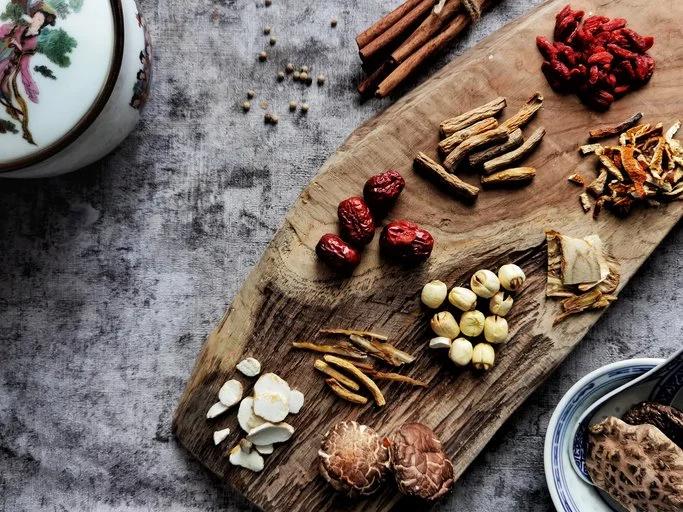
The Herbal Lane Today
Taipei’s most famous herb lane is Wanhua's 青草巷, tucked against the walls of Longshan Temple in a narrow 45-metre alley, where a cluster of shops has operated for generations. Some have been in the same family for over a hundred years.
With the herbal usages, Taiwanese find it not different from Europeans: put hot water and make it herbal tea. But to correspond to the heat, Taiwanese normally drink it cold like a take-away bubble tea. Here are the most common drink list:
青草茶 (百草茶) — Herbal Blend Tea The house drink of almost every herb shop. A rotating mix of mint, dried grass jelly plant, holy basil, and wild greens — cooling, lightly sweet, and built for hot days. Think of it as the original sports drink, minus the neon.
苦茶 (甘草苦茶) — Bitter Detox Tea The one you reach for after a late night or too much fried food. Brewed from andrographis and bitter herbs, it tastes exactly as serious as it sounds — but finishes with a surprising sweetness that creeps up after you swallow. Locals call that the 回甘, the returning sweetness. It's earned.
仙草茶 — Grass Jelly Tea Made from a single ingredient — dried xiancao herb, slow-cooked for hours until the liquid turns deep and almost black. Cleaner and more austere than the herbal blend, with a quiet, earthy coolness. The same plant that becomes the wobbly jelly in your bubble tea.
冬瓜茶 — Winter Melon Tea Old-fashioned and unapologetically sweet, brewed from winter melon and rock sugar. No herbs, no bitterness — just a gentle, caramel-adjacent sweetness that Taiwanese grandmothers have been making on the stovetop for generations. Pure nostalgia in a cup.
楊桃汁 — Starfruit Juice Tart, fresh, and slightly astringent in the best way. Traditionally used to soothe a sore throat — the Taiwanese equivalent of hot lemon water, except cold, bright green, and considerably more interesting.
Herbal Shops Worth Knowing
四知青草舖 — Sizhi Herb Shop is one of the oldest in the lane, over a century in the same family. The shop name 「四知」 references the integrity of the Han-dynasty official Yang Zhen — honest goods, nothing hidden. Now in its third generation, it sells ready-to-brew herb packs adapted for modern kitchens without losing the original formula. Ask the owner; she'll tell you which one is for sleep and which one is for summer heat.
Open: 8:30-18:00 (Sunday close)
老劑安青草店 — Old Jian Herb Shop holds a modern distinction. The 3rd generation created a modest innovation that changed how people experienced the whole street. You can ask for the customised drink like how you order in a bar. English is available here.
Open: 9:00-18:00 (Wed, Mon, Sun close)
Reading the Wild《iá 野植風味學》
If the lane leaves you curious for more, the bilingual reference magazine 《iá 野植風味學》 is the companion piece you didn't know existed. It’s curated by the chef Wes Guo from the Michelin Green Star awarded restaurant EMBERS, and the biologist Su Li, Su from Taiwan Wild Herb Tea.
Published in both Chinese and English, it treats wild and semi-wild plants as a subject of genuine flavour study — not folk remedy, not wellness trend, but something closer to natural gastronomy. Each issue profiles specific plants found across Taiwan, tracing their flavour profiles, seasonal rhythms, and the communities — farmers, herbalists, foragers — who still know how to use them.
***Message the page for where-to-buy. Sometime they have interesting collaboration with independent book stores.
The Herbal Cafe “Yeshi”, Jiufen
Before you commit to buying anything, there's a gentler entry point in the hills. Yeshi (野室草店) is a small café in Jiufen where the menu is built around wild and foraged plants — the kind of place where a drink arrives with a small card explaining what's in it and where it came from. It's a good first conversation with this world: unhurried, roof-terrace atmospheric, and genuinely flavoured by the surrounding hillside. Wander there after the old street, before the clouds roll in. Order something you can't identify, ask about it, and see what opens.
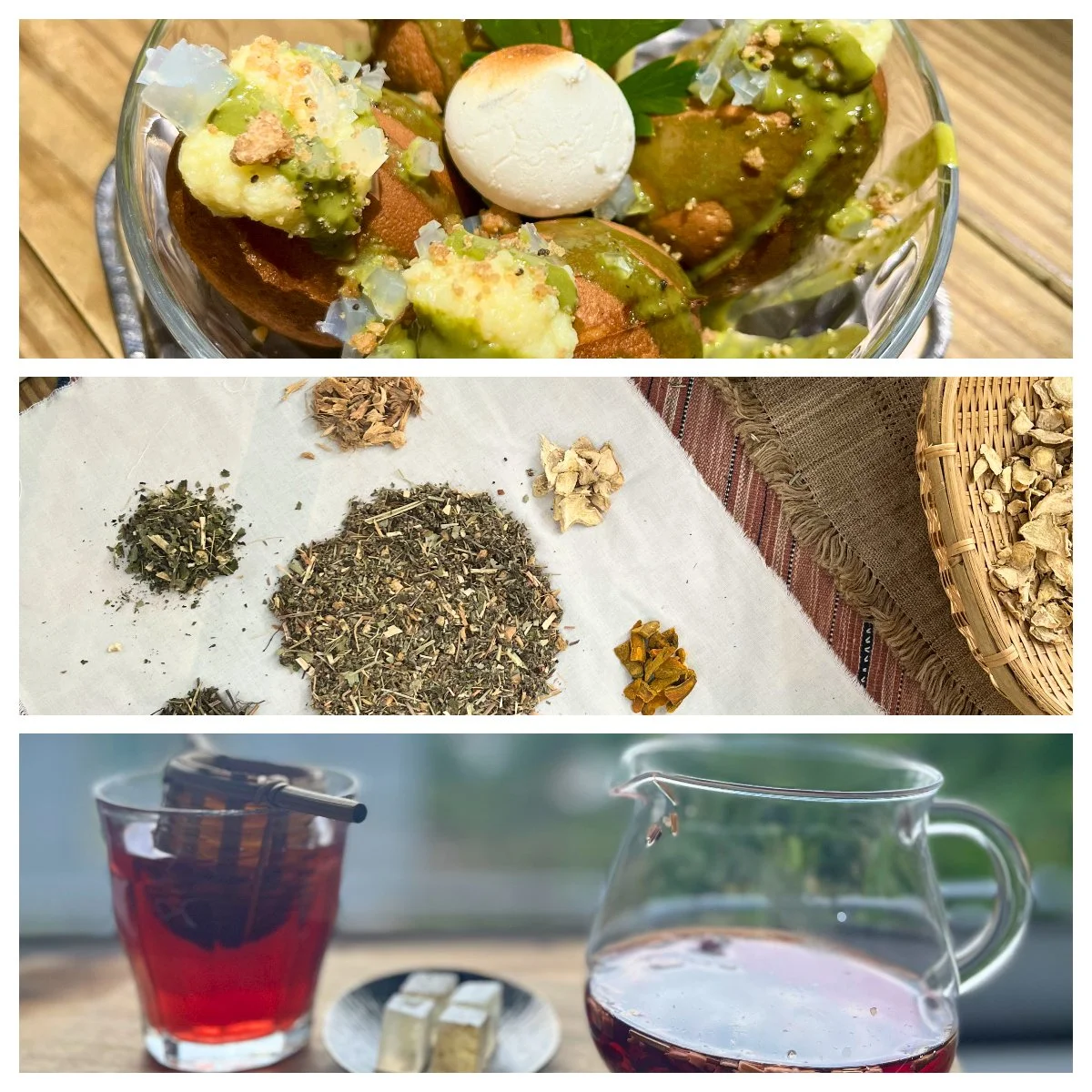
The pancake with herbal sauce is good to order. As well as the herbal crystal gummy.
Open: 11:30-17:30 (Mon, Tue close)
A Tip Before You Buy
Personally I am not a big fan of herbal drinks, so I tend to buy small selection of dried herbs and put them into my small cotton drawstring bag to give myself a pleasant fragrance: lemongrass, dried chrysanthemum, mint... Carry them loose in a small cloth bag in the backpack or luggage. Back home, the scent opens a door straight back to that lane. It's the most honest souvenir you'll find in Taipei — it weighs almost nothing, costs almost nothing, and smells like somewhere real.
These are my recommended shopping list for the great energy fragrance pack:
佩蘭 — Eupatorium / Orchid Herb A light, faintly sweet-smelling herb used to clear summer dampness. Think of it as the herbal world's answer to humidity.
香薷 — Elsholtzia / Chinese Mint Herb Sometimes called "summer ephedra" — a warming herb paradoxically used for summer colds, when you've been caught in the rain or hit by an air-conditioned chill.
蒼朮 — Atractylodes A dry, bitter rhizome root. One of the great "dampness-dispelling" herbs in the tradition — historically burned as incense during epidemics to purify the air of a room.
石菖蒲 — Stone Acorus / Rock Calamus A low-growing water-edge plant with a sharp, camphor-like scent. Often found tucked into aroma bundles and sachets — the smell is immediately distinctive, almost medicinal but strangely calming.
藿香 — Patchouli Herb / Chinese Patchouli Not the heavy, resinous patchouli of incense shops — the herbal variety is fresher and greener, used to settle the stomach and clear heat. A cornerstone of summer herbal formulas.
艾草 — Mugwort The most recognisable of the six. Silvery-green leaves with a warm, woolly scent — used in moxibustion, rice cakes, and aroma sachets alike. If you've smelled anything burning gently near a temple or traditional clinic, it was probably this.
