The World's Most Unlikely Cacao Origin
Most people don't know Taiwan grows cacao. Most people who do know, don't know why.
The answer starts with a beetle, a nut, and a government buyout programme that left ten thousand farmers staring at empty hillsides in the early 2000s.
From Betel Nut to Cacao
For decades, betel nut was one of Taiwan's most profitable cash crops. The stimulant seed — chewed across Southeast Asia and deeply embedded in Taiwanese working-class culture — grew easily on steep hillsides and paid well. At its peak, betel nut blanketed an estimated 55,000 hectares of Taiwan's mountain slopes.
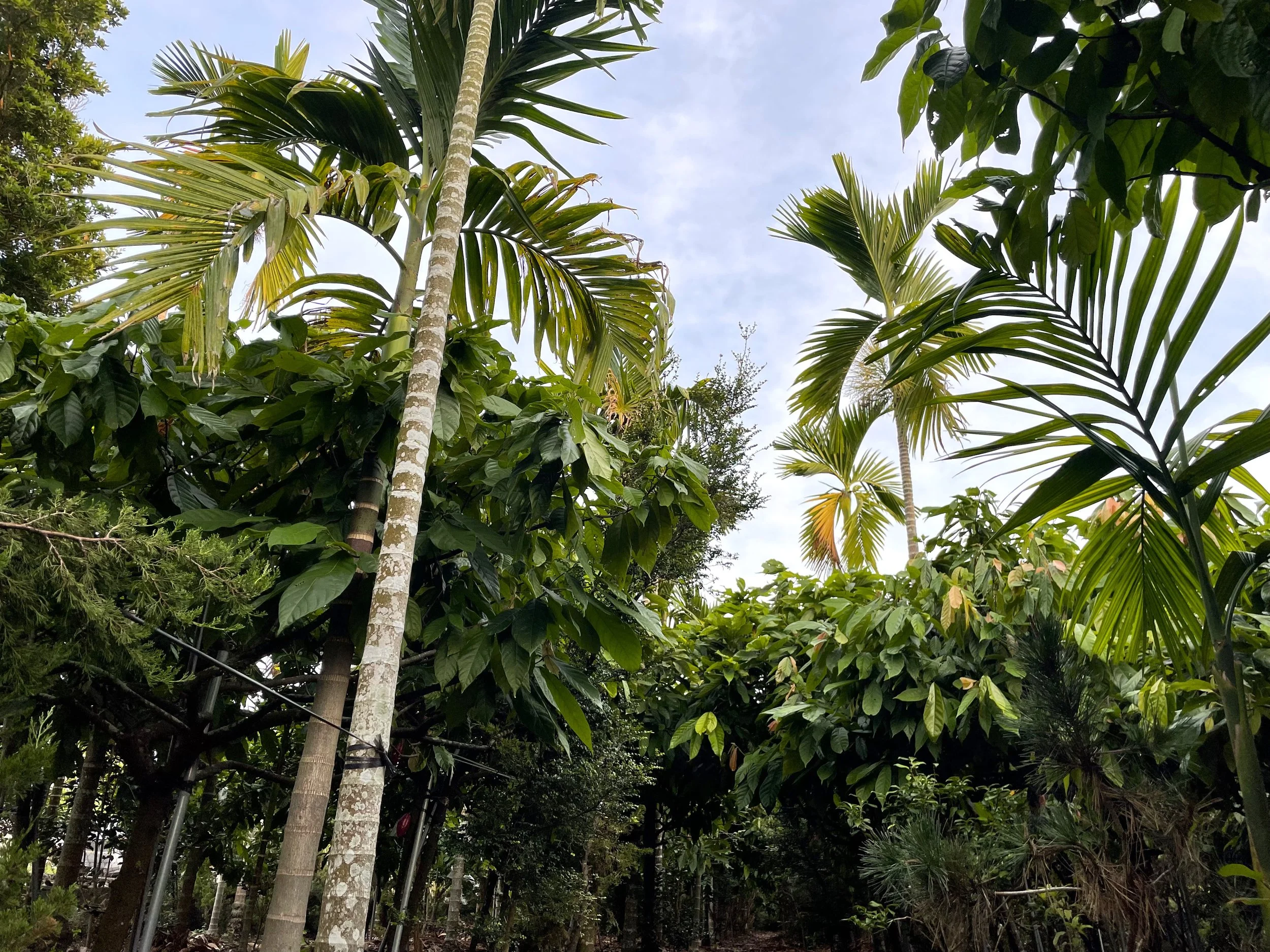
Cacao loves shade. Betel nut trees (those looks like coconut tress) were already there — a perfect, accidental partnership.
Then the tide turned. Health campaigns linked long-term betel nut consumption to oral cancer. Government subsidies collapsed. Farmers who had built their livelihoods on the crop were suddenly holding land and no market.
Some replanted with tea. Some with coffee. And a small, stubborn group in Pingtung — in the sun-soaked foothills below Dawu Mountain — tried something almost nobody else on the island was attempting: cacao.
It worked. Not just agronomically. Deeply.
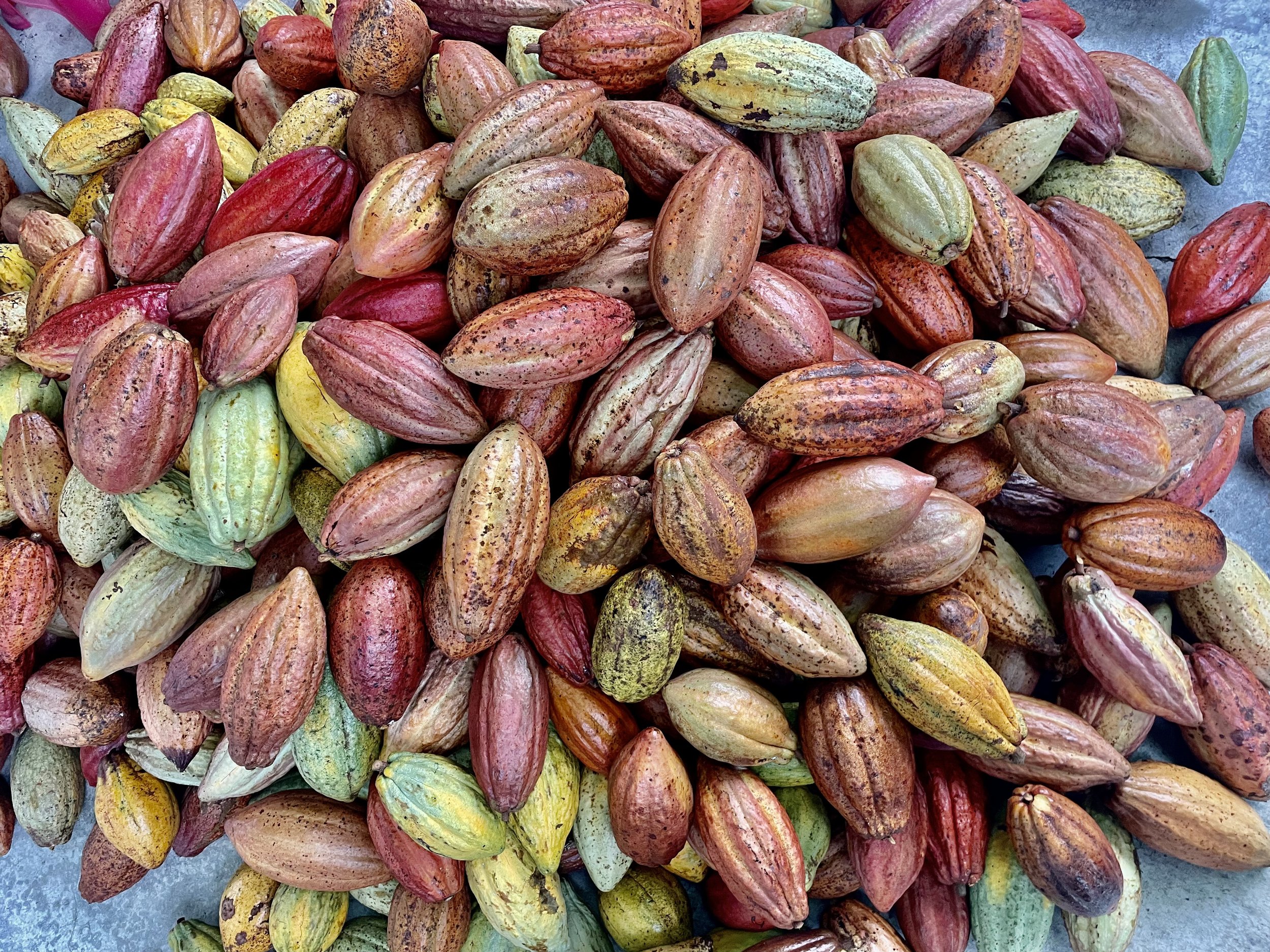
Cocoa pods ripen from green or deep red into yellow, orange, or burgundy — each shade a different variety, a different moment in time.
Cancer Line 23.5°N — The Most Farm-to-Table Cacao on Earth
The Tropic of Cancer runs at 23.5 degrees north latitude. It bisects southern Taiwan almost perfectly, and it marks the boundary of the cacao belt — the narrow equatorial band where the crop has historically thrived.
Taiwan sits at the northernmost edge of this belt. That borderline position creates something extraordinary: growing conditions that are warm and humid enough for cacao, but with enough seasonal temperature variation to force slower development in the bean. Slower development means more complex fermentation. More complex fermentation means flavour depth that single-origin producers in Ecuador or Ghana spend years trying to coax out through processing.
But what makes Taiwanese cacao genuinely singular isn't just latitude. It's distance.
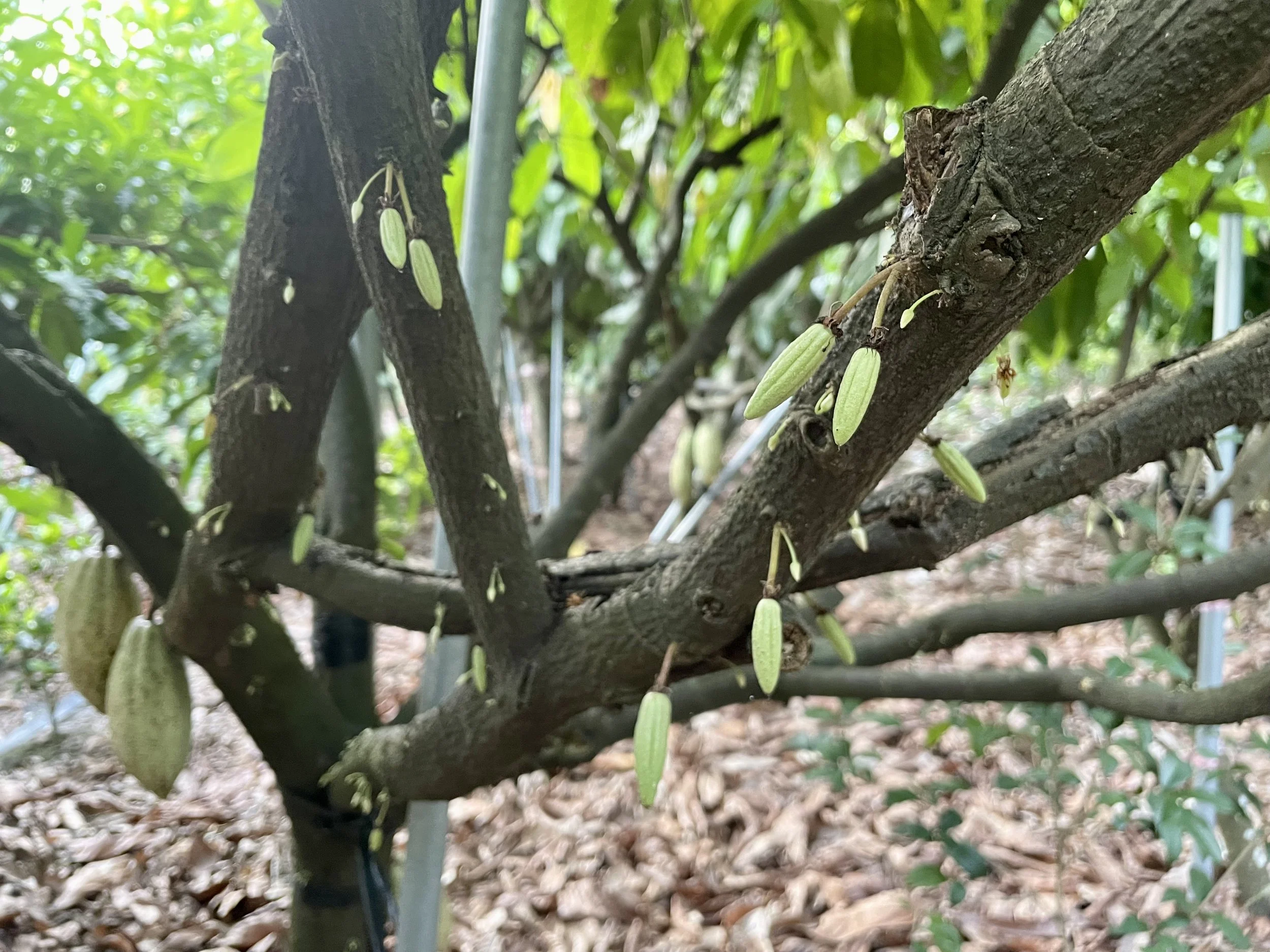
Meet the Cacao babies !!! Two harvests a year: spring (Mar–Apr) and autumn (Sep–Oct). Tiny pods, twice the reward.
In most cacao-producing countries, beans travel. They move from smallholder farms to collection points, to exporters, to overseas processors. Days pass. Sometimes weeks. The fermentation window — a narrow, critical phase where the bean's flavour precursors develop — is managed not by the farmer but by a middleman operating at industrial scale.
In Pingtung, the farmer ferments. The farmer roasts. In many cases, the farmer makes the bar. The distance from tree to finished chocolate is sometimes measured in metres, not kilometres. This is not a marketing claim. It is a structural reality of a cacao industry too small and too young to have middlemen.
The result is arguably the most farm-to-table cacao in the world — not by philosophy, but by necessity.
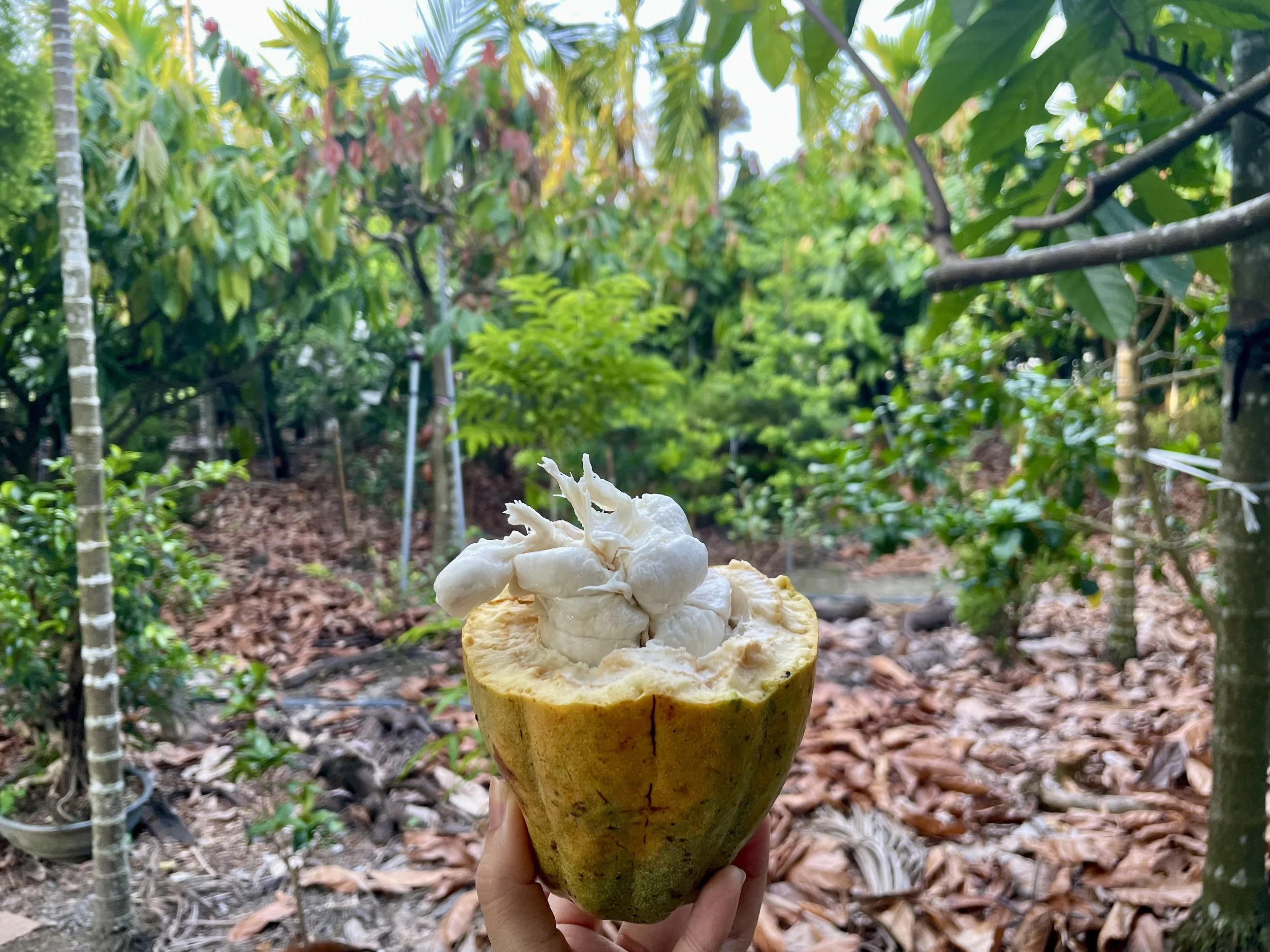
Ripe pods must be cracked open immediately. Inside: sweet, fragrant pulp that tastes nothing like chocolate — yet.
How Taiwan Compares to Its Neighbours
Taiwan is not Southeast Asia's only cacao producer. Indonesia and Vietnam both grow significant volumes, and both have been positioning themselves in the specialty market. The differences, however, are meaningful.
Indonesia produces at scale — it ranks among the world's top five producers by volume. That scale comes at a cost to traceability. Most Indonesian cacao moves through multi-tier collection systems, making single-origin claims difficult to verify. The flavour profile tends toward earthy and smoky, shaped as much by drying method as by terroir.
Vietnam is newer to specialty cacao and growing fast, particularly in the Mekong Delta. Quality is rising, and several Vietnamese bean-to-bar producers are gaining international recognition. But Vietnam's cacao culture is still largely export-oriented — the domestic story, the connection between land and maker, is still being written.
Taiwan produces almost nothing by comparison — perhaps 300 to 400 tonnes annually. But what it lacks in volume it compensates in completeness of story. The farmer who grew the beans often knows the person who bought the bar. That chain of custody — rare, perhaps unique at this scale — is what no other origin in Asia can currently replicate.
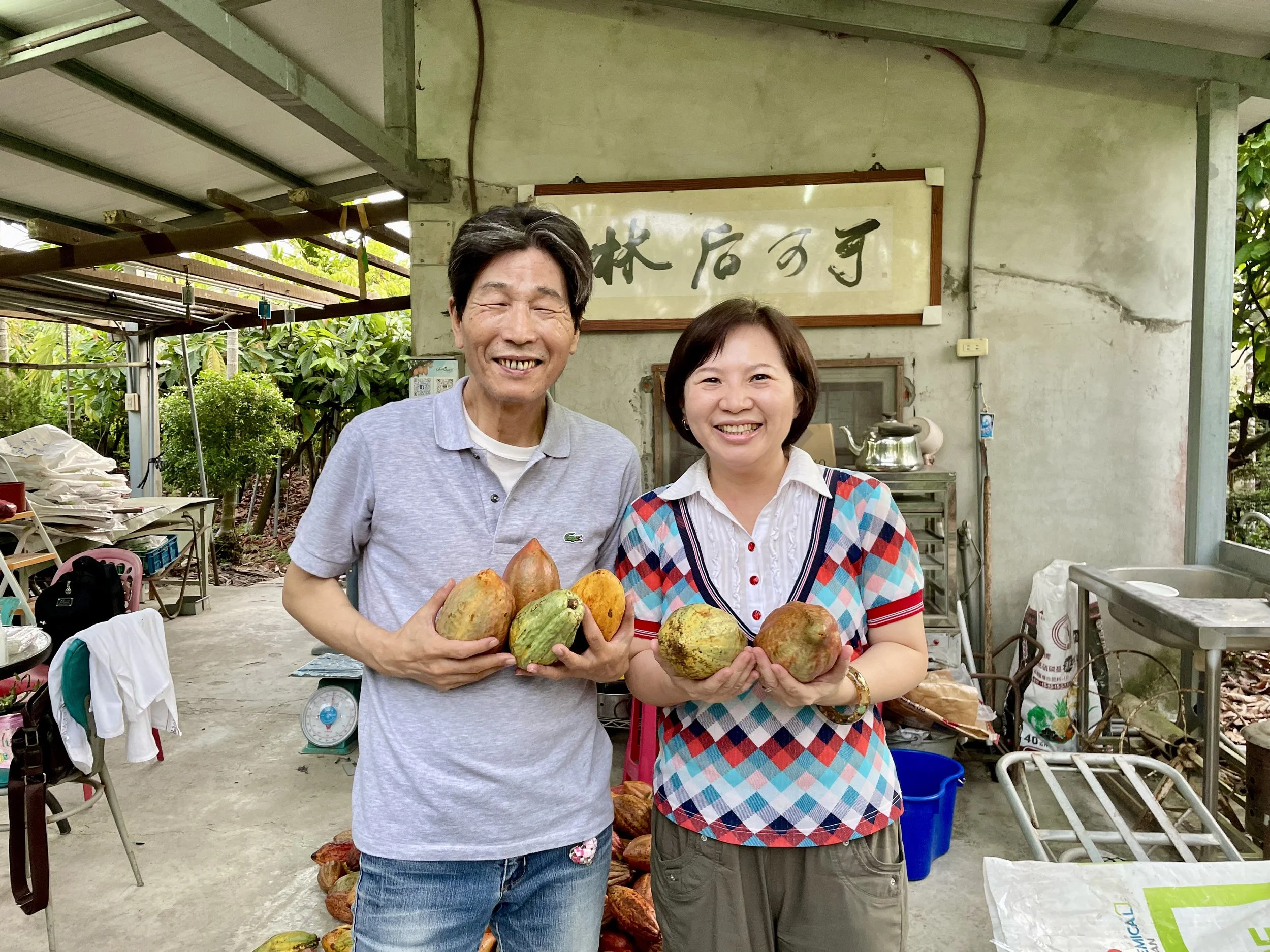
Too rare to export, too precious to waste. Local farmers press cacao butter into skincare — something only origin can offer.
If you’re interested in knowing more about Taiwanese cacao, do mail us or join our event! That is not a story you find in an airport duty-free. It is the kind of story T Scout exists to help you find.
Written & Photography by: Julien Huang©
