Maokong · Keepers of Authentic Tieguanyin
Uncle Well's Tea Garden is about 300 meters from the Maokong Gondola terminus. Founded in 1991, it is one of the few organic gardens in Maokong still growing authentic Zhengcong Tieguanyin (正欉鐵觀音). Unc studied under Wu Chen-duo, widely regarded as the father of modern Taiwanese tea science. In the winter of 2019, competing against 312 entries in the Muzha Winter Tieguanyin Tea Competition, Chen took the Grand Prize — the highest honor the competition awards.
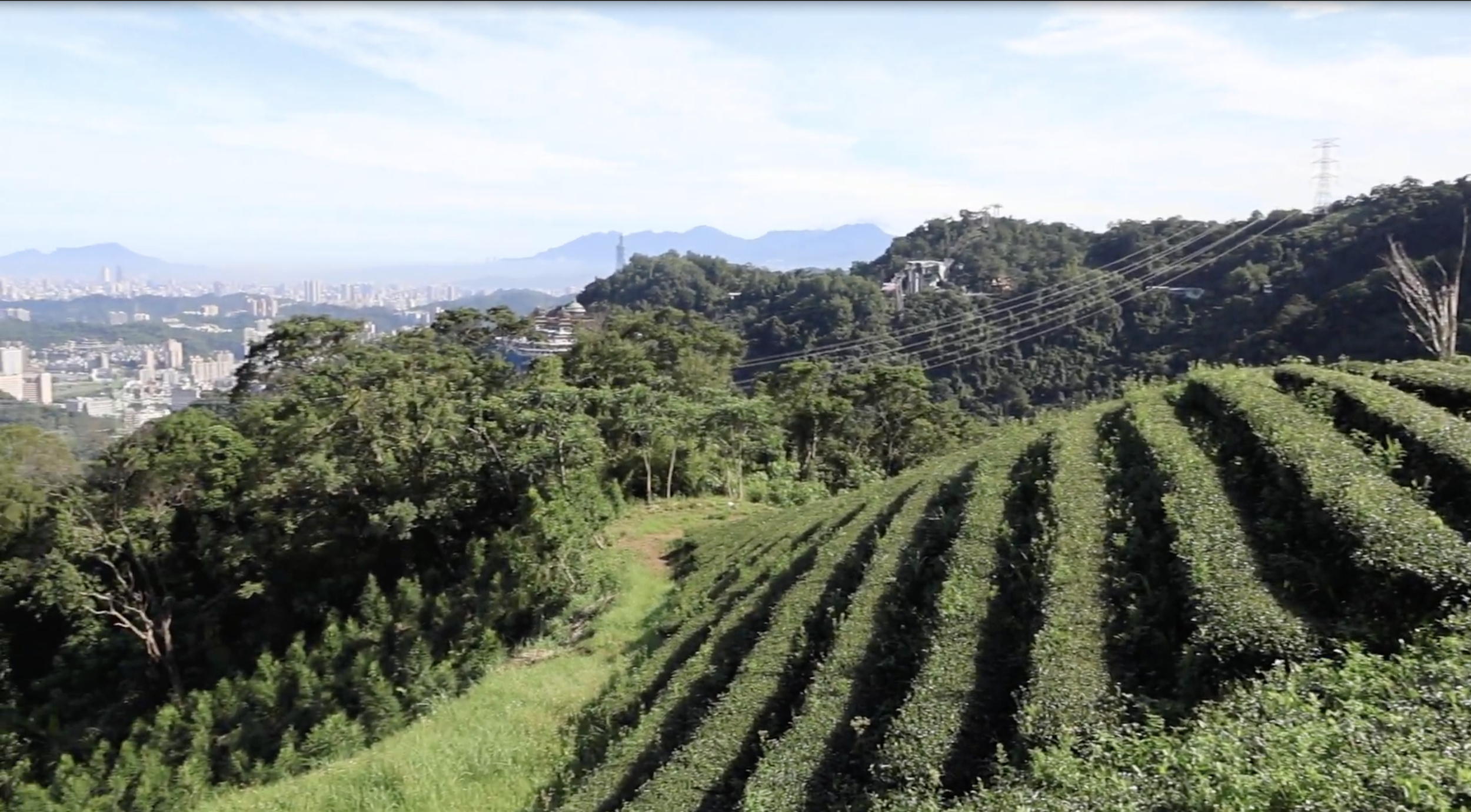
Can you see Taipei 101 from Uncle Well’s tea farm?
Tieguanyin,What’s So Special?
Tieguanyin isn't thin and grassy like green tea, and it doesn't lean hard into sweetness or astringency like black tea — it sits somewhere in between. The heavy oxidation and heavy roasting give it a warm, toasted character - roasted nuts and a faint trace of charcoal. The first sip feels round and full-bodied, and as it settles, a gentle sweetness rises at the back of the throat, lingering like a trace of honey. It's not bitter, not sharp — your first impression is closer to "comforting" than anything else. You don't need to know anything about tea ceremony to taste the difference.
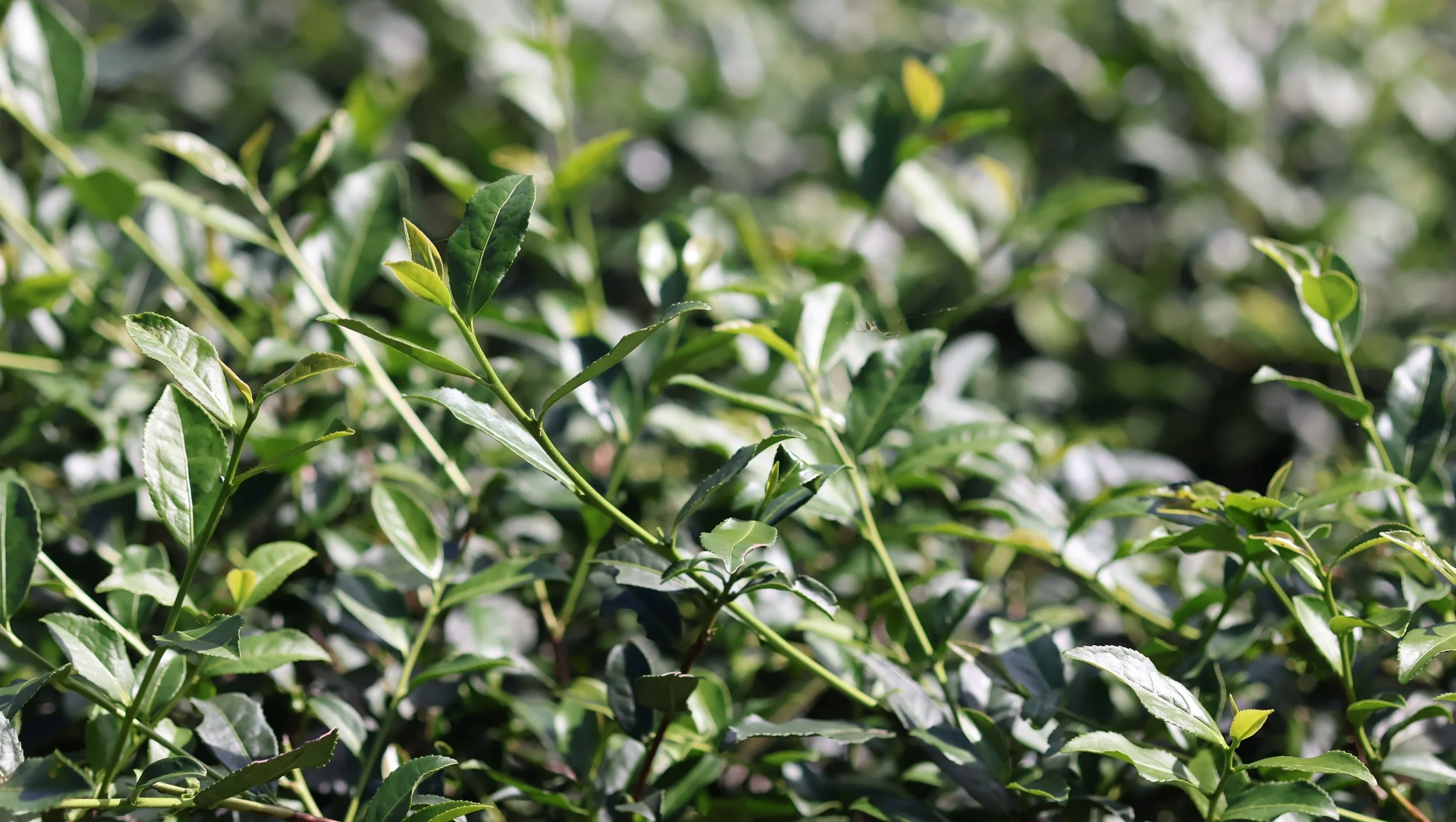
Zhengcong Tieguanyin’s new buds emerge reddish, and the leaf and bud sit asymmetrically — tilted to one side.
Tieguanyin is not originally from Taiwan. It was brought by Brothers Zhang Naimiao and Zhang Naigan from Anxi, Fujian Province, China in 1895. They are the pioneers of tea industry in North Taiwan, and that’s why most of the tea farmers in Maokong have their last name “Zhang”. To honor the Zhang family’s role in establishing the island's tea industry, the fifth generation established the Zhang Naimiao Memorial Hall in Maokong👉👉👉which is one of my favorite tea select shop. (You may pay NT$300 for tea tasting, absolutely worth it!!)
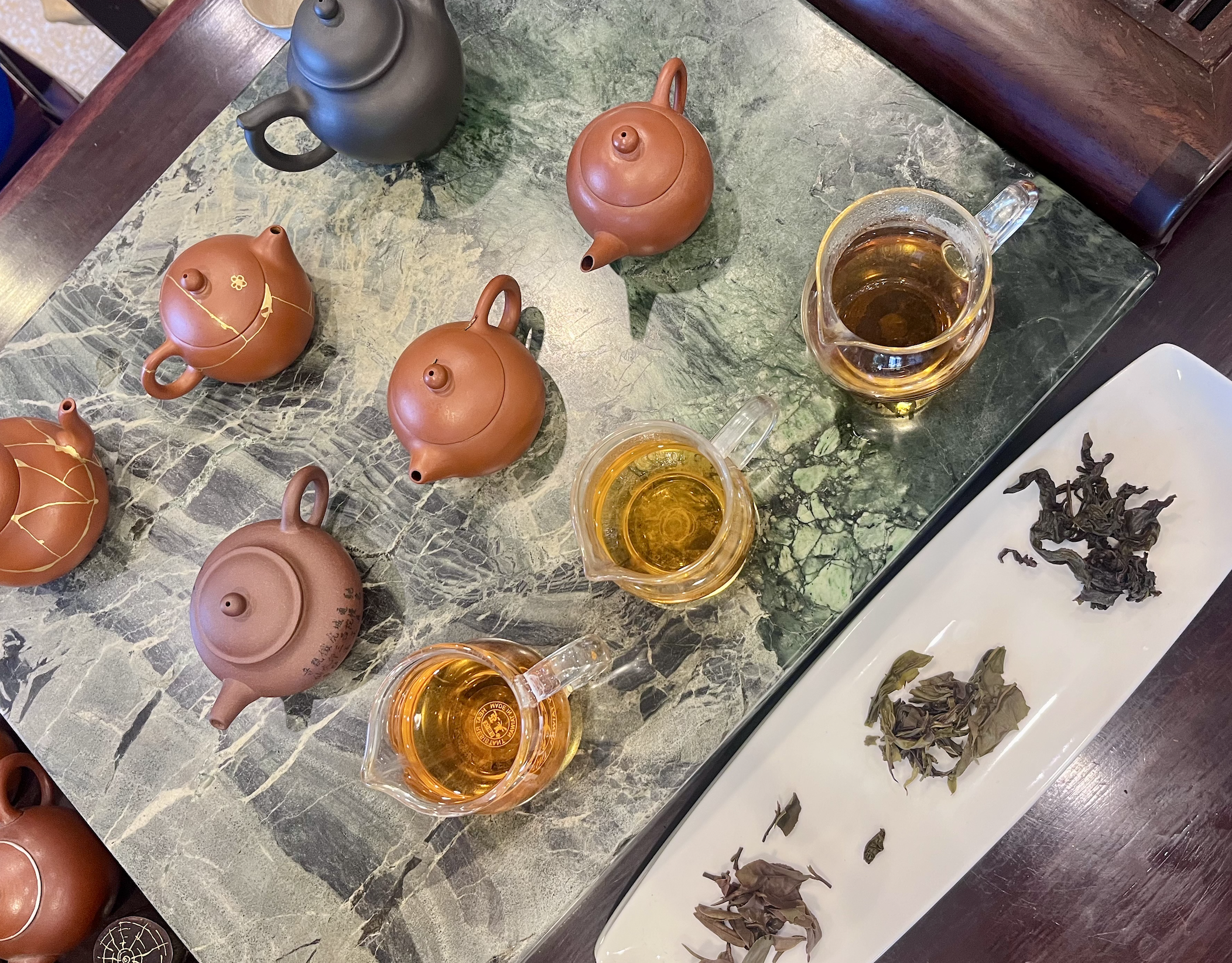
Zhang Naimiao Memorial Hall offers English and Cantonese friendly service.
Two keys that make Tieguanyin special: the species & the method. Most teas you'll find in Taiwan, from High Mountain Oolong to Si Ji Chun(四季春) to Jinxuan(金萱), lean toward light oxidation and light roasting, chasing freshness and floral clarity. Tieguanyin does the opposite: heavy oxidation, heavy roasting, a traditional process that can take twenty days or more, with multiple rounds of rolling and roasting repeated again and again. That slow, labor-intensive character is exactly why Tieguanyin can be steeped seven times or more without turning bitter — a quality genuinely rare among Taiwanese teas. And because the process is so demanding and yields so limited, much of what's sold as "Tieguanyin" today is actually made from other varietals using Tieguanyin's technique. Tea made from the true Zhengcong Tieguanyin tree has become the rare exception. This is today the number of Maokong farmers still growing authentic Zhengcong Tieguanyin can be counted on one hand.
Organic Farming Isn’t Easy
Chen Wei-zhi, known in tea circles as "Uncle Well," made his way to Maokong in 1991. He studied under Wu Chen-duo, the first director of the Tea Research and Extension Station after the retrocession of Taiwan. People called Wu “the father of Taiwanese tea”. They even travel together to Anxi, Fujian, to observe Tieguanyin at its source. Thus, Uncle Well has never doubted himself as “the guardian of Tieguanyin.”
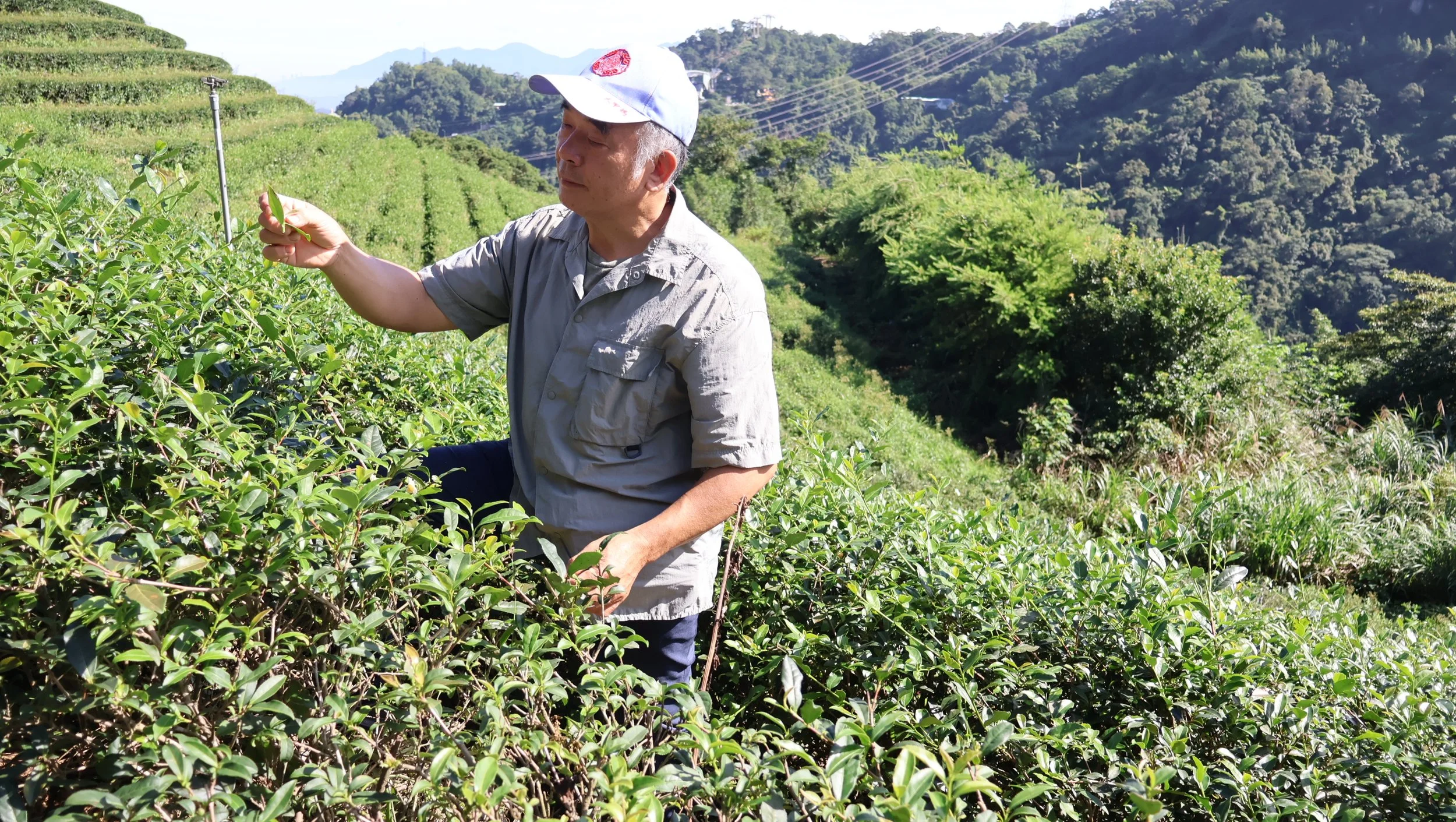
Uncle Well explains the right way of tea plucking.
Walk into his tea farm, I found him growing two species of tea: one planted with Zhengcong Tieguanyin, one with Jinxuan. The Jinxuan grows dense and full; the Tieguanyin is visibly sparse. "Zhengcong Tieguanyin has tremendous character," Chen says. "It's difficult from the growing stage. The yield is one-third of Jinxuan's. And in processing, it doesn't follow ordinary logic — which is why almost no one grows it anymore."
The difficulty begins at harvest. Where most teas are picked as one bud and two leaves, Tieguanyin requires one bud and three — the extra leaf adding sweetness and body to the cup. The stems are thick, water movement slower; from withering through rolling, judging the degree of oxidation depends entirely on the maker's intuition. The final roasting must reveal the tea's best nature without overwhelming it — not, as Chen puts it, applying heavy makeup to something that should be seen as it is.
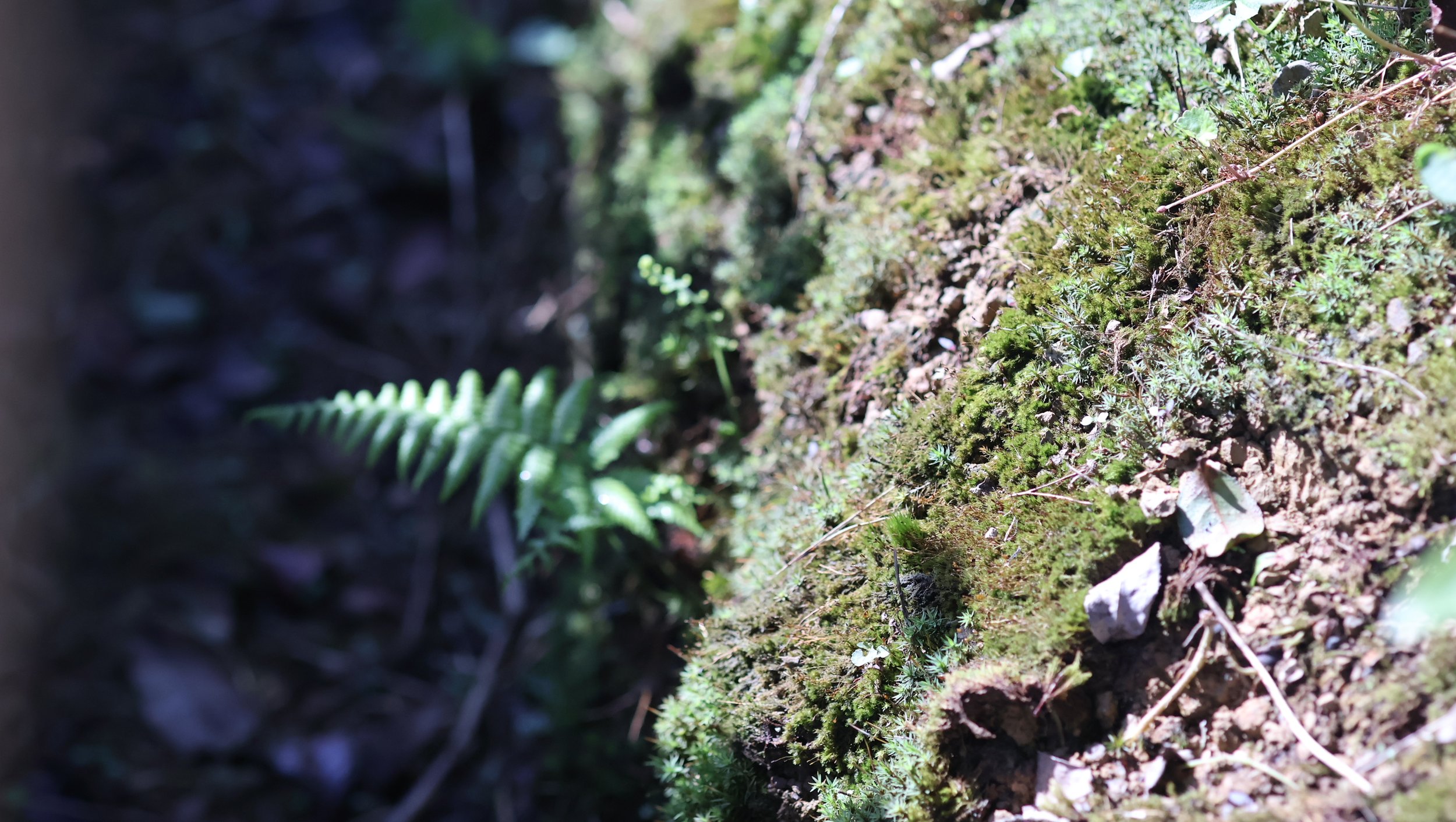
He hand picked the wild grass and try to maintain the farm original as it is.
Managing the garden is another order of difficulty. The neighboring plot uses conventional farming. Chen can only do what he can within his own boundary: weeding by hand, using enzymes instead of pesticides. Climate change has intensified pest pressure year on year; the tea leafhopper is the main adversary. He is out at five in the morning and again after four in the afternoon, laughing that he truly lives by the stars.
Another Keeper, Up the Mountain: Liu Ji Xiang Tea House
Uncle Well isn't the only one in Maokong still holding onto Zhengcong Tieguanyin. Further up Section 3 of Zhinan Road, Zhang Xin-zhong of Liu Ji Xiang Tea House offers another answer. Zhang Xin-zhong is the fourth-generation of the Zhang family, who brought Tieguanyin since 1895. His father Zhang Wen-hui once discovered an unusually vigorous cultivar that could be harvested up to six times a year in his tea farm, naming it "Liu Ji Xiang" (Six-Season Fragrance) for its intense aroma. Transplanted to central Taiwan (Mingjian, Nantou) in the 1980s, it eventually became the varietal known nationwide today as Si Ji Chun(四季春).
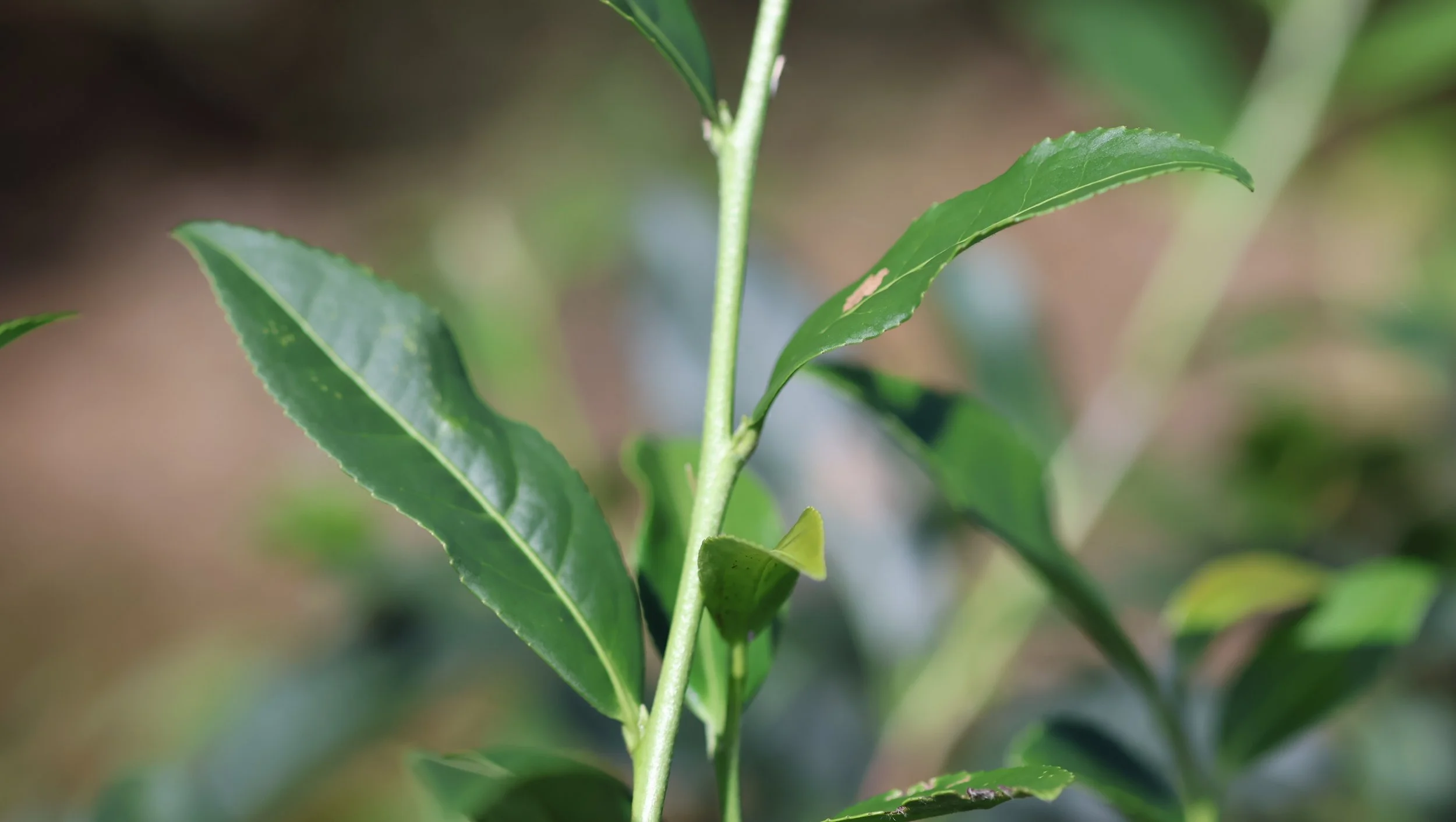
The stems of Tieguanyin is especially thick, and that makes the withering difficult.
Tieguanyin Keeps You Warm
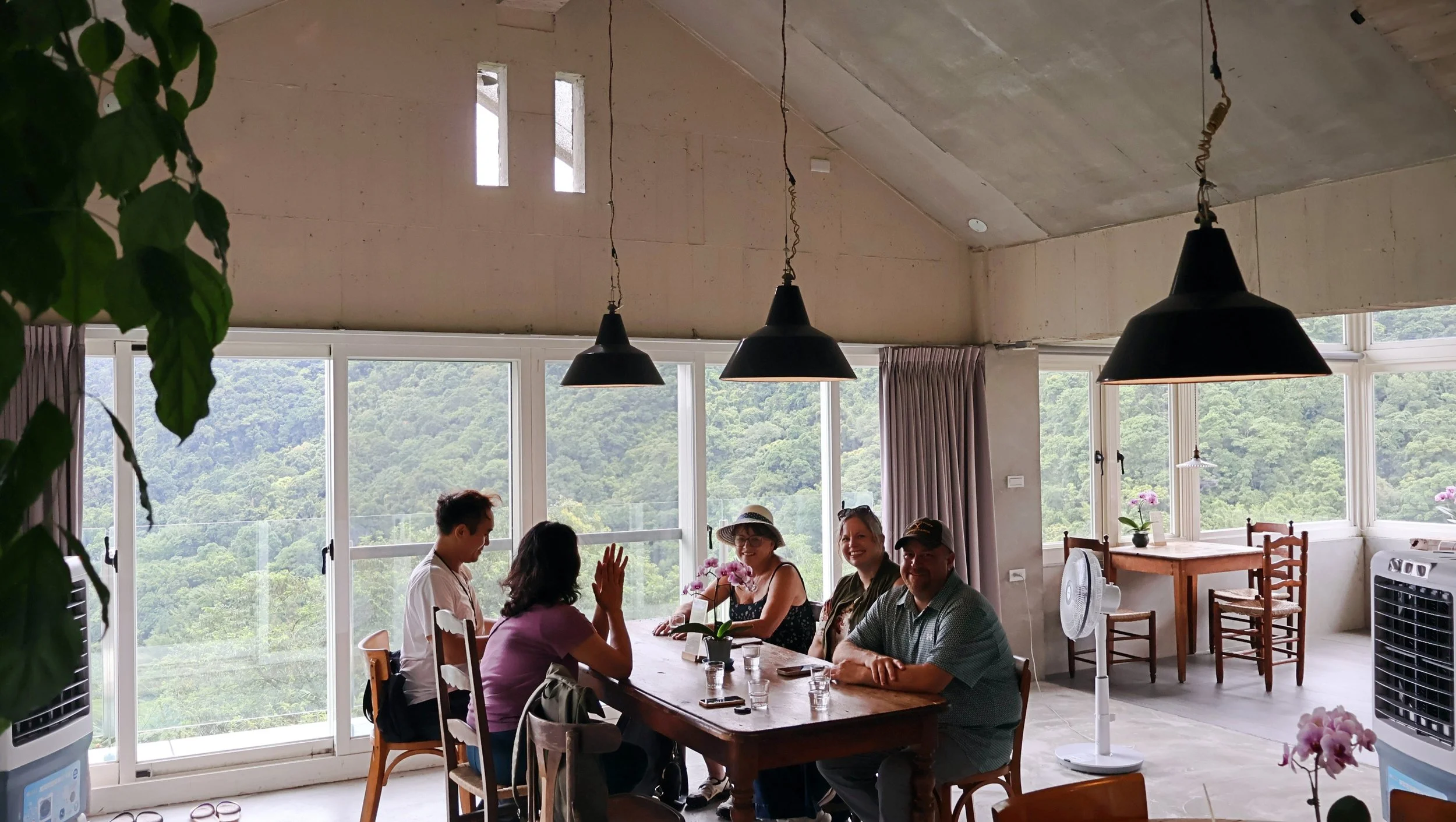
Uncle Well’s tea house is specious with gorgeous view.
Tieguanyin, Uncle Well says, has no ceiling — the better you make it, the better it can become. That is why, after thirty years, he has never switched to an easier varietal. In his telling, the name captures everything: tie (鐵), iron — steadfast, enduring; guanyin (觀音), the bodhisattva of compassion. A cup of aged Tieguanyin on a cold night, he says, warms you from the inside out.
We see Uncle Well and Zhang family not just tea farmers, but keepers of a craftsmanship that is close to disappearing from these hills. When we raised a camera, Uncle Well made one only request: get a good shot of Zhengcong Tieguanyin!
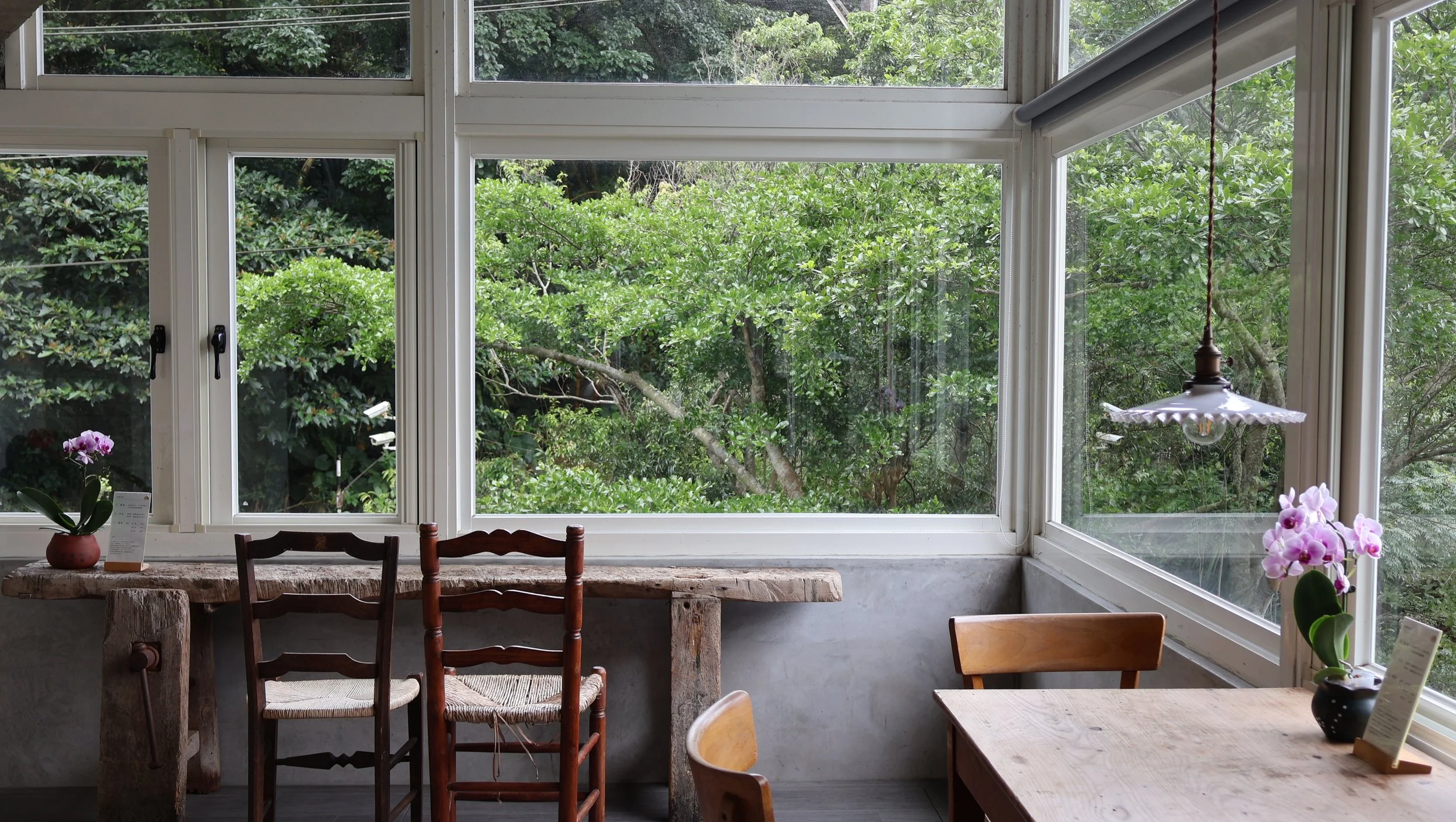
There are two floors seats and two private tea rooms. All window seats.
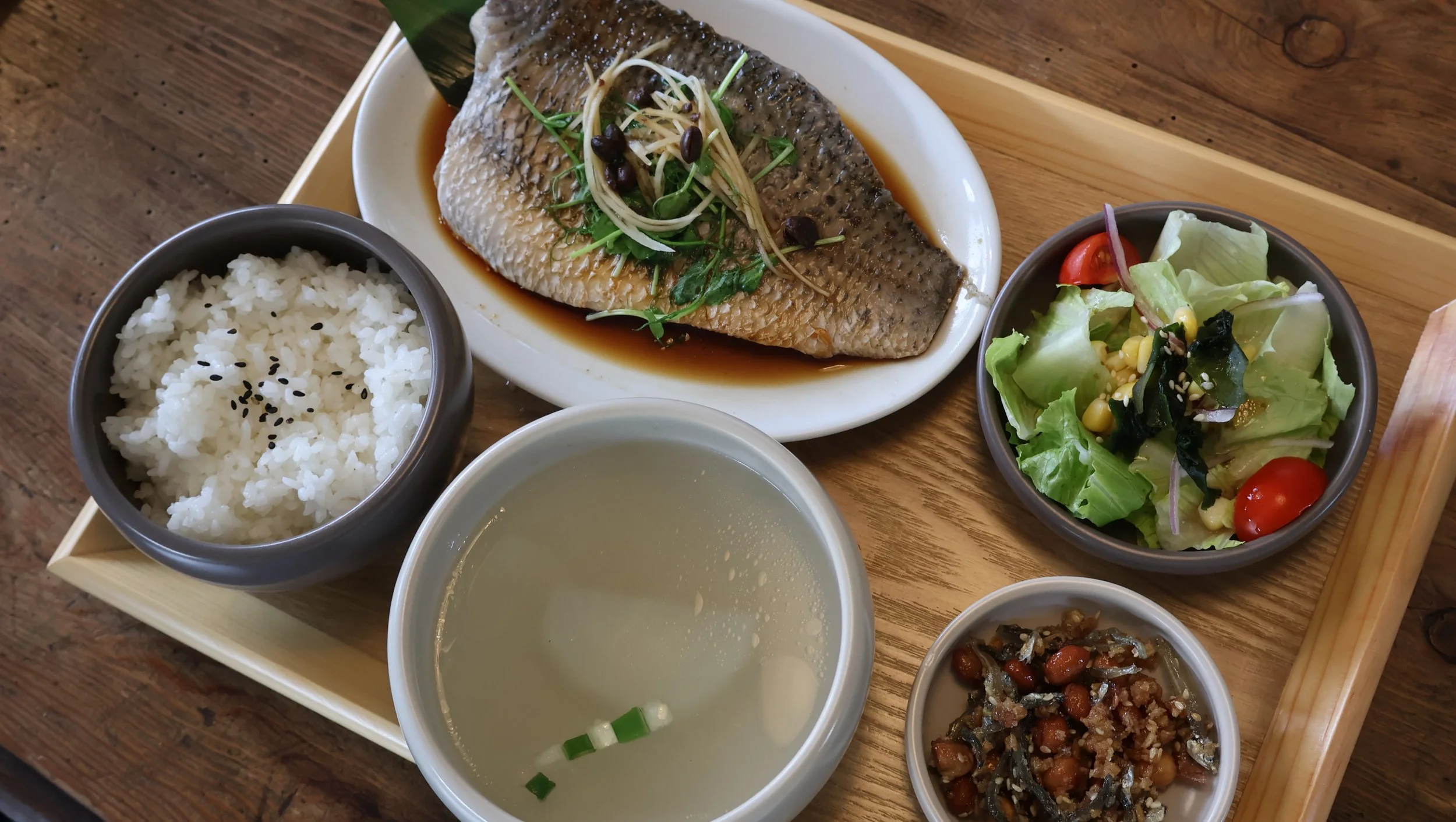
The homemade lunch and desserts are decent. Vegetarian inquiry better call for availability in advance.
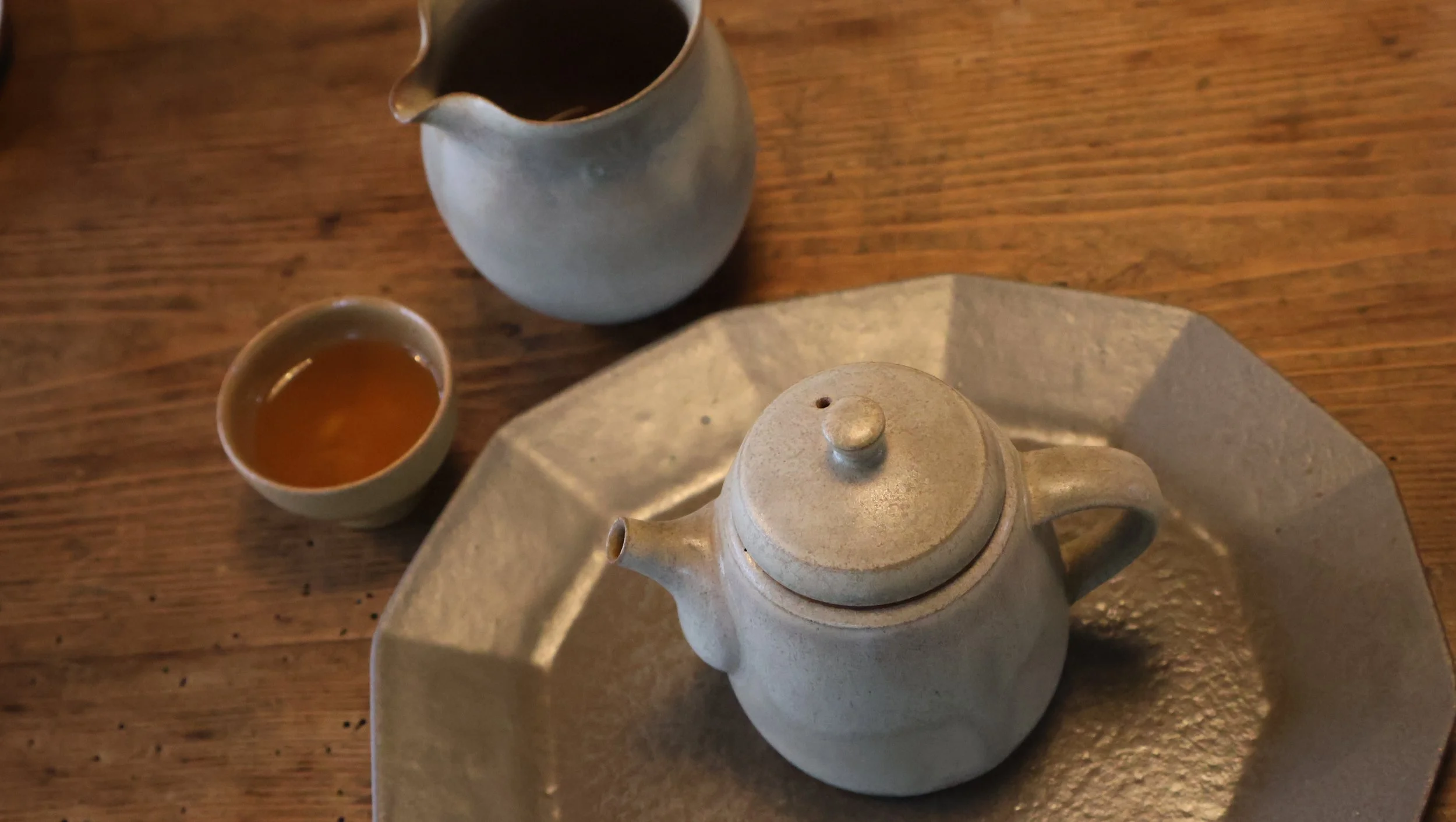
A tea pot set is good to share with friends.
Q&A
What's the best season to visit Maokong?
→ If your priority is tea — seeing harvests and buying spring/winter tea — October through May is the sweet spot. If you're there for flowers and hiking, February through May works better. If you want to avoid heat and rain, skip the June–September afternoon storm window.
How should I plan a Maokong day trip?
→ The T Scout would recommend:
Getting up the mountain: Take the Maokong Gondola (transfer at Taipei Zoo Station), about 20–30 minutes, with mountain views along the way. If you want to ride in a crystal cabin (glass floor), book ahead online — weekend waits can run 30–60 minutes.
Tea Farm Visit: reserve the availability of the tea farmer and step into the tea field to learn the terra.
Lunch & tea: Take Bus BR15 or Maokong Left to Uncle Well’s tea house. Enjoy the lunch and rest yourself with a proper tea time.
Zhinan Temple: Visit the Taoist temple built in 1890 and enjoy the panoramic views of Taipei on a clear day.
Head back down by Maokong Gondola or bus.
If you want a deeper tea experience — picking, processing, guided tastings — book ahead with a specific tea garden, since that adds meaningfully to the time needed.
How much does Muzha Tieguanyin cost?
→ Prices vary widely depending on varietal purity, processing method, growing elevation… — there's no single fixed market rate. As a rough guide. We’d suggest 100 grams no lower than NT500. Worth knowing: A significant share of tea marketed as "Tieguanyin" in the market isn't actually made from the original Zhengcong Tieguanyin cultivar. Before buying, it's worth confirming the varietal directly with the farmer or a reputable seller — otherwise you risk paying premium prices for a generic blend. For an exact, current price, ask the tea garden or shop directly.
I don't have a teapot at home — how do I brew it?
→ Mug (tea: water=5:100). Drop the leaves straight into the mug, pour boiled water (as hot as possible) over them, and let the leaves settle to the bottom for 2 minutes (try not to stir them up). You may adjust the quantity of tea and water and time, and just remember the TIP: Tieguanyin requires high temperature to reveal the aroma!
Written & Photography by: The T Scout 2026© All rights reserved.
