Whenever someone tells me organic tea is overpriced and doesn't taste good, I think of Chen Lu-he's Red Water Oolong. It is the best closing argument there is. Green Light Farm (綠光農園) is an organic tea farm in Pinglin, New Taipei, inside the Feitsui Reservoir watershed. Retired tea farmer Chen Lu-he runs it with his son, Chen Yi-tai. They grow Chin-Shin Oolong, Jin Xuan, Ruby and other cultivars under organic, grass-covered cultivation, make Baozhong, Oriental Beauty and Red Water Oolong, and offer bookable tea-picking, tea-making and tasting experiences.
The doubts about organic tea are not unfounded. On a farm that uses no pesticides, the leaves have to be shared with insects. Without chemical fertilizer, yields often drop to a third of a conventional farm's, and the leaves are thinner, enough to make even a seasoned tea maker frown. Over time, "organic means healthy, but not tasty" has become settled opinion for many drinkers. But put a cup of Red Water Oolong in front of them, its liquor a clear amber-orange, smooth and sweet on the finish, and that opinion gets hard to defend.
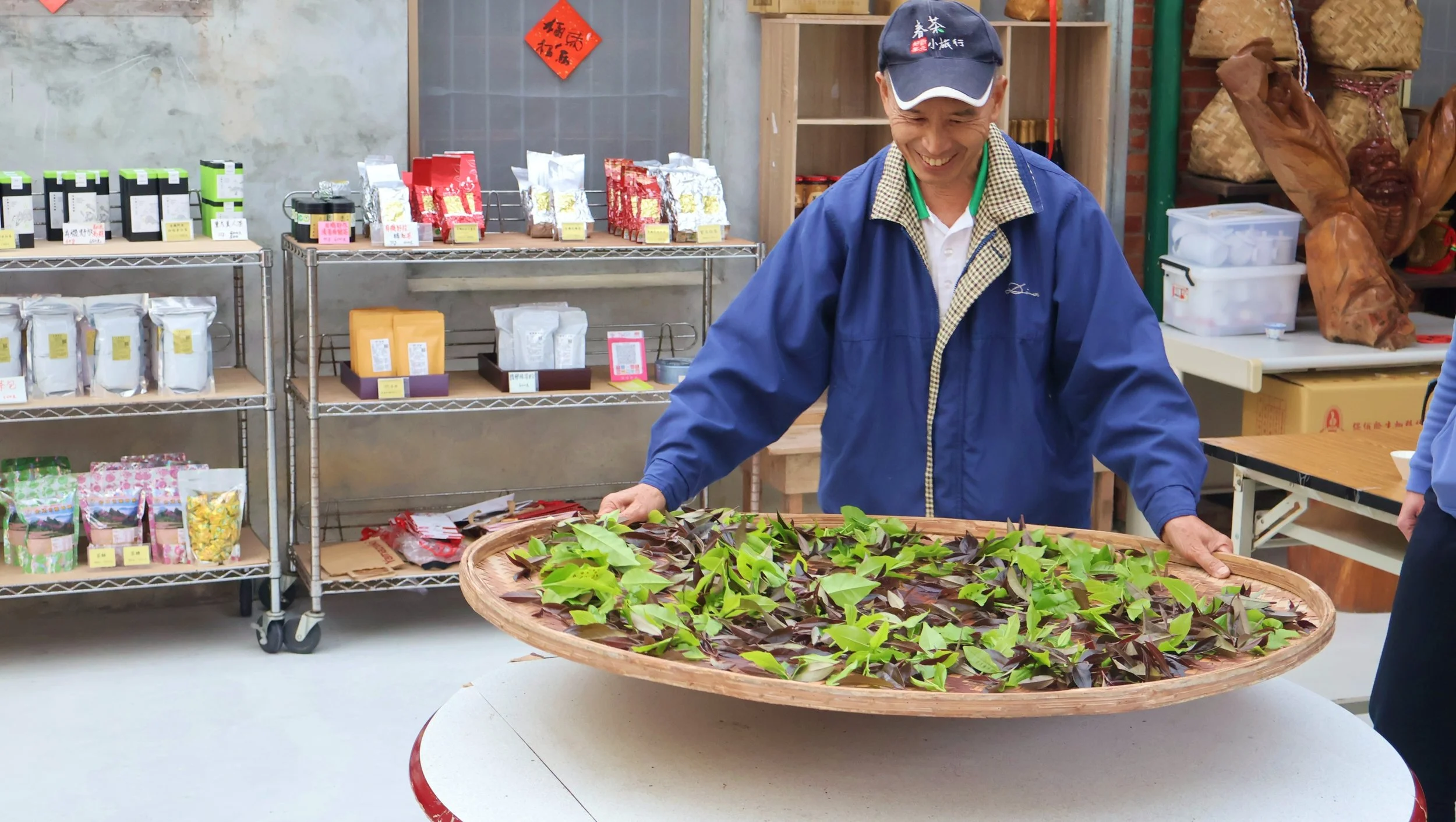
Now 70, Chen Lu-he has spent twenty years back home in Pinglin and has never wavered on sustainable farming.
Coming Home to Grow Organic Tea: Chen and the Feitsui Reservoir
Chen Lu-he comes from a family that has grown tea in Pinglin for generations. He left the mountains after junior high to make a living, and worked at Panasonic until he retired. In 2006, at fifty, he came home with more than NT$4 million in retirement savings. He did not spend it on a quiet retirement. He put all of it into organic tea.
Pinglin lies in the watershed of the Feitsui Reservoir. Every drop of pesticide and every handful of fertilizer on its slopes can wash into the reservoir with the rain, and from there into the taps of Greater Taipei. Chen wanted to protect his hometown's water, so he chose the hardest path. Neighbors called him a fool. Even his son thought his father was being naive at first.
He started with his family's own 0.3 hectares, then leased conventional tea gardens one by one and converted them to organic. Some landlords took their land back, and he had to start over elsewhere. Today he farms about 3 hectares. He is also a partner farmer in the Tse-Xin Organic Agriculture Foundation Project, working alongside other Pinglin growers who use their tea gardens to protect the water supply.
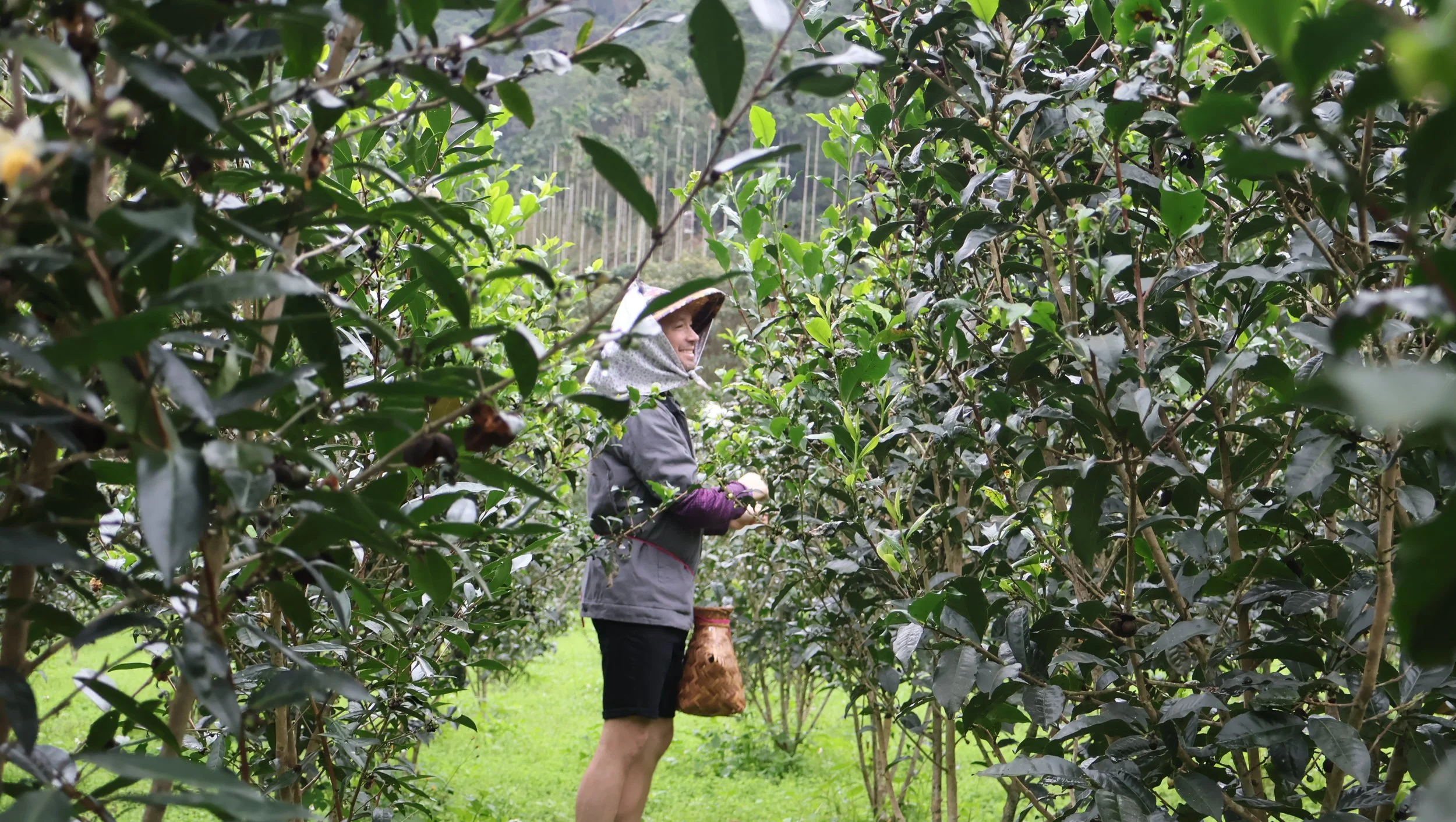
Chen leaves some tea bushes unpruned. These Ruby plants are only five years old, yet already tall enough to swallow a person.
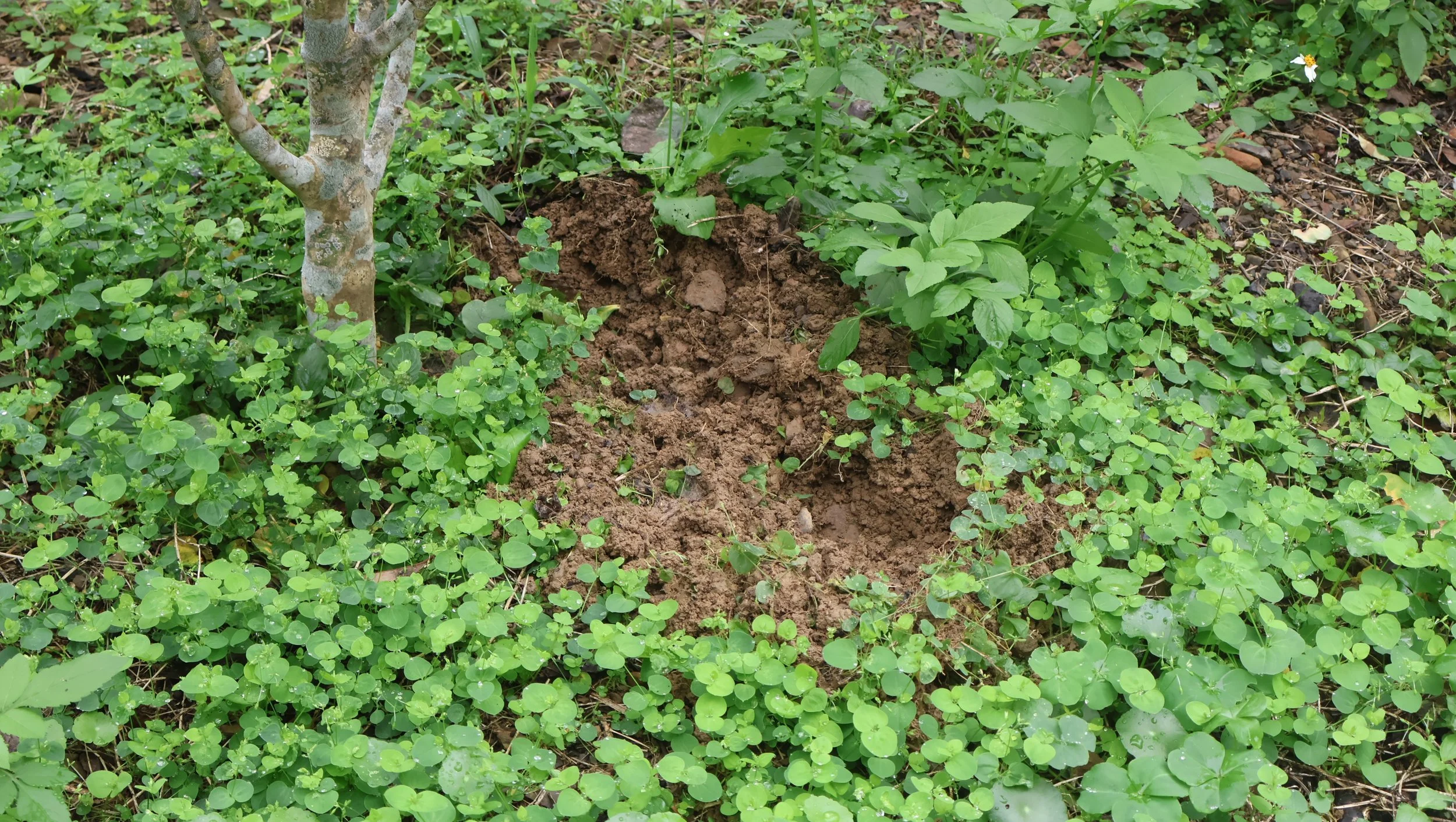
A visitor in the tea garden. Which small animal left these traces?
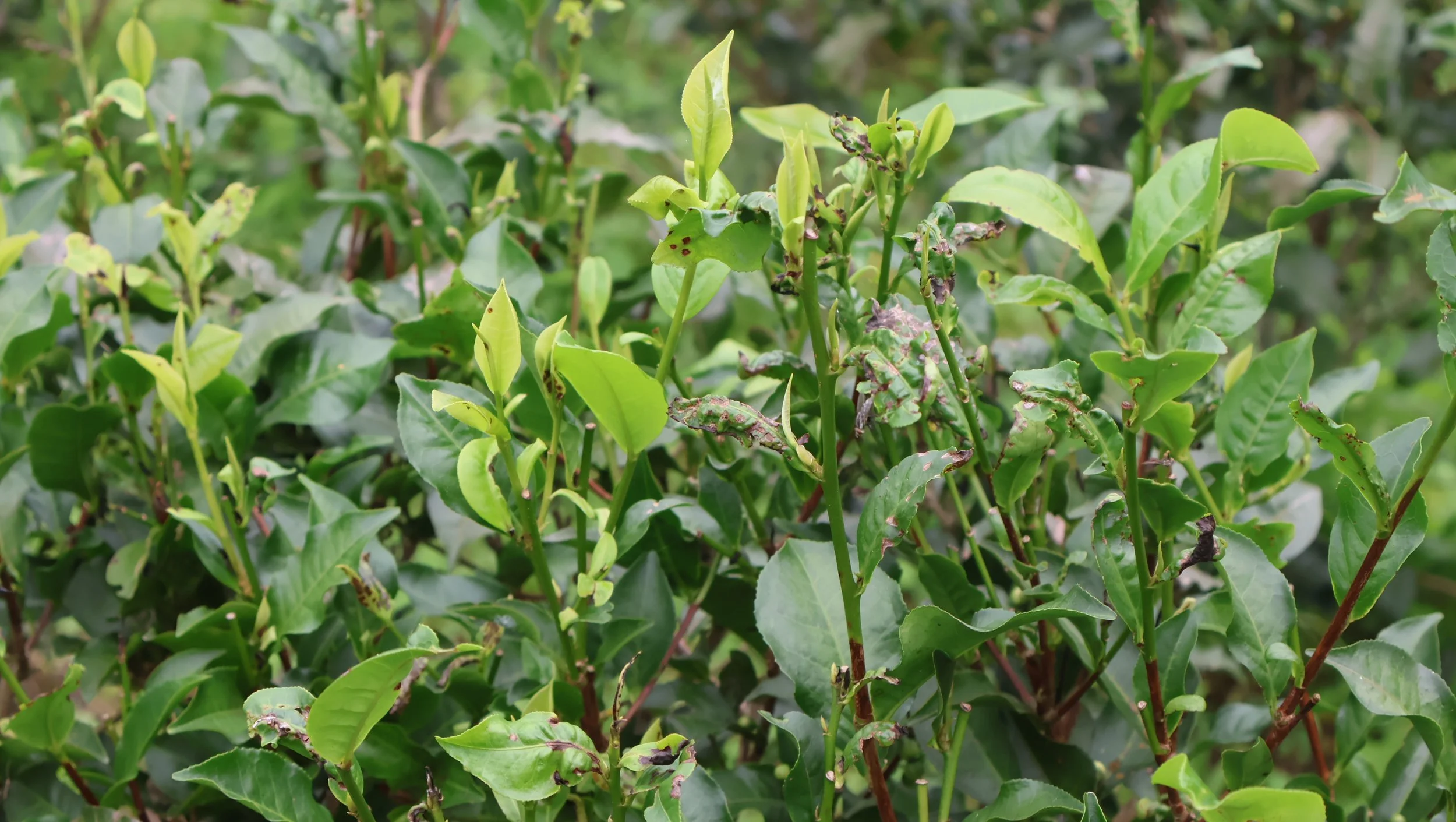
Without pesticides, insect damage is a common sight on organic tea bushes.
Sod Culture Tea Meets Taiwan's Emerald Tree Frog
Walk into Green Light Farm and the grass grows thick between the tea bushes. That is deliberate. Grass cover holds water, protects the soil, and shelters insects and small animals. Organic fertilizer goes on only once a year, so the tea plants send their roots deep on their own.
Chen is known locally as the "Frog Prince." Tea farmers often leave blue plastic barrels by their fields to catch rainwater and wash equipment, and small animals that come to drink often fall in and drown. Chen moved his barrels into the shade and drilled a hole at the 80% line to keep the water level down. He propped branches inside as escape ladders and dropped in leaf litter to feed insects. The blue barrel became a "frog bathtub," and the emerald tree frog, found only in Taiwan, began breeding and calling there.
Reeves's muntjac, Formosan pangolins, Taiwan blue magpies and Swinhoe's pheasants have all become regular visitors. If organic tea needs a defense, these animals are its most honest witnesses.
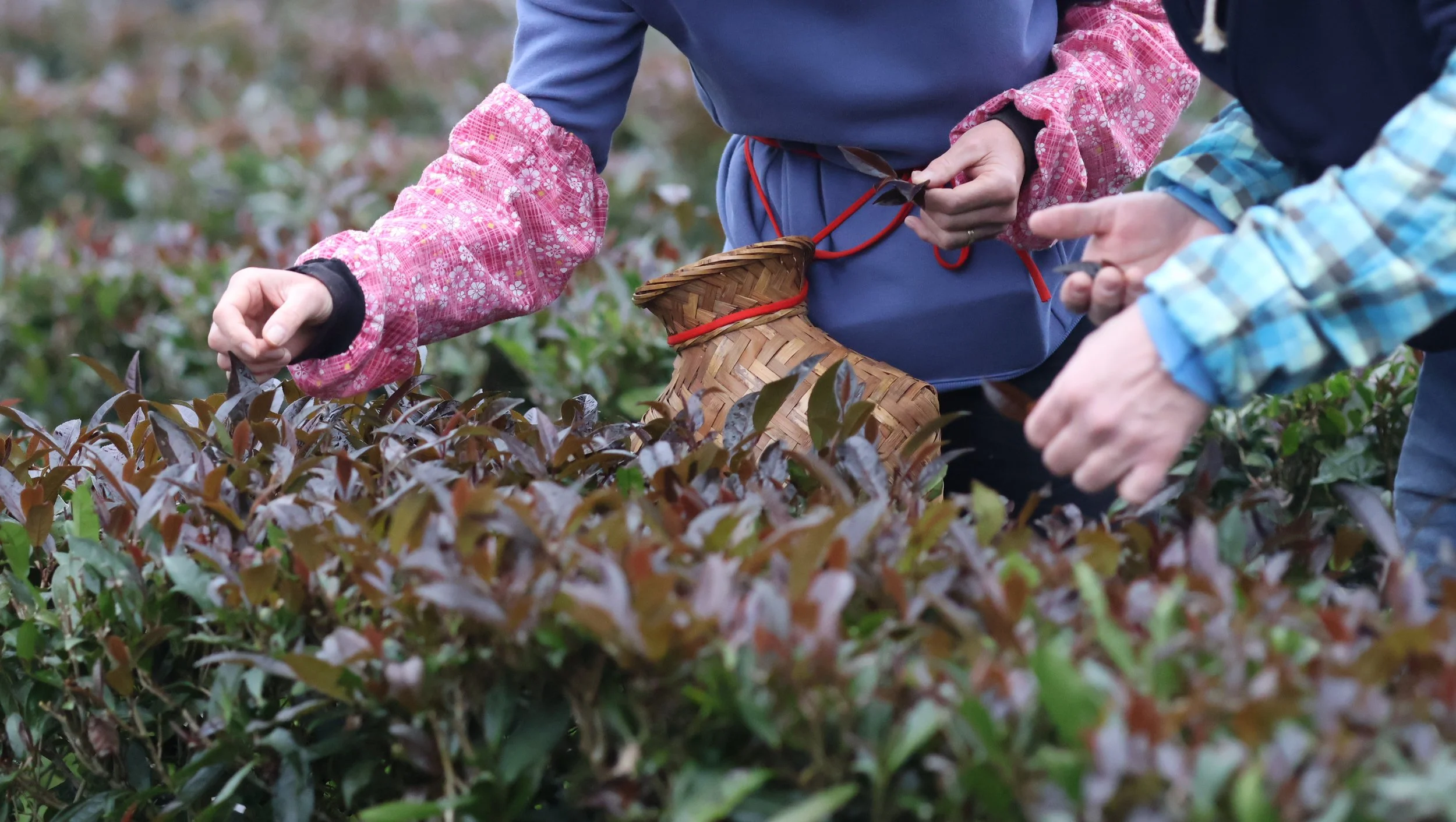
Organic Tea Can Taste Great
Green Light Farm grows Chin-Shin Oolong, Jin Xuan, Qinyu, Bai Rui Xiang, Ruby, Ziyu and other cultivars. It makes green tea, Baozhong, Oriental Beauty, white tea and black tea, as well as Red Water Oolong.
Red Water Oolong grew out of the old way of making Dong Ding Oolong. Chen's method is to take the oolong, after the leaves are fixed, through part of the black tea process. The first time I tasted it, ripe fruit and the cultivar's own aroma opened slowly on the palate. It was smooth going down, left a clean sweetness in the throat, and still had flavor deep into the later steeps. In that moment I understood that whether tea tastes good has never been about whether it is organic. It is about whether someone is willing to spend the time to care for a piece of land.
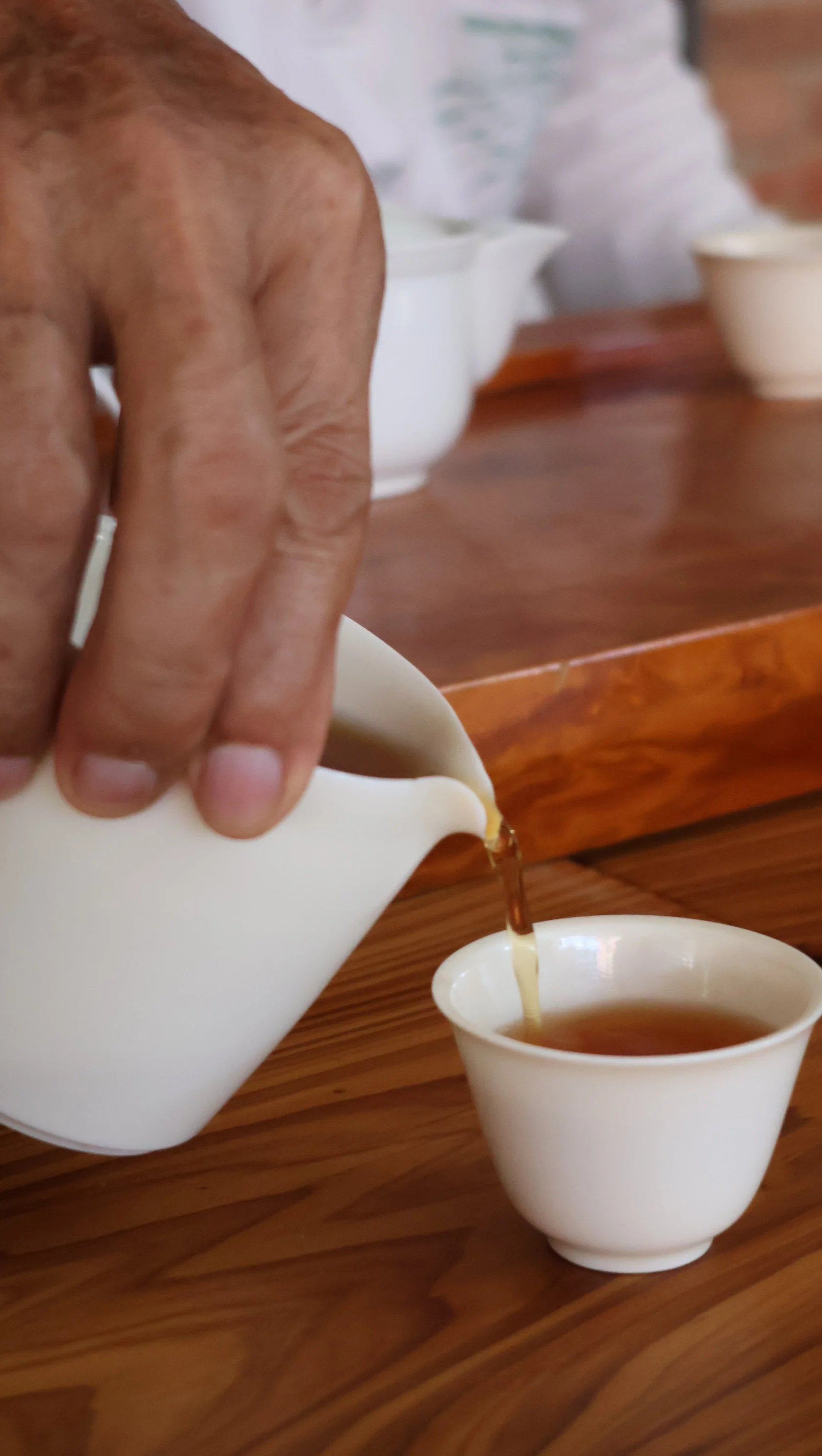
Red Water Oolong takes time and skill. Fewer tea makers still make it, so it is hard to find.
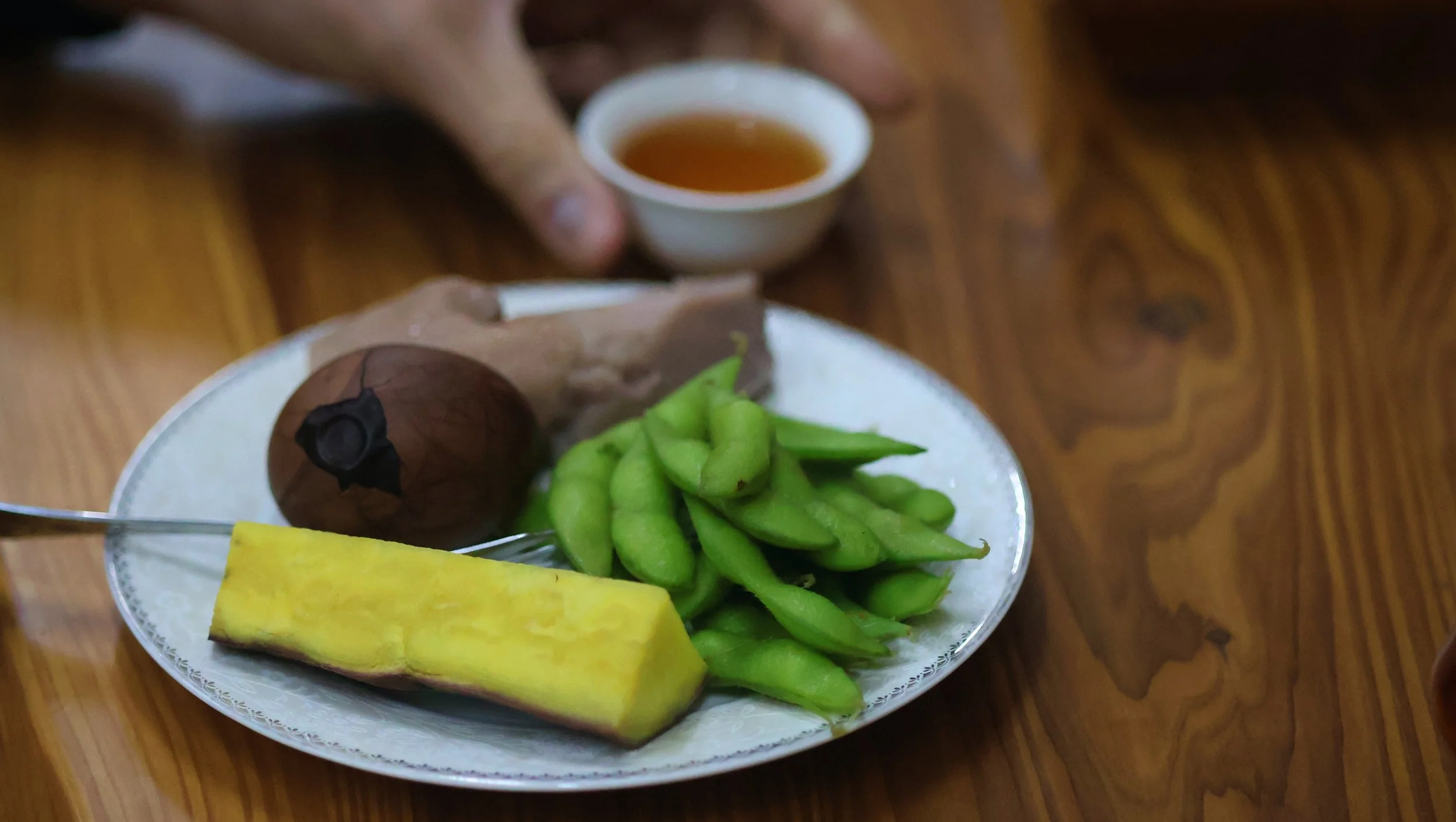
Chen’s wife prepares the tea snacks with unprocessed ingredients, and every one is delicious.
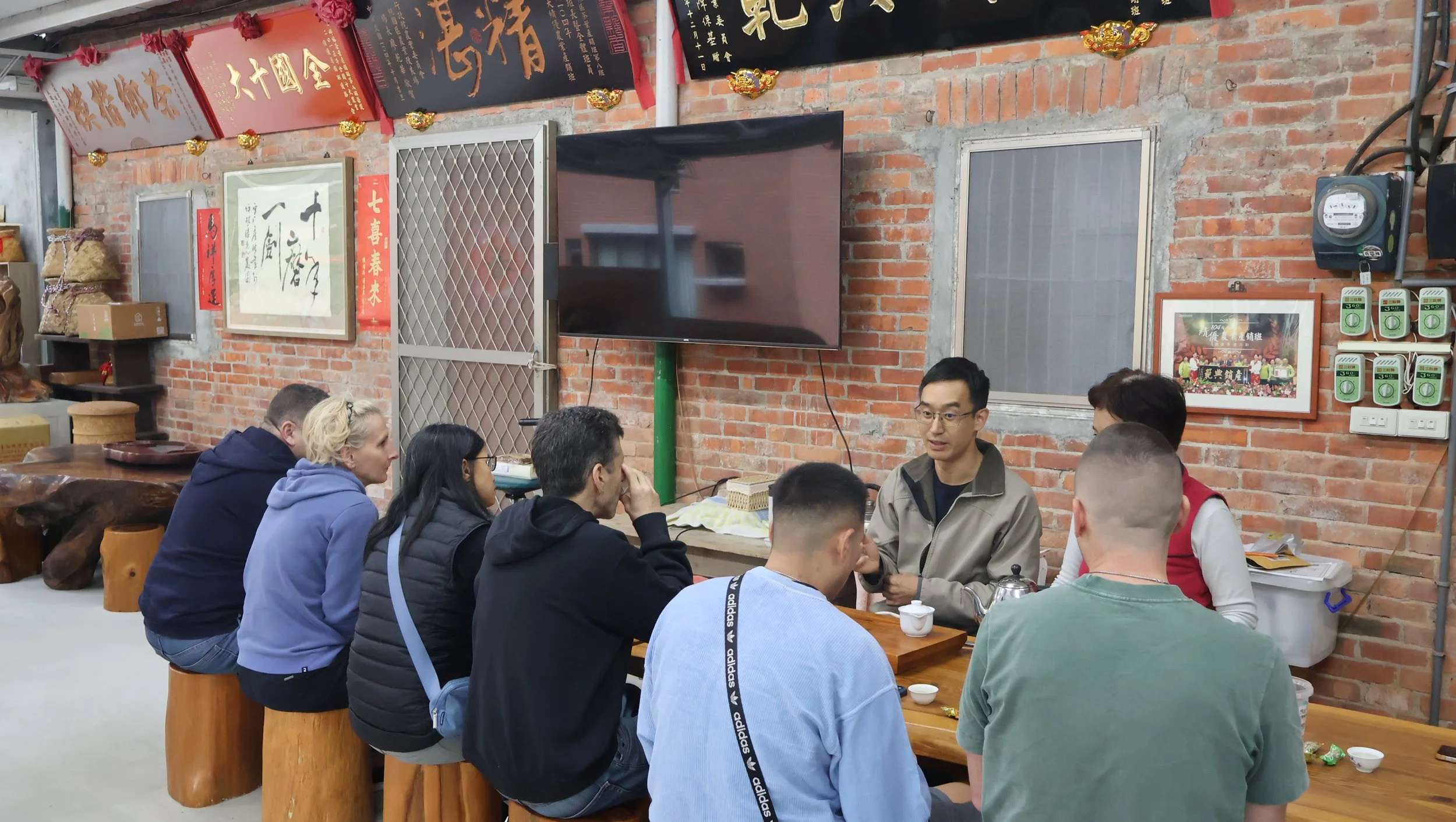
Chen’s son Yi-Tai shares the tea knowhow during tea tasting time.
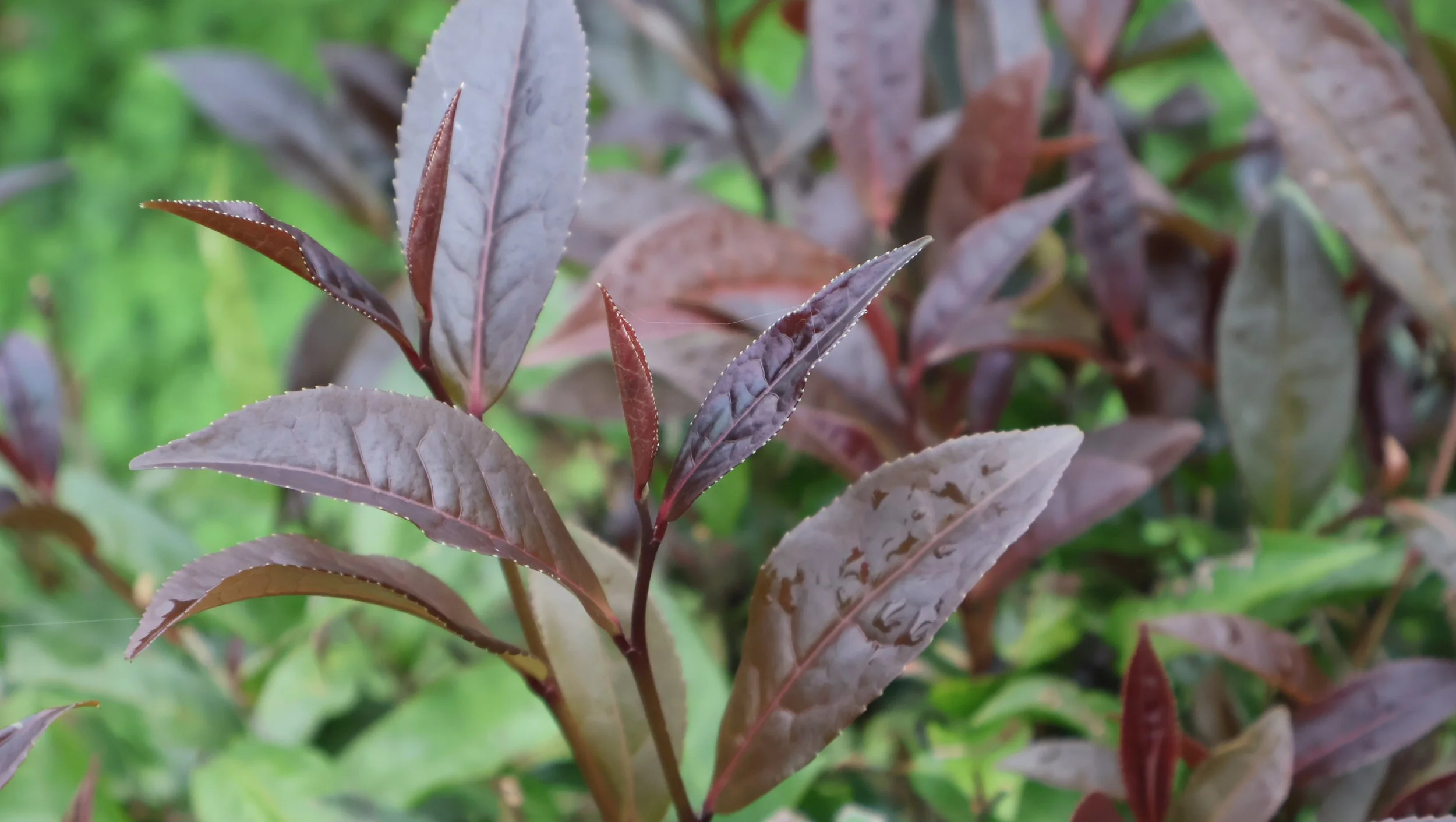
Today Chen Lu-he runs Green Light Farm with his son, who came back home to join him, and the farm has opened Pinglin's tea hills to more international travelers. Visitors can pick, make and taste tea: put on a bamboo hat, pluck the young buds, help make the tea, then sit down for a cup. Only then do you really understand the strength behind a pot of organic tea.
Next time someone says organic tea doesn't taste good, don't argue. Take them up to Pinglin and brew a pot of Red Water Oolong.
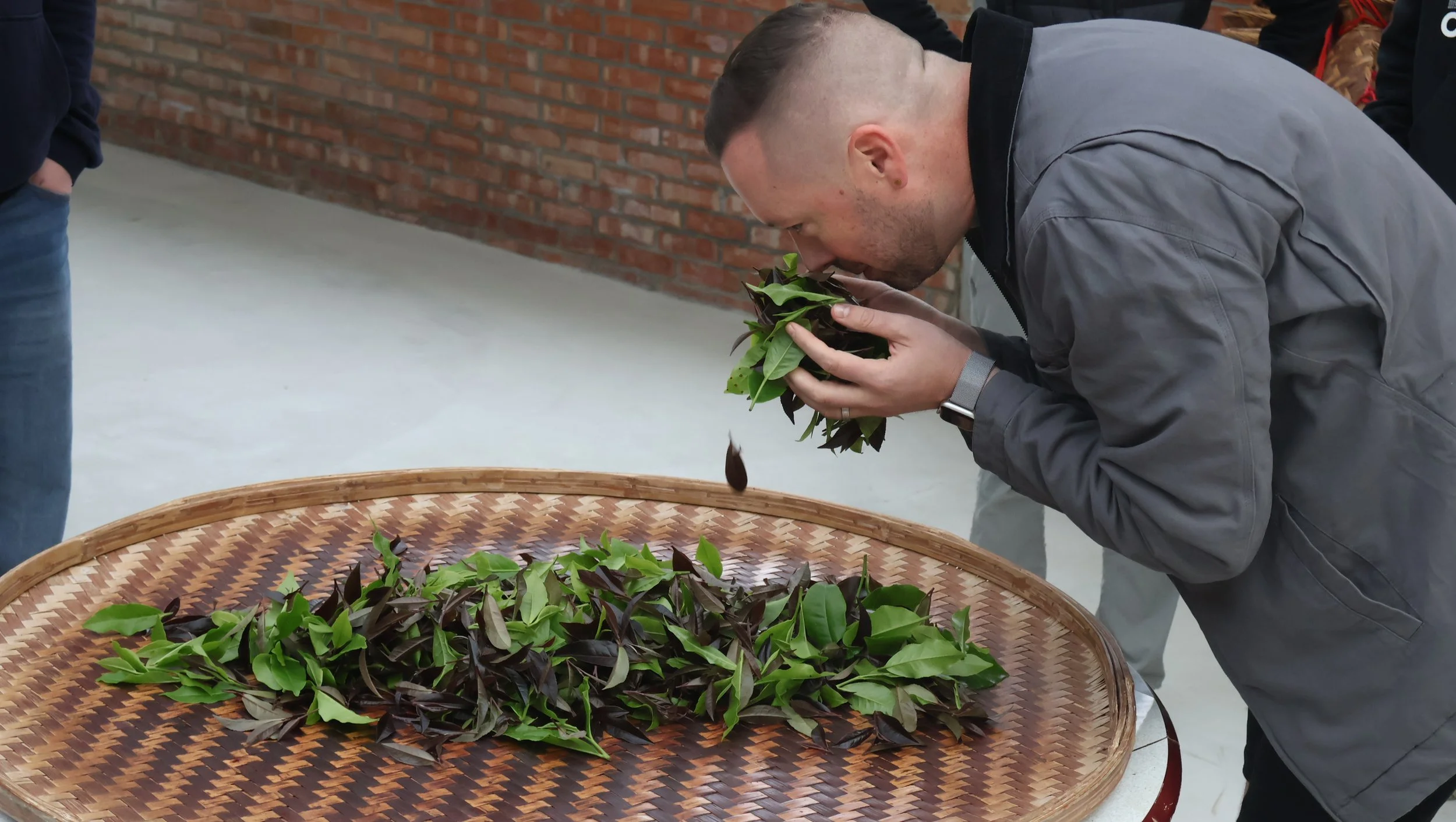
After picking, visitors try tossing the fresh leaves, a step called langqing that starts oxidation.
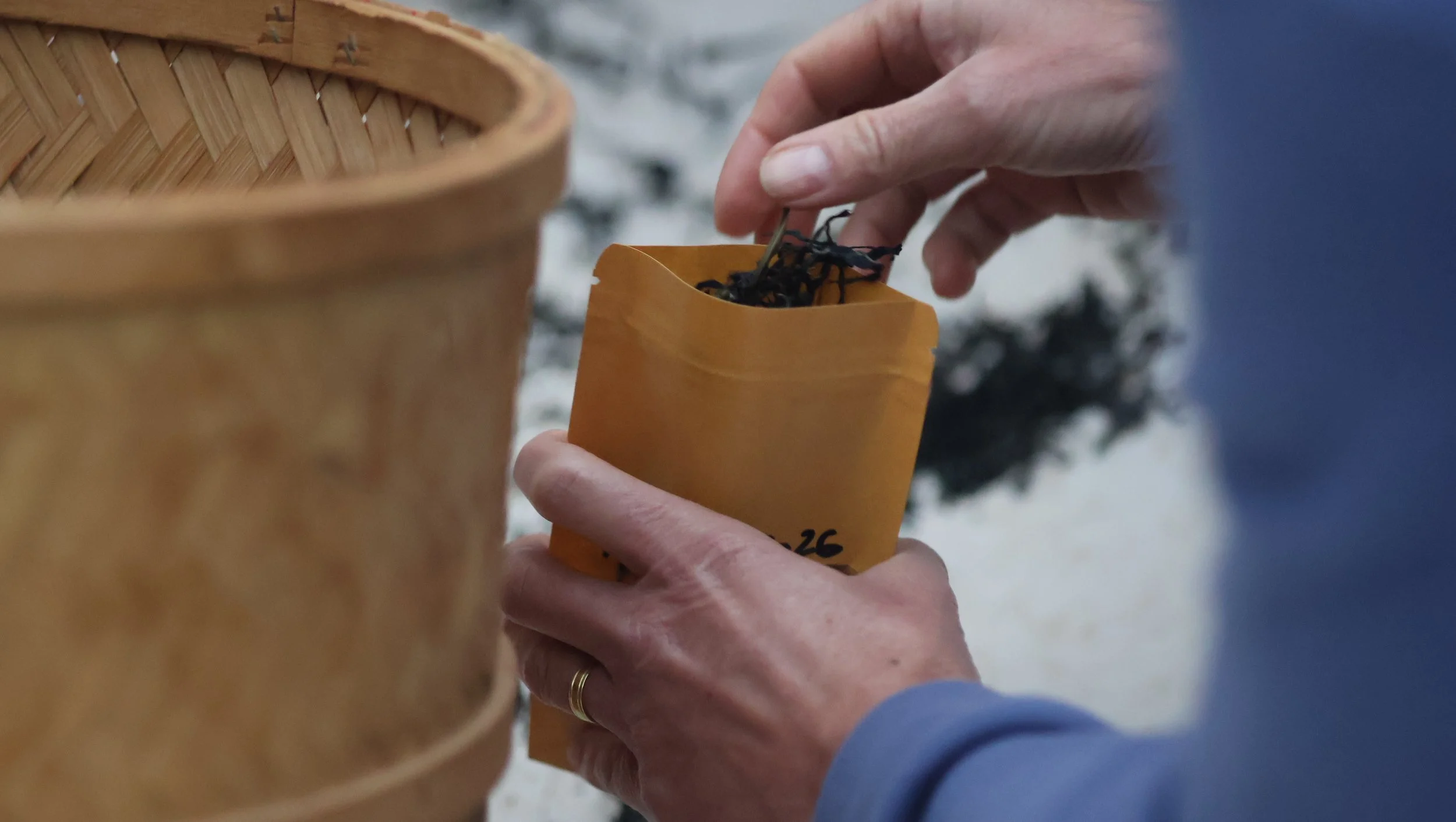
Visitors bag the tea they made and take it home.
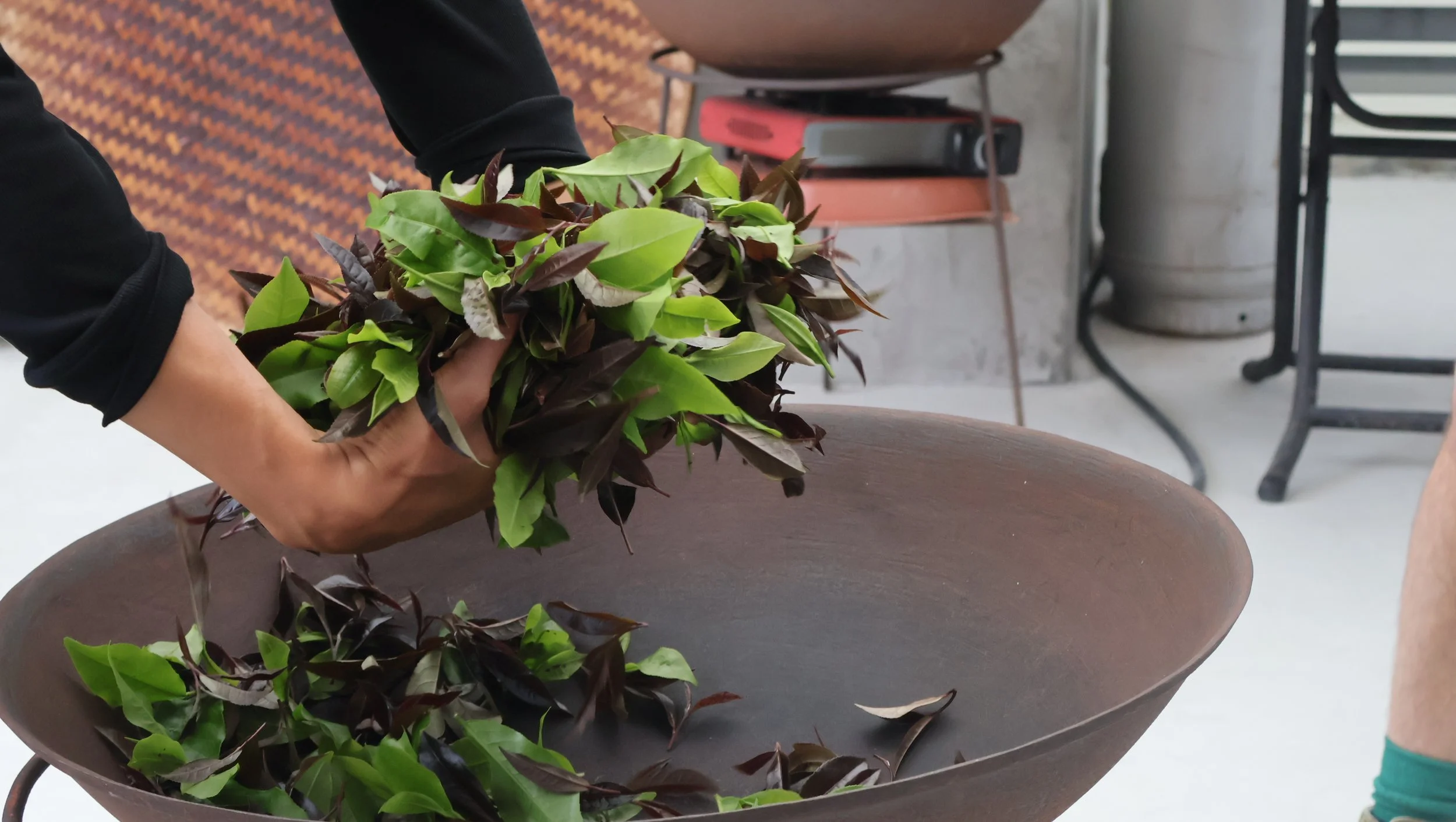
Pan-firing the leaves by hand the traditional way fills the room with the aroma of tea.
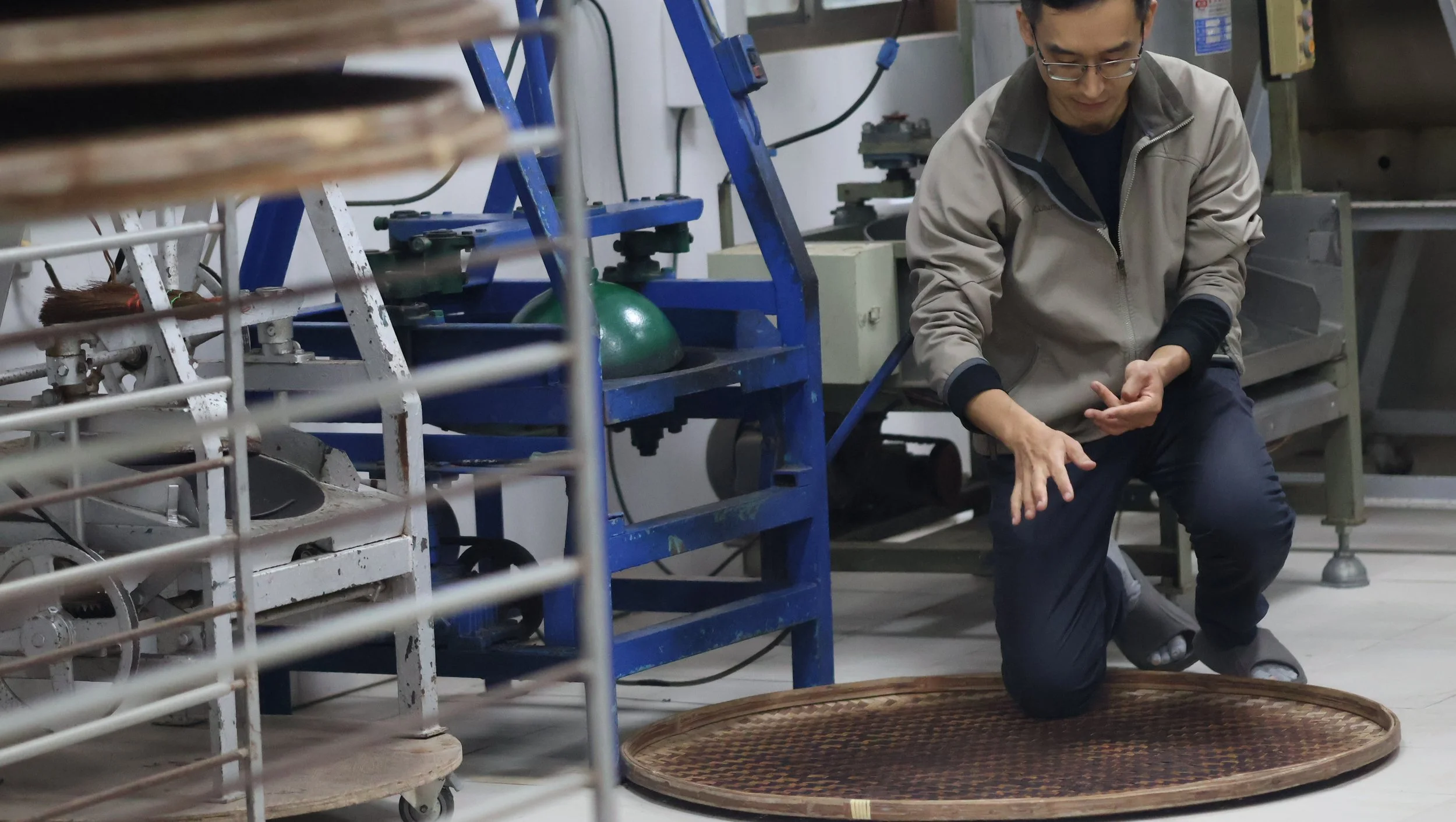
Chen Yi-tai explains each step of the tea-making process in English.
FAQ
Where is Green Light Farm, and how do I get there from Taipei?
→ The farm is in Pinglin District, New Taipei City. By car, it is about 5 minutes from the Pinglin Interchange on National Freeway 5. By public transport, take bus 923 from MRT Xindian Station to the Pinglin Junior High School stop. Pick-up can be arranged in advance.
What does the tea-picking and tea-making experience include, and how long is it?
→ You pick tea, help make it, and taste organic tea with tea snacks. You take home a small bag of the tea you helped make. The whole experience takes about 2.5 to 3 hours.
What are the time slots, and do I need to book?
→ Booking is required, through the online form on the farm's website. Sessions run 9:00 am to 12:00 pm and 1:30 pm to 4:00 pm.
Can I buy tea at the farm?
→Yes, cash only. The farm sells its own organic teas, plus snacks flavored with organic tea powder, such as popcorn and peanut brittle.
Who is Green Light Farm best suited for?
→ Travelers who are interested in tea, who care about organic farming and can spare a full day in Pinglin. There are no grand vistas staged for social media here, such as high mountain or fancy tea ceremony. What you get is a clean, decent, thoughtfully set tea table and comprehensive tea knowledge with hands-on experience.
What’s the extra service if I book the tea tour from The T Scout?
→ We emphasize offering comprehensive tea knowledge, Taiwan tea histroy with proper tea tasting, so there would be a 1.5-2 hr tea ceremony hosted in a private tea house after(or before) your Greenlight tea farm visit. The whole session conducted in English.
Written & Photography by: The T Scout 2026© All rights reserved.
