Alishan・Tea Tasting with a Champion Tea Maker &Judge
Alishan Win (飲山郁) is a rose-greenhouse tea house in Shiding (隙頂), Fanlu Township, Chiayi County, at the 55.6 km mark of the Alishan Highway. It is run by tea farmer Huang Chang-Sheng (黃昶升) and his wife. Huang is the second generation of Shengli Farm (生力農場), a long-established local tea farm. He has placed third in Taiwan’s national tea-making competition and won the Greater Alishan Light Oolong tea-making competition, and he judges the Alishan High Mountain Tea competition. Ten years ago, the couple launched their own brand, Alishan Win. Its signature is a high mountain oolong scented with roses they grow themselves.
The tea is reason enough to come. The conversation is better. Huang makes tea, judges tea and sells tea. If you want to understand how Taiwan’s tea industry works, one afternoon at his table will show you most of it.
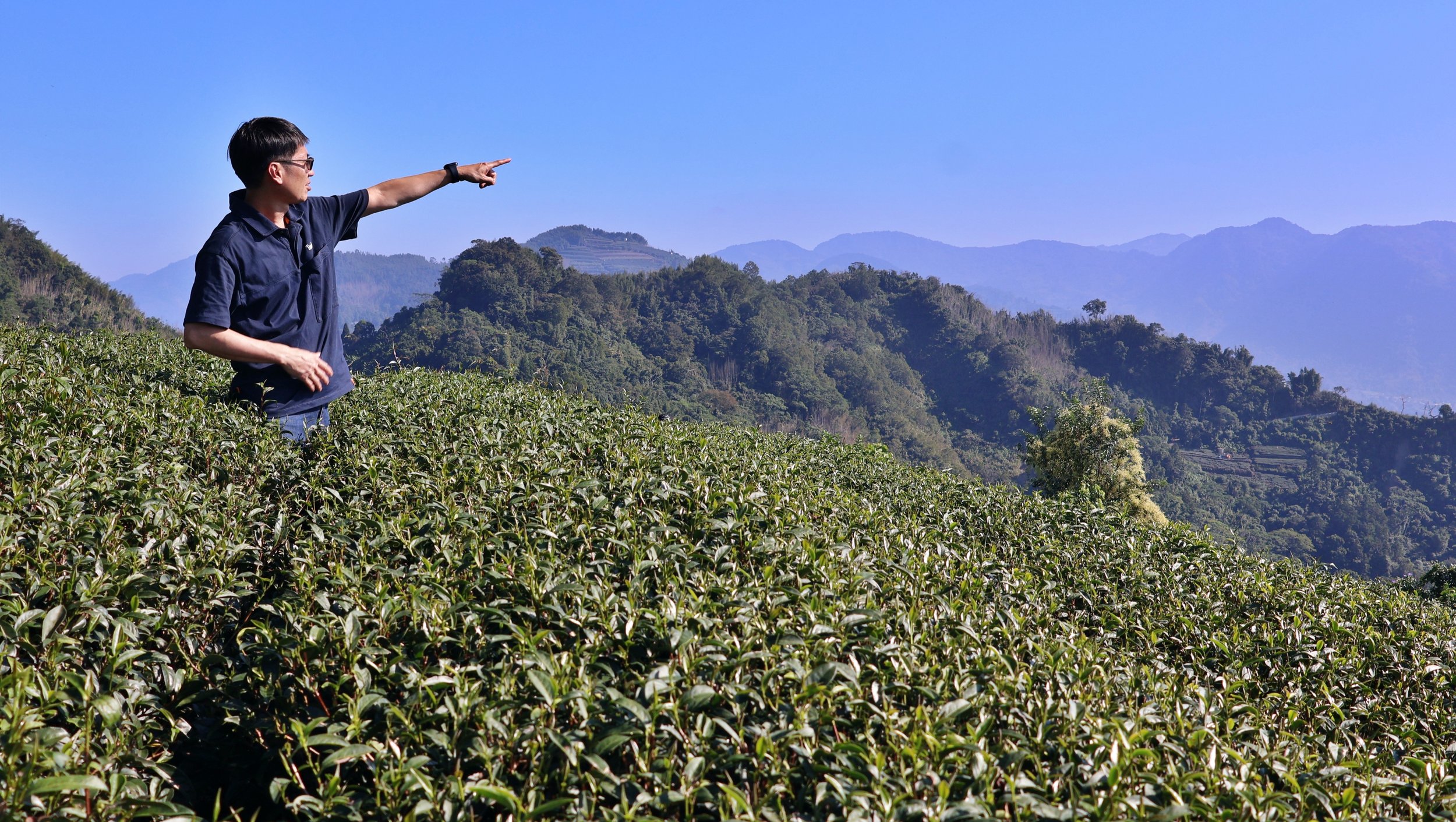
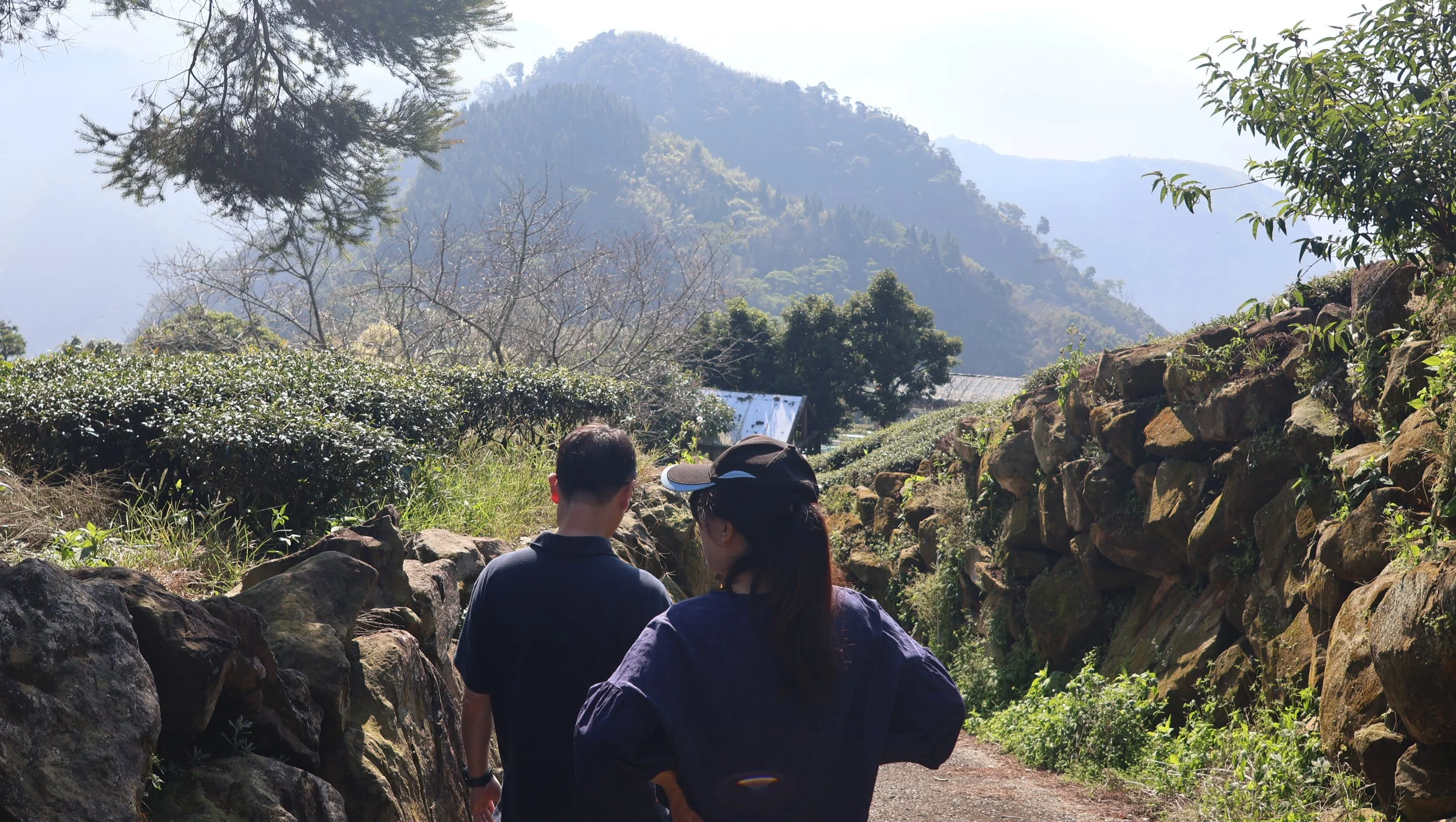
On a clear day, Huang’s tea garden looks out as far as Yushan (Jade Mountain), Taiwan’s highest peak.
The Path of Returning to Alishan
Huang was born into a tea-making family in Fanlu. He and his two brothers all grow and make tea. Their father taught them as children, and he grew up surrounded by the smell of tea. In 2005, after graduating in international trade from Tamkang University, he went back to the mountain. He knew how people saw a trade graduate going home to farm tea. His own expectations were just as high. Both weighed on him.
His first years making tea were hard, he admits. The theory he learned at the Tea Research and Extension Station rarely matched the calls he had to make at the withering racks. Weather, leaf and oxidation follow principles in books. In practice, he kept meeting exceptions. His father could pass on experience, but not always the reasons behind it. So Huang learned from his mistakes, and kept making tea while he learned.
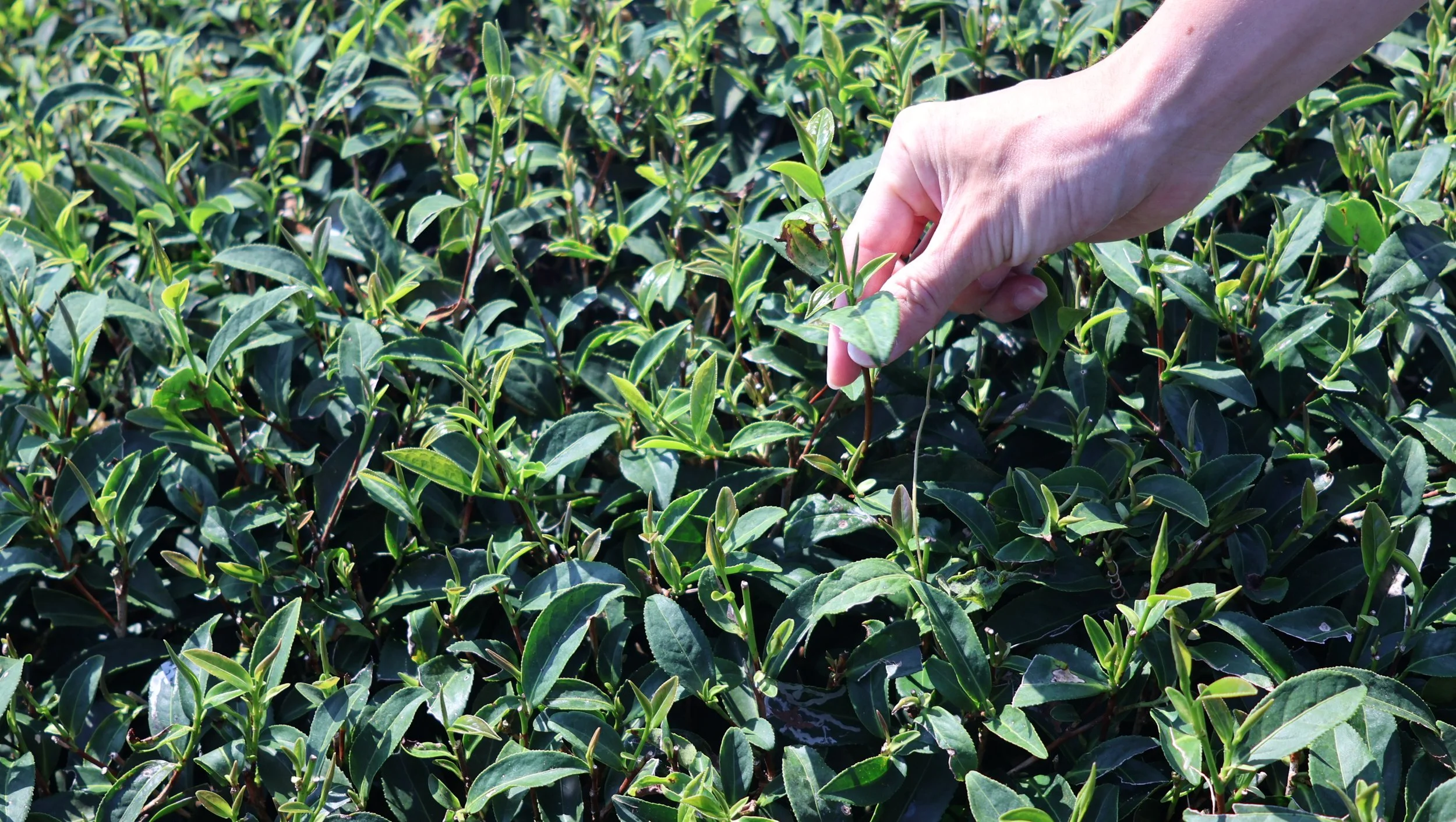
The garden faces south, with full sun and dark, fertile soil, which gives thick, high-quality leaves.
How Are Taiwan Tea Competitions Judged? Why Competition Tea Matters
Taiwan holds official tea competitions every year. They are organized by township farmers’ associations, the Tea Research and Extension Station or tea merchants’ associations. Judges are selected and certified through a strict official process. They score each entry on appearance, aroma, taste and liquor color, and eliminate entries round by round. The organizer then seals and packages the winning teas in uniform official packaging.
Competitions matter to both the market and the farmer. For the market, they set a benchmark for top-grade flavor and a reference point for pricing, which keeps prices stable. For the farmer, they help sales directly. Judges pick roughly the top 5% from more than a thousand entries, so winning is real recognition of a tea maker’s skill. For Huang, it was a competition win that first gave him a sense of achievement.
That came in 2014, when he won a first-class award in the Meishan Township Farmers’ Association winter oolong competition. He had been back on the mountain for nine years.
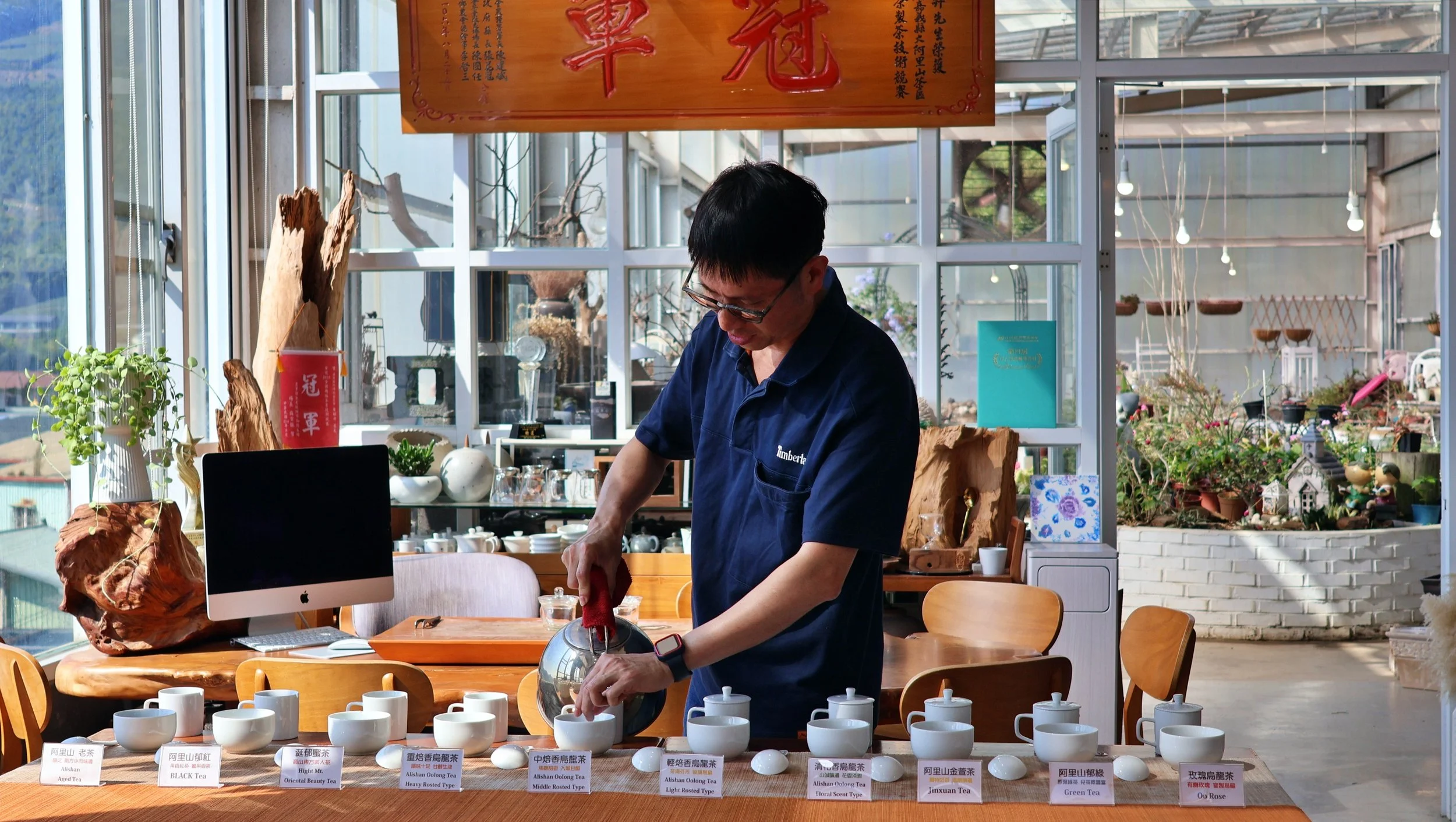
Huang sets out ten teas side by side, from light to heavy oxidation, for guests to taste.
From the National Tea-Making Competition to Greater Alishan Champion
The awards kept coming. In 2022, he placed third in the rolled-oolong division of Taiwan’s National Partially Fermented Tea-Making Competition, against 39 of the country’s best tea makers. The same year, his Qingxin oolong won in the Taiwan Tea Assortment & Grading System (TAGs) evaluation for the second year running. In 2025, he won a first-class award in Taiwan’s small-leaf black tea competition. In 2026, he won the Greater Alishan Light Oolong tea-making competition, one of the highest marks of technical skill among tea makers.
The more he wins, he says, the more cautiously he competes.
The more he cares about rank, the more clearly he sees where he might slip, and that keeps him from surpassing himself. First-time competitors carry no baggage. They dare to work right at the edge, and sometimes break through without meaning to. Experienced winners know where the mistakes hide, so they steer around them and stay where they are. The task he now sets himself is to challenge himself, not to defend a ranking.
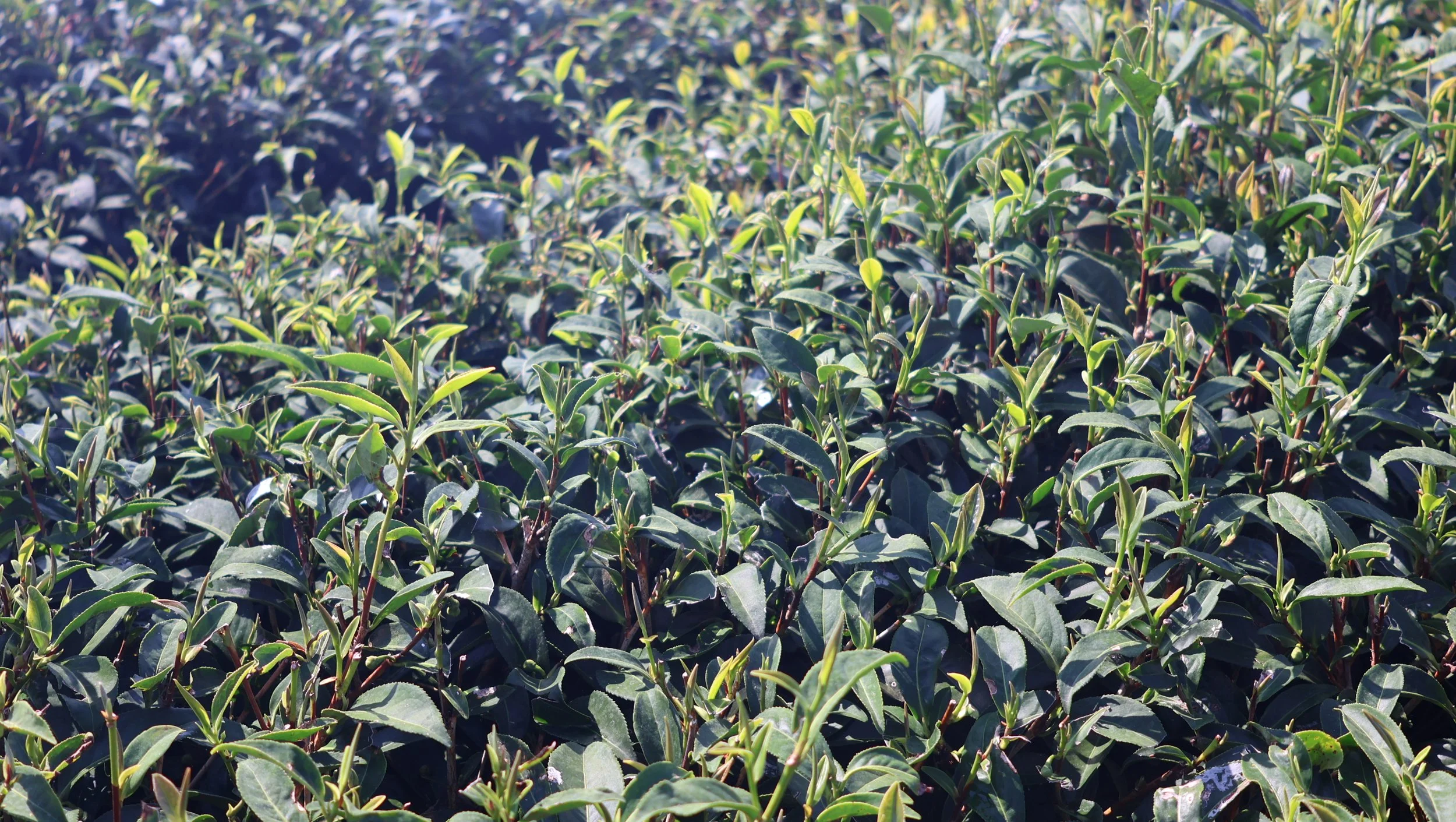
Young tea plants just putting out their first buds, lively and healthy.
From Tea Maker to Tea Judge: Why Great Tea Starts in the Garden
Today Huang also sits on the judging panel. He is a first-round judge for the Alishan High Mountain Tea competition and a judge for the Alishan tea region’s specialty tea evaluation. A tea maker knows how a cup goes wrong. A judge spots the flaw in the dry leaf. Having worked on both sides, he reads tea differently from most farmers.
In his view, the closer a factor is to the source, the more it decides the quality of the tea. First comes the growing environment: the garden’s altitude, the richness of its soil and its exposure to the sun. Next is the farmer’s control over fertilizing and pruning. He aims for value, not volume, so the leaf has the body to carry through into the cup. In processing, the first step, sun withering, sets up everything that follows in controlling oxidation. To make the tea he likes, he and his wife built their own brand, Alishan Win, pairing a tea house with a rose greenhouse. The edible roses are grown organically and used to scent their high mountain oolong. The tea takes on the floral aroma and gains another layer of sweetness.
Huang and his wife, Ya-Ting, work side by side for Alishan’s tea industry.
The Alishan Win Tasting: 10 Alishan Teas Tasted the Way Judges Do
At Alishan Win, you can taste ten teas side by side using the competition method: 3 grams of leaf in a 150 ml white porcelain cup, 100°C water, steeped for 6 minutes. Moving across oxidation levels, you taste light, medium and full styles, then roasted teas, aged teas and rose-scented teas. You then choose two or three, and the host brews them properly in a teapot. You talk with the owner across the tea table and come away with a full picture of Taiwan’s tea industry.

Competition-style cupping is a good start for tea beginners. Tasting this way builds a solid first framework for understanding tea.

Experience 10 types of tea tasting at Alishan Win and enjoy the properly brewed after the tasting.
The Estate Path is The Future of Taiwan Tea
Huang is clear about where Taiwan tea should go: the fine-estate path. Compete on the conditions of each garden, the quality of each batch and a traceable source, not on volume. It is a slow road, but the direction is clear. Every cup you drink at Alishan Win is a step along it.

Choose your two or three favorites from the cupping, and the farmer brews them properly for you.
Q&A
Where can I taste tea in Alishan?
➙ Tea tasting in Alishan centers on the Alishan Highway (Route 18) and the tea areas around it, including Shizhuo, Shiding, Meishan and Leye. Drinking tea directly with a farmer is one of the real pleasures of traveling in Taiwan. Most farmers are warm and welcoming, and you learn about tea first-hand. These are our recommended farmers who speak English, but do make reservation in advance:
Shiding
Shengli Farm (生力農場): A long-established tea garden and factory with more than 35 years of history. It offers tea-picking experiences (not during Nov-Mar) and tea factory tours.
Alishan Win (飲山郁): A quiet tea house set in a rose garden with mountain views. It offers tastings of Taiwan high mountain teas, oolongs and competition-grade teas. The space is the most comfortable one.
You Ming Tang (銪茗堂茶園): Run by a national tea-making competition champion. The owner is humorous and chill. He offers cupping session and simple tea ceremonies.
Shizhuo
Drizzle Tea Factory (小山霂茗): Runs a traditional old house as B&B. You can book tea garden tours and tea ceremonies, with in-depth explanations of high mountain oolong.
Wu Zuo Tea (悟佐茶): Also runs a simple Airbnb. The young couple who run it both introduce the tea garden and tastings in English.
Meishan: The T Scout’s best recoomendation Tea Gong Zu (茶供足)
Inside Alishan Forest Recreation Area: Tea Field No. 35 (茶田35號)
Where is Alishan Win and how do I get there?
Landmark: Alishan Win sits next to the Shiding Xiangshan viewing platform, directly across from Shengli Farm.
By bus: From Chiayi HSR Station, take the Taiwan Tourist Shuttle Alishan Line A from Exit 2, Platform 7. Get off at Shiding stop. The ride takes about 70 minutes (fare about NT$180), and Alishan Win is a 8-minute walk from the stop.
By car: Navigate to “Shengli Farm” or the “Shiding Xiangshan viewing platform”. The platform has about five free parking spaces.
What is a competition-style cupping?
The standard setup is 3 grams of tea, 150 ml of water at a full 100°C boil, and a 5–6 minute steep. It shows the tea in its raw, unflattered state, so its strengths and flaws are easy to read.
You assess the shape of the dry leaf, the aroma of the dry leaf, the color and aroma of the liquor, the taste, and finally the infused leaves. Together they tell you a tea’s story, from cultivar to processing.
How are Taiwan tea competitions judged?
➙ Shortly speaking, Taiwan’s tea competitions fall into two broad types:
Tea product competitions: Run by the Ministry of Agriculture’s Tea and Beverage Research Station or local farmers’ associations. Farmers submit their current-season tea, and professional judges score it on aroma, taste, appearance and craftsmanship. The results show where market prices and flavor trends are heading.
Tea-making competitions: Competitors gather at one tea factory and each receives an equal share of the same fresh leaf. They all make tea in the same environment, weather and equipment, and the finished teas are judged against each other. What’s being tested is the tea maker’s skill.
Written & Photography by: The T Scout 2026© All rights reserved.
