Alishan · Organic Tea Farm & Cabin Tasting Experience
Tea Gong Zu (茶供足) · Organic Tea Farm & Cabin Tasting, Alishan
Tea Gong Zu is a certified organic tea farm in Ruifeng Village, Meishan Township, offering guided wild-release oolong tastings inside a handbuilt two-story wooden cabin at around 1,000 meters elevation. It is one of the few farms in the Alishan tea corridor where the tea producer — Chang Gong-Zu (張供足) — receives visitors personally, brews aged tea at a prepared table, and explains the land behind every cup.
If you're passionate about tea and have a little more time to explore Alishan, this is a place you shouldn't miss. Here, we wandered through ① wild tea gardens ② greeted the sunrise above misty tea fields ③ discovered beautiful waterfalls hidden in the mountains, and ④ spent the night in a cozy treehouse B&B.
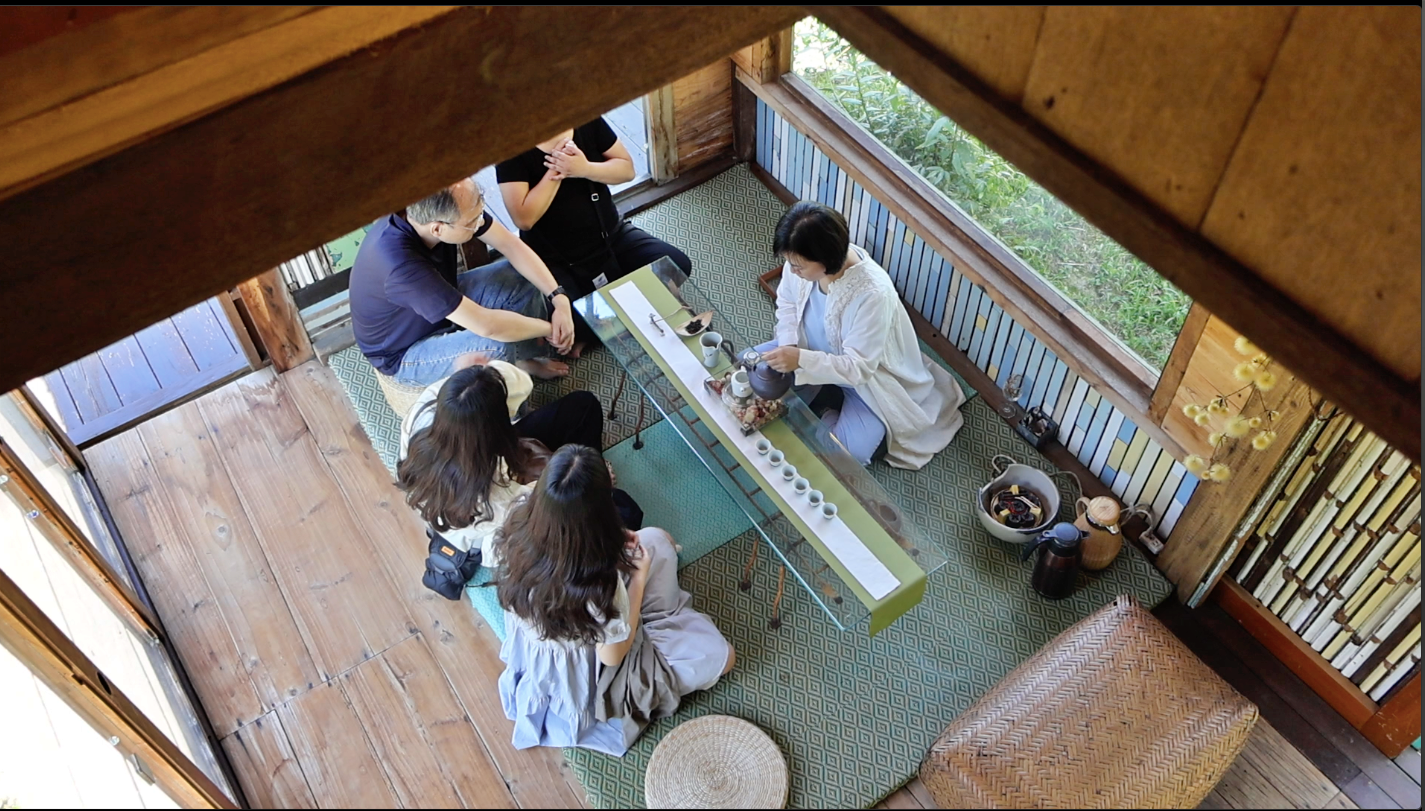
Enjoy the tea ceremony at the cabin with Tea Gong Zu.
The Farm: Biodiversity Over Yield
Chang Gong-Zu converted the family farm to organic production after marrying into a farming family — a decision that required persuading the household, enduring a mandatory three-year organic transition period, and accepting that annual harvest would drop to half. One dedicated plot — the pure wild-release section — completed full organic certification, benefiting from an isolated position with no neighboring farms and no need for chemical buffer zones.
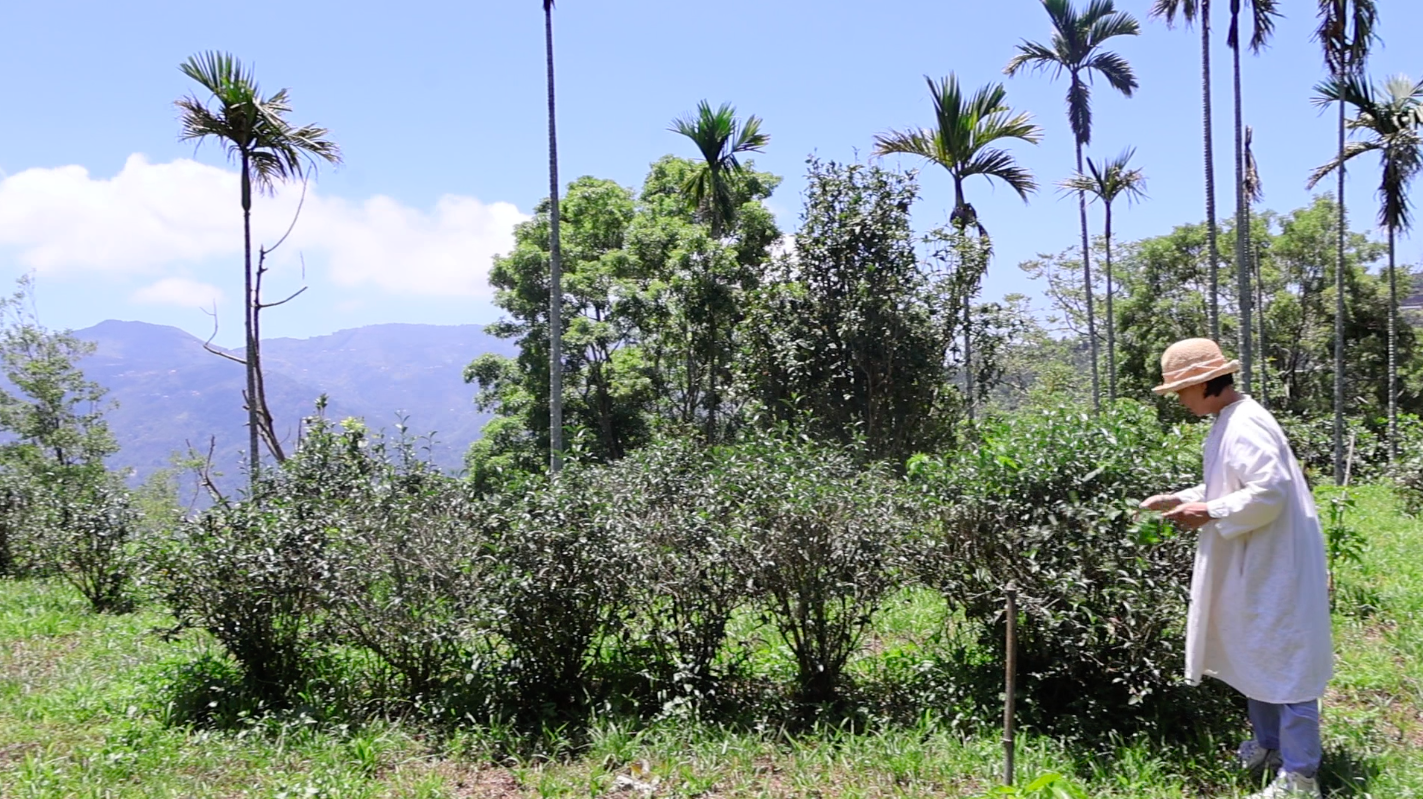
The tea trees are cultivated loosely. Handpick.
The tea rows are intercropped with eucalyptus, plum, apple, osmanthus, and coffee — a deliberate biodiversity strategy that influences soil chemistry and, by extension, cup character. The soil itself is loose and fragrant; Chang will pull back a handful and invite you to smell it. Before conversion, it wasn't.
The primary cultivar is Qingxin Oolong (青心烏龍). What the wild-release plot produces is not large in volume. What it produces is not replicable elsewhere.
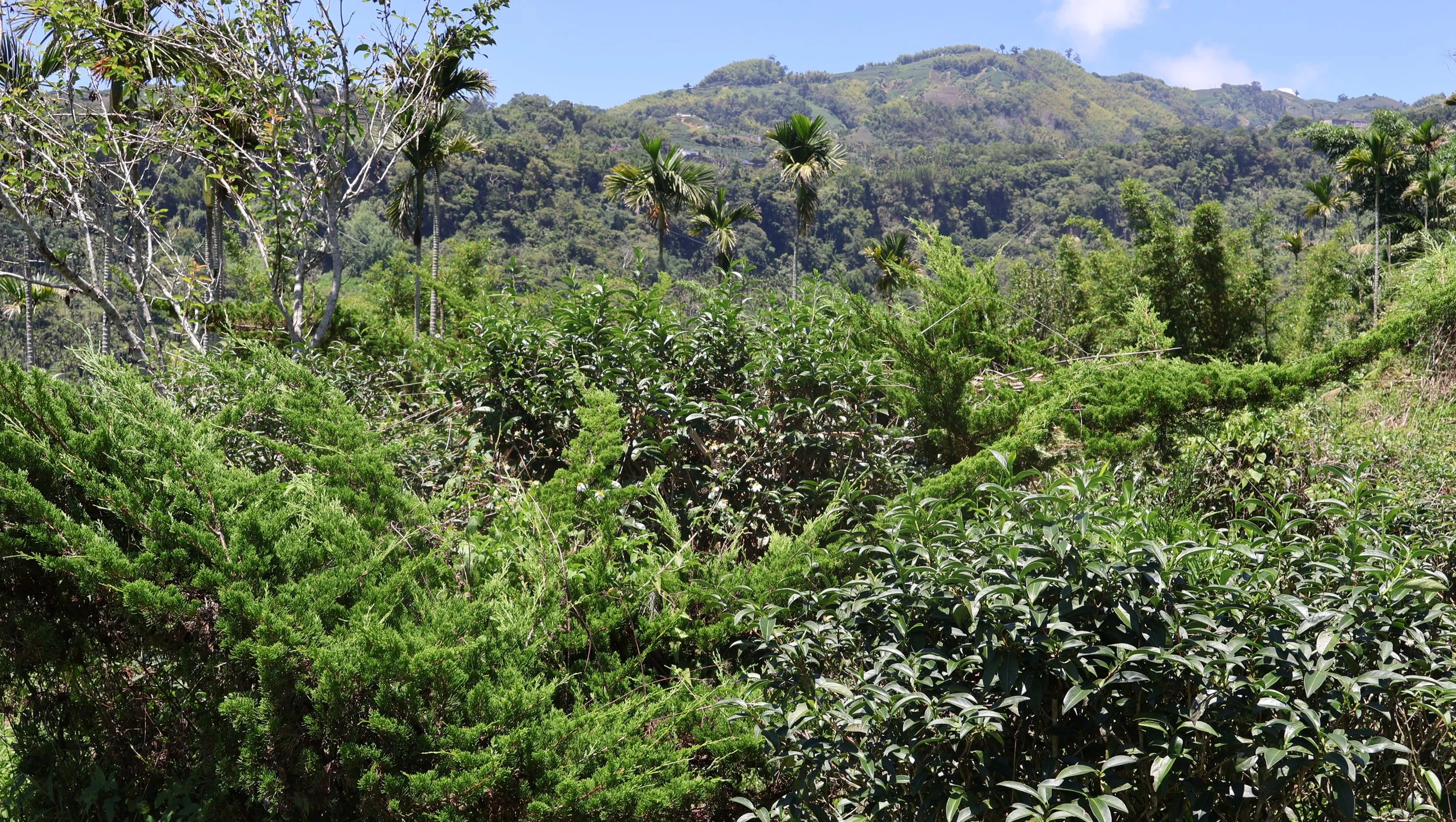
The tea trees grow with other tress such as pine trees, apple trees and so on, to create balanced biodiversity.
The Cabin Tasting Experience
At the garden's edge stands a two-story wooden structure built by a local craftsman at Chang's invitation, assembled from reclaimed glass panels and salvaged door frames. There is no air conditioning. Mountain air passes through freely.
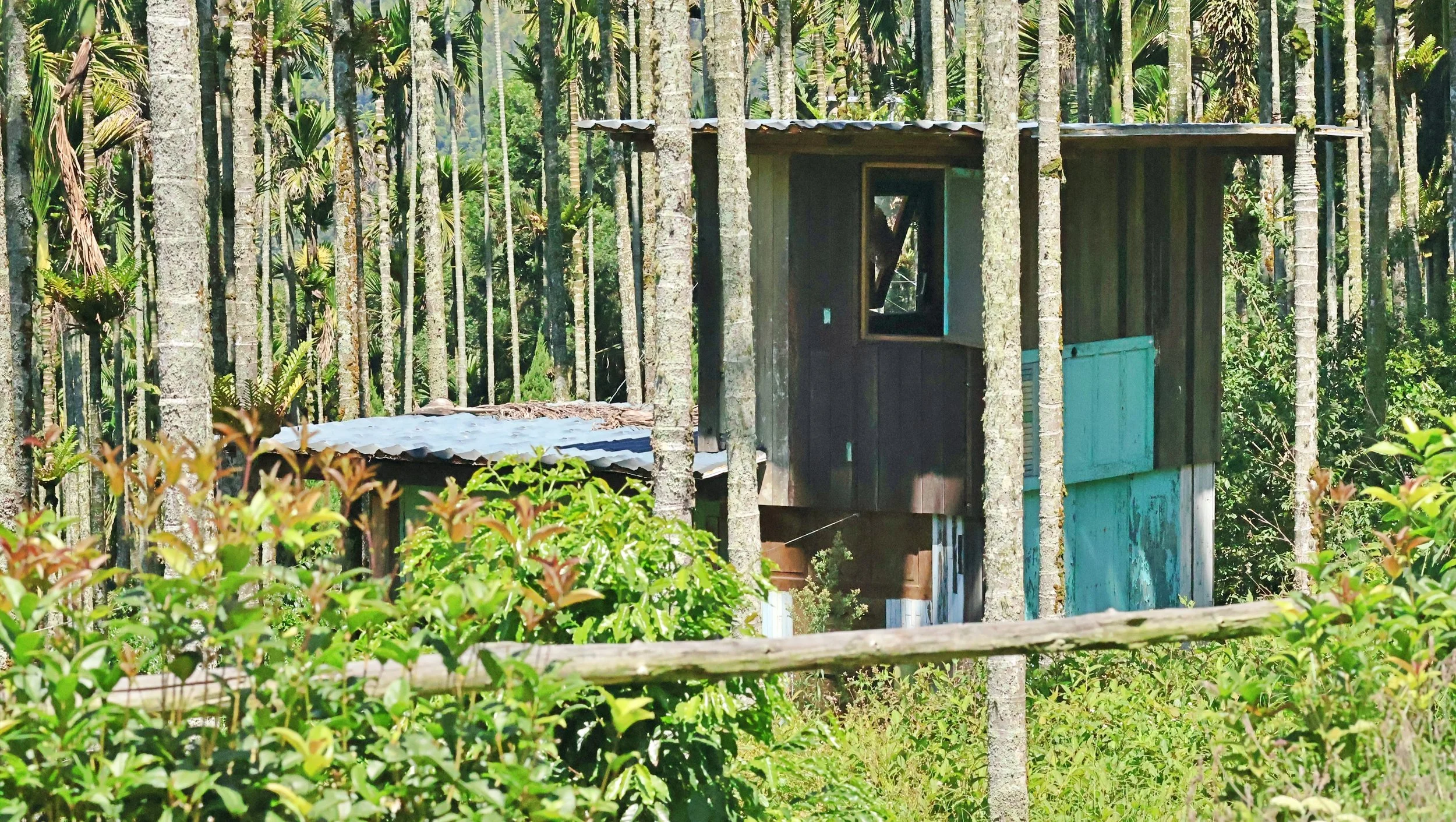
The wooden cabin provides two floors spaces, with a cute 2nd floor for 3 people maximum.
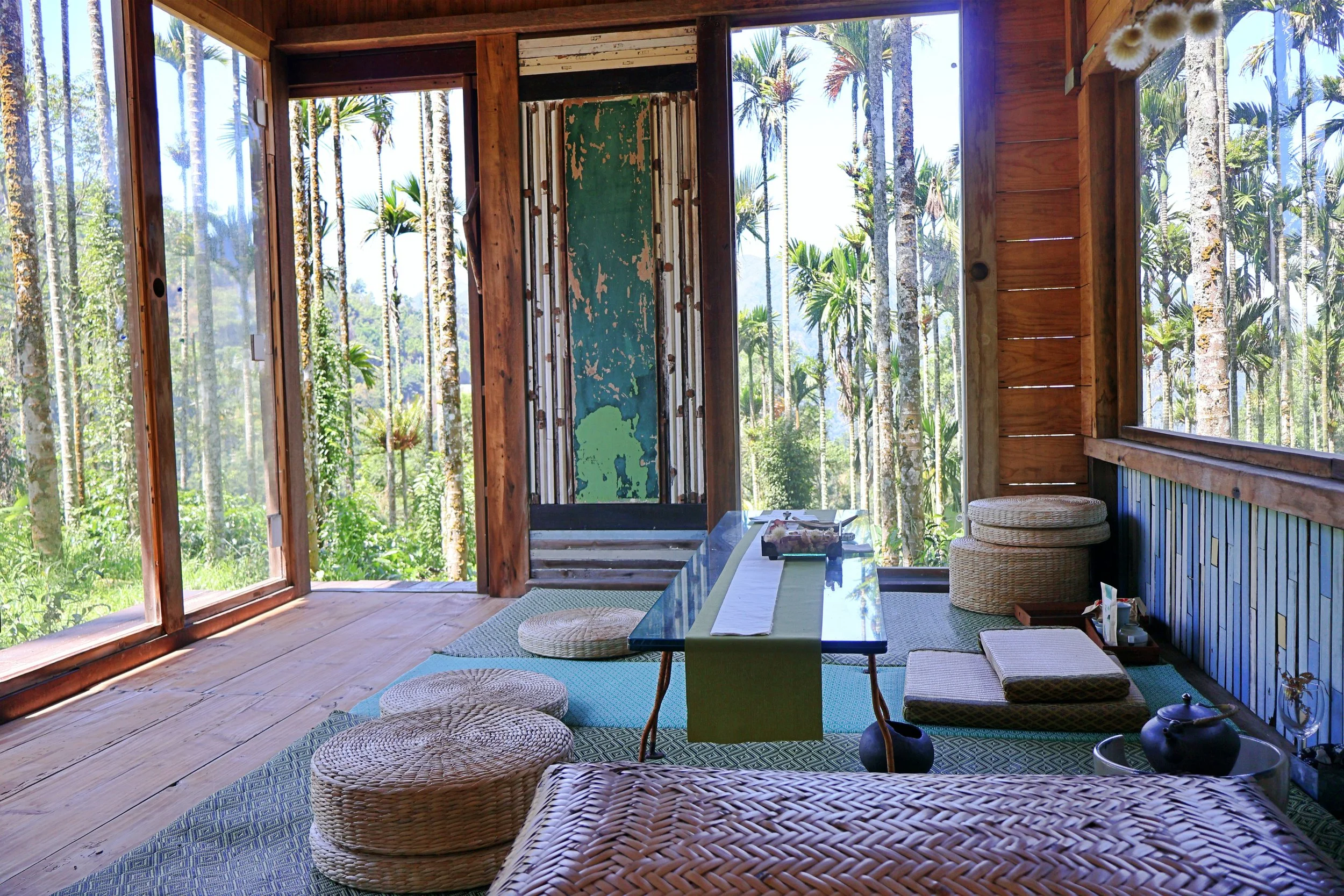
The eco-friendly wooden cabin welcomes breeze and sunshine.
Chang brews at a prepared table using ceramics by local artisan Tsai Chiang-Long, whose pieces are made from regional clay and shaped specifically to lift and concentrate fragrance. On our visit, she served a 2011 harvest wild-release Oolong — aged, settled, with the particular stillness of tea that has had time. Alongside it: handmade amber sugar confections in butterfly pea flower, sakura, and lavender.
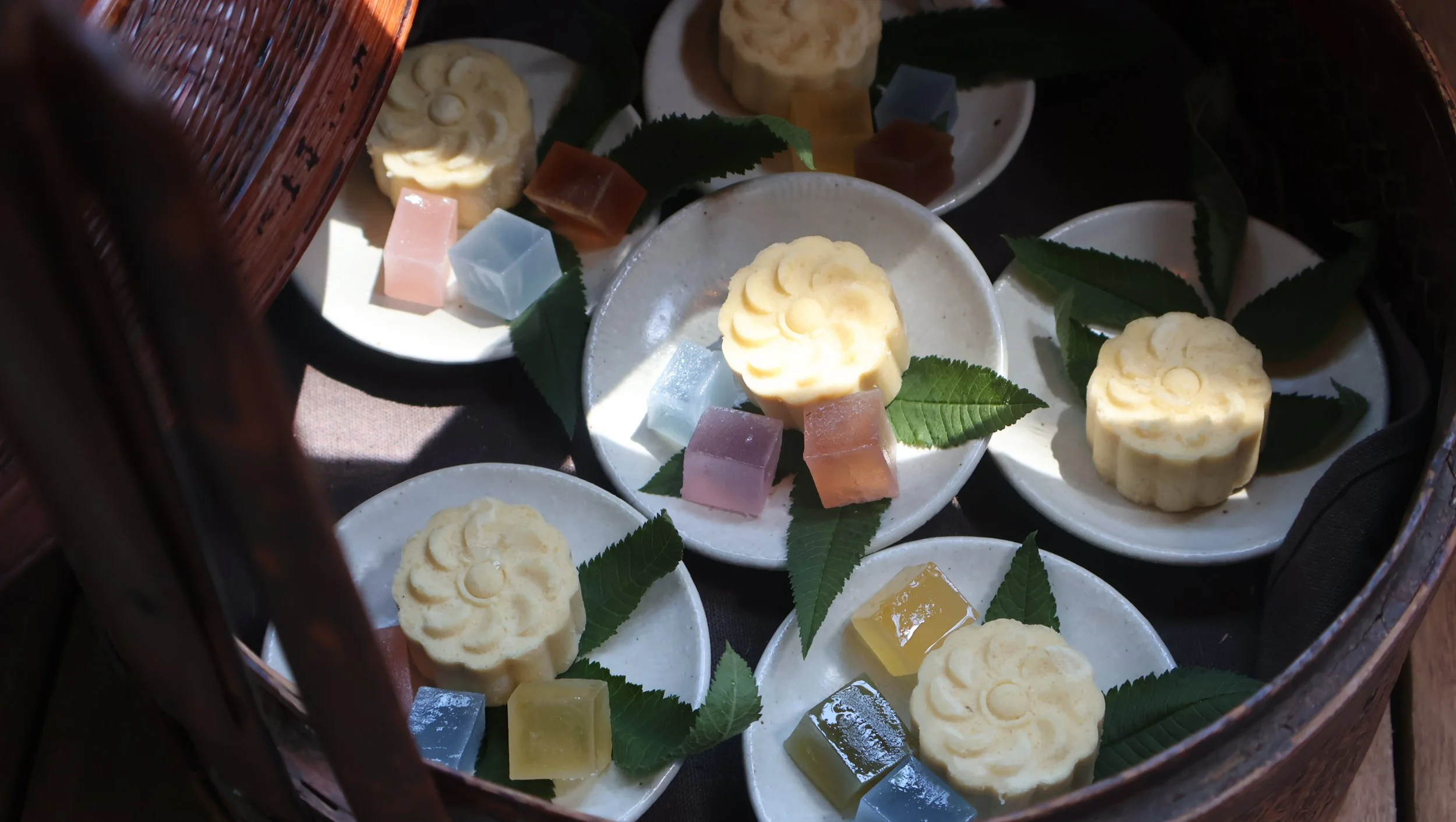
The neighbor homemade tea snacks, used natural ingredients
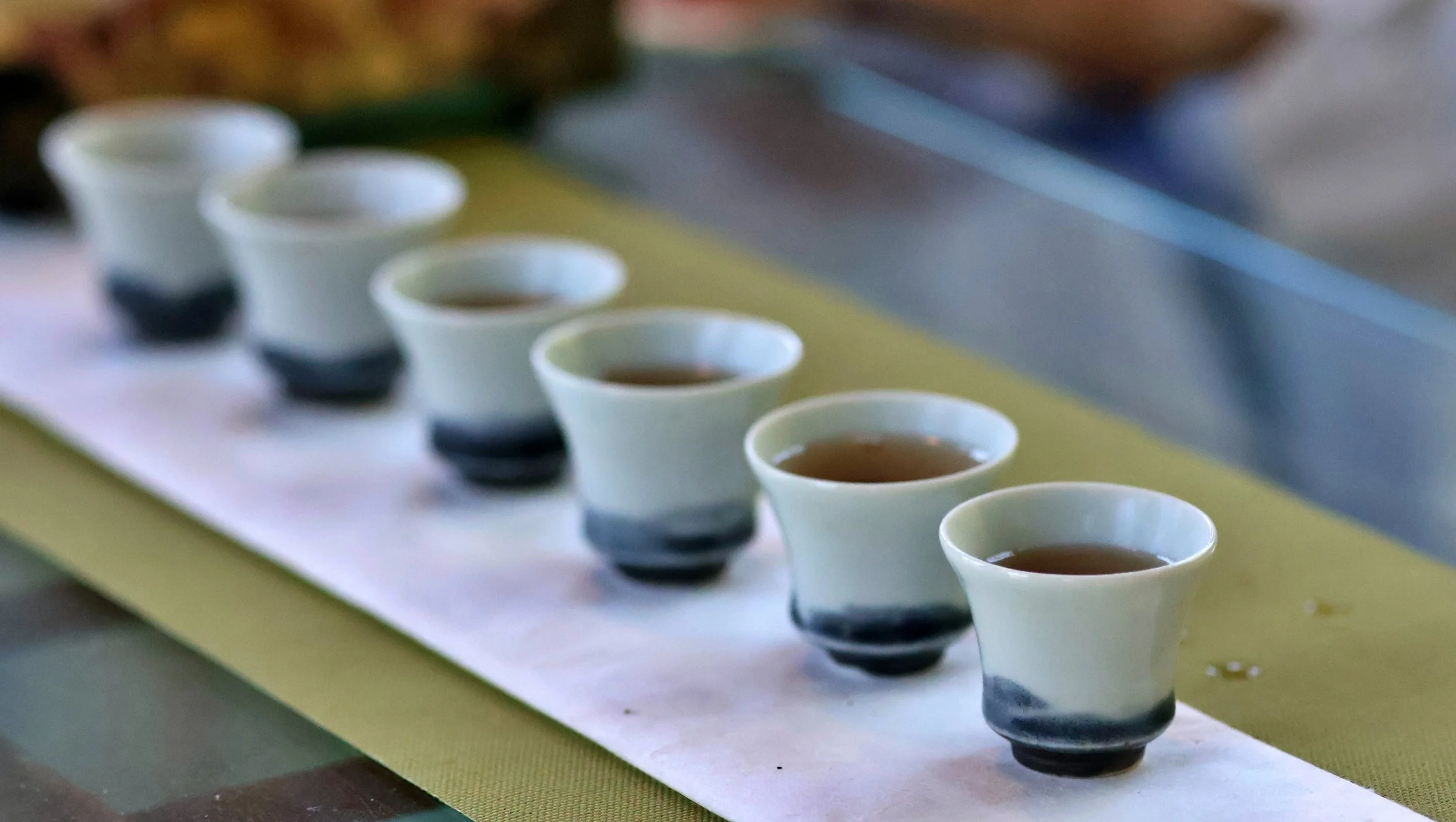
The ceramics made by local artisan Tsai. The cups beautifully presents the tea flavor and aroma.
What to Expect on a Visit
Most tea farms in Taiwan's Alishan corridor are optimized for yield. Gong Zu is optimized for something harder to name — a kind of unhurried rightness that you feel before you've tasted a single leaf.
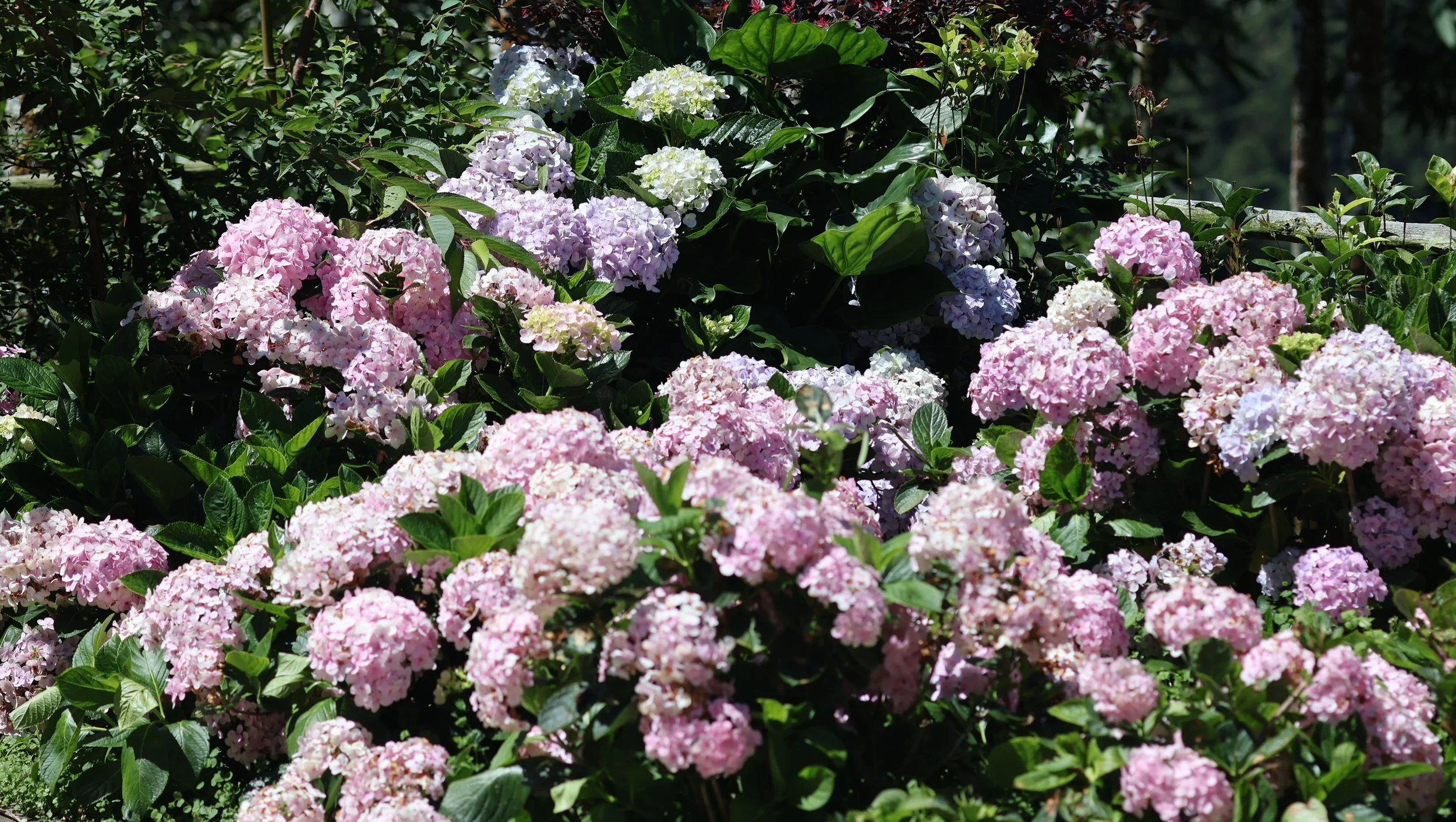
Gong-Zu has green fingers for plants and flower arrangement.
She’s the very rare case that has both tea farm management ability and tea ceremony aesthetics. Especially she tends hydrangeas, agapanthus, and lavender across the property with the same attention she gives the tea rows.
It was a fantastic experience to being received as a guest by someone who has been farming this land seriously for over a decade and has something considered to say about it.
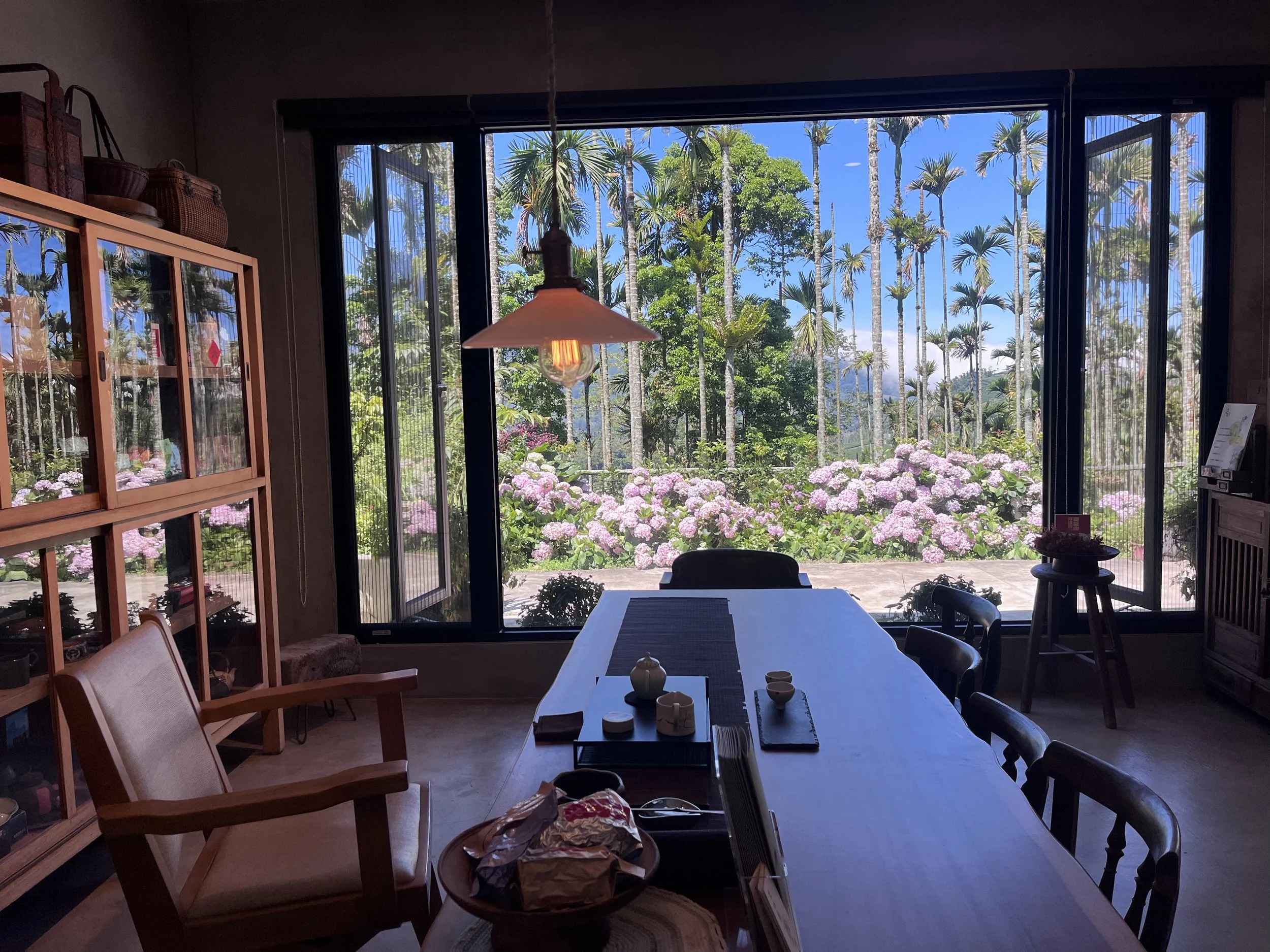
Another interior space (with air-conditioner) is friendly for those who cannot sit on the grounds.
2Days 1 Night in Ruifeng, Alishan
This is a destination we highly recommend for tea lovers who want to spend extra time exploring the Alishan region. On this journey, we discovered wild tea gardens, watched the sunrise over rolling tea fields, admired stunning waterfalls, and spent a night in a charming treehouse B&B.
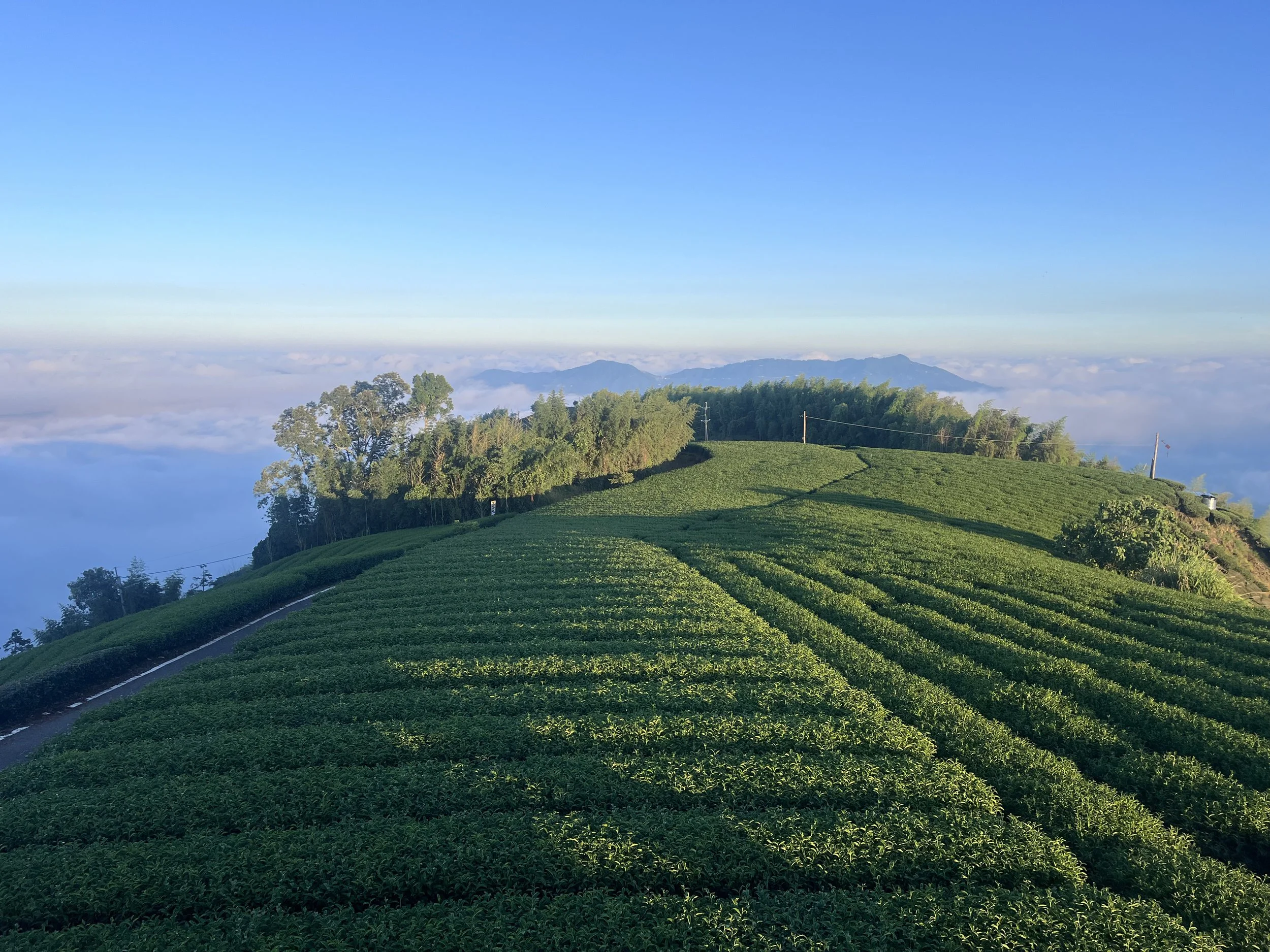
The landscape from 1314 observation deck—a rare moment when time seems to slow down and the mountains awaken with the day.
Despite its tranquil atmosphere, the area is only about 40 minutes from popular Alishan attractions such as Fenqihu (奮起湖). That makes it an ideal base for travelers who wish to experience a quieter side of Alishan while still enjoying easy access to the Giant Trees Trail in Alishan National Forest Recreation Area.
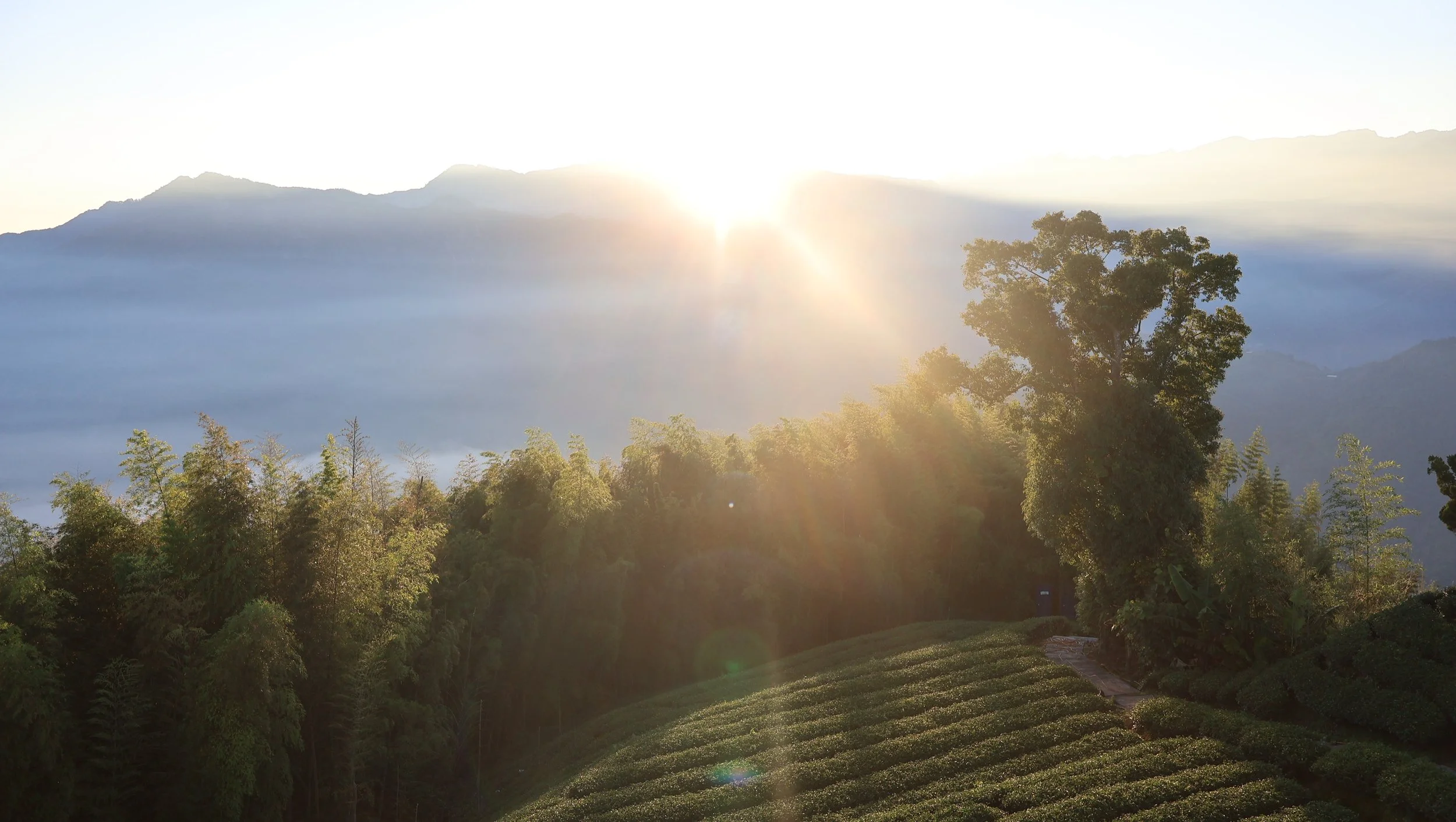
The sun rises behind distant ridgelines, casting long rays across the tea fields and illuminating every leaf with a soft golden light.
We could barely describe the breathtaking dawn scenes at 1314 Observation Deck: a sweeping 360-degree panorama of mountain ranges stretching endlessly into the distance. Before sunrise, the landscape is wrapped in silence, with layers of mountains fading into the darkness. As the first light appears on the horizon, a sea of clouds slowly drifts through the valleys below, transforming the mountains into a series of floating islands.
We might call here as the most beautiful tea field scene in Taiwan, with no doubts.
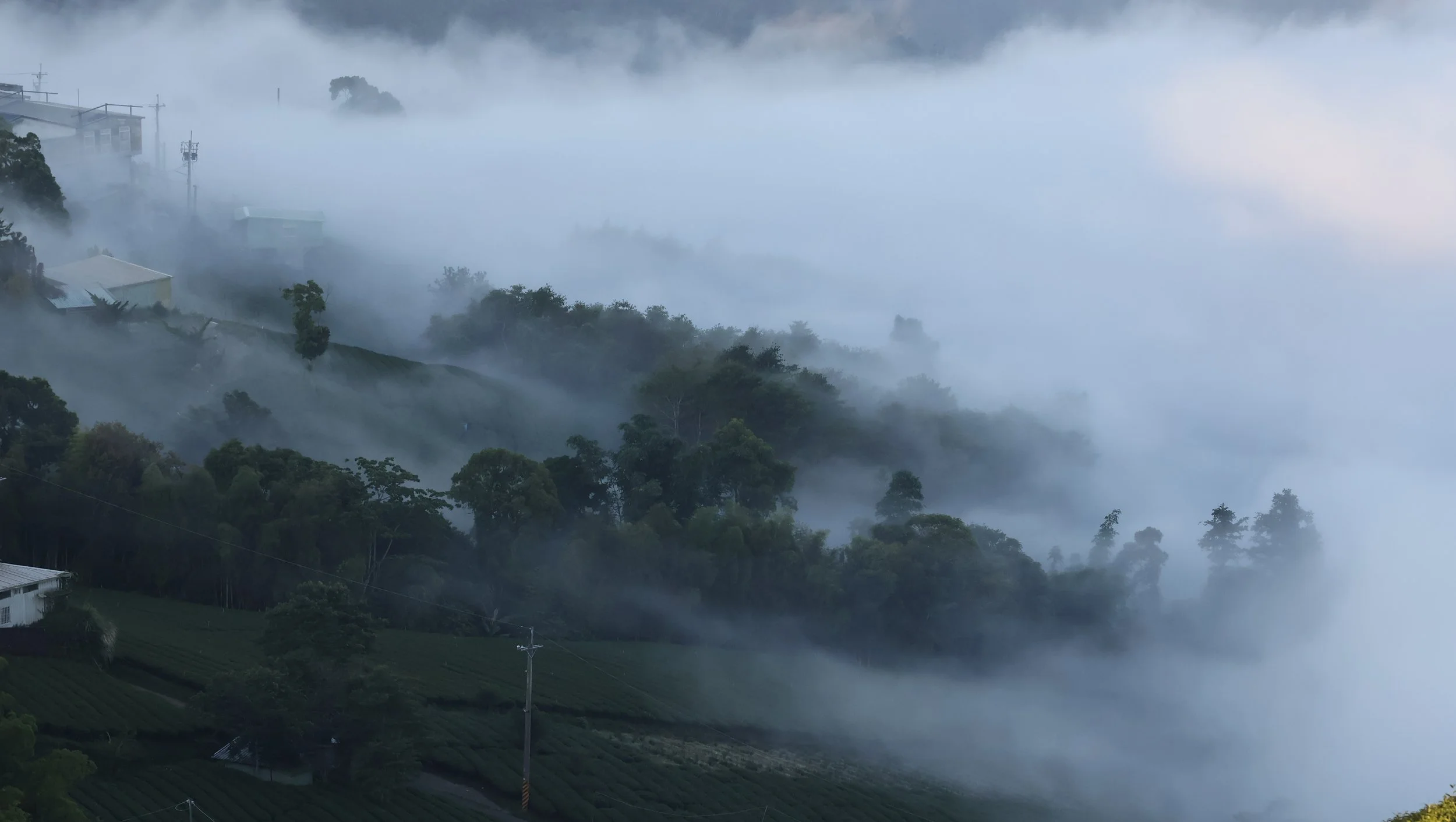
Before sunrise, the landscape is wrapped in silence, with layers of mountains fading into the darkness.
The Charming Treehouse B&B
We were surprised to see so many Western travelers in Lai Home Country Cottage B&B. Here is around self built wooden cabins and dozens of varieties of flowers, ornamental plants, and fruit trees. Bus reachable, just very few.
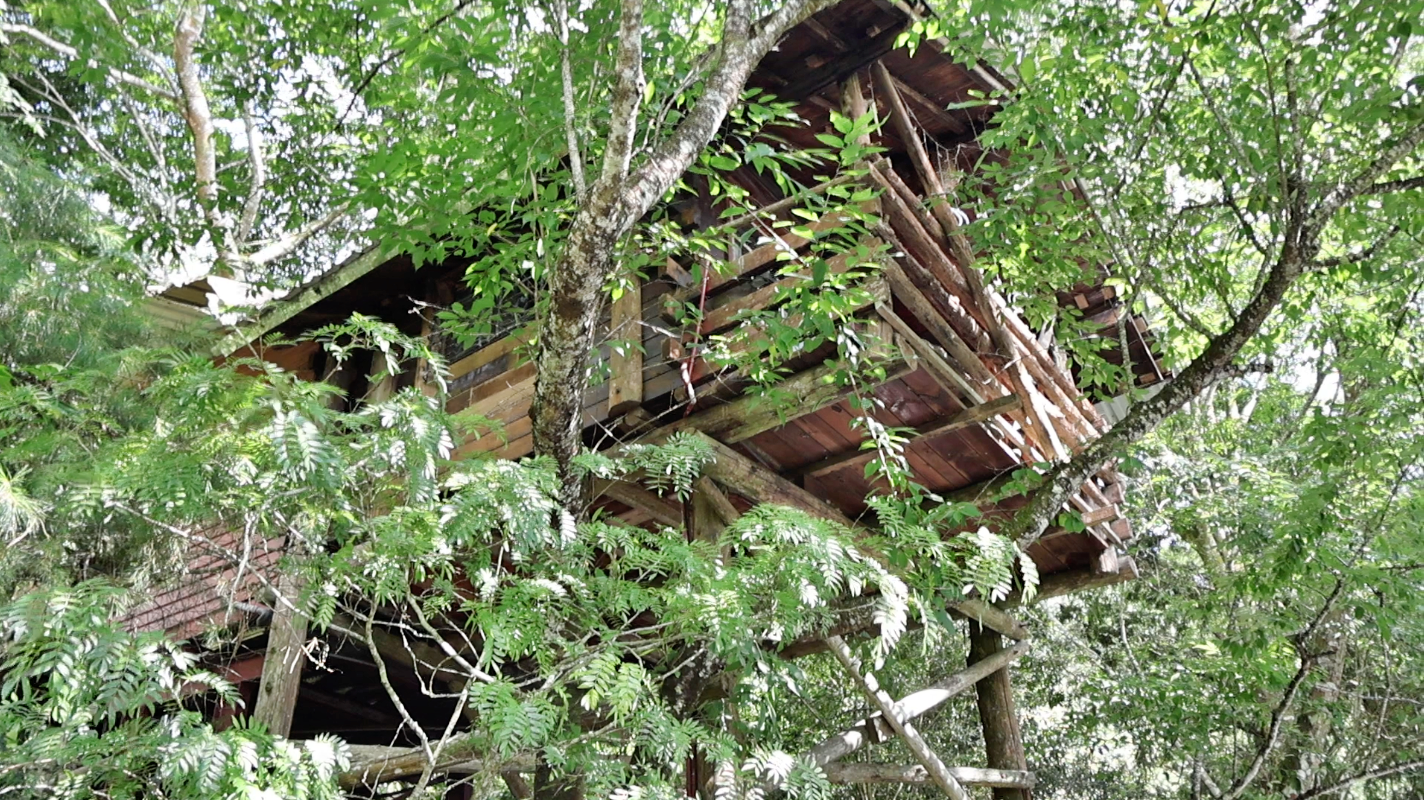
All the wooden cabins are self-built by Lai papa.
Lai was once a lumberjack and possessed an intimate knowledge of timber. He carefully selected materials such as Taiwan cypress and camphor wood to build the property. All the wild plants around added life and charm to the surroundings. Together, these elements create the B&B's distinctive rustic and free-spirited character.
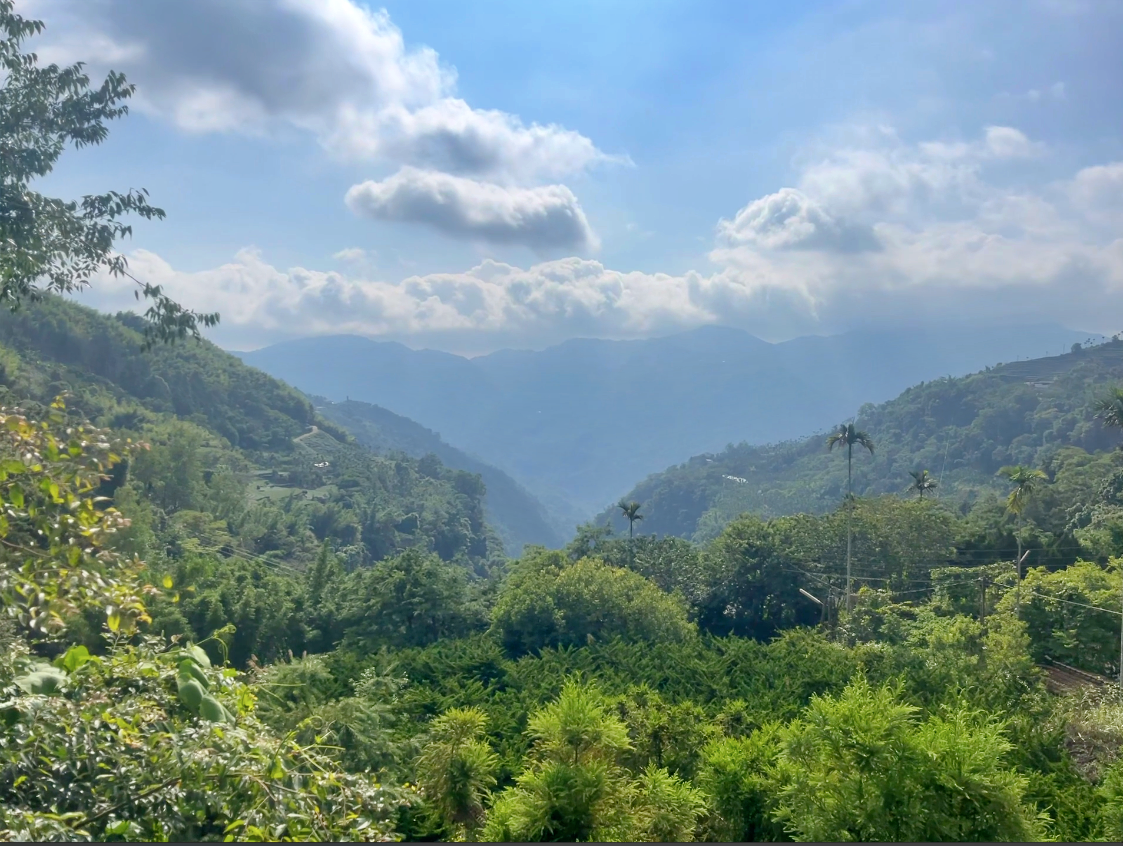
The landscape outside the B&B.
Located in Ruifeng at an elevation of 800 to 1,300 meters, the cabins enjoy a naturally cool mountain climate. Air conditioning is unnecessary; even during summer heat, guests often find themselves pulling up a blanket at night. The B&B operates on a half-board basis, including dinner and breakfast, and can accommodate around 30 guests in total.
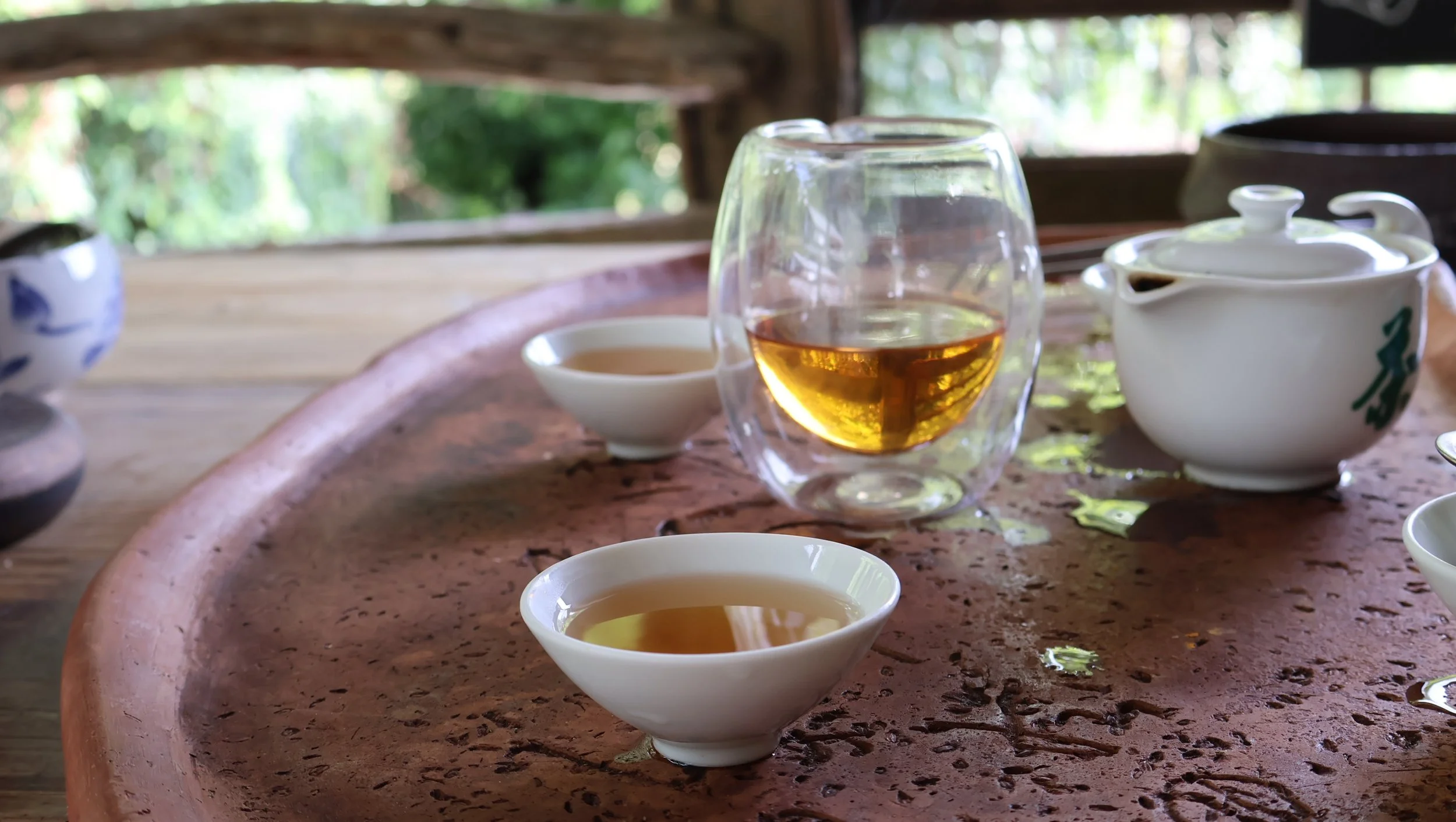
Lai’s Shan-Cha tastes clean and easy-going. Comfortable to drink.
Lai is a gifted storyteller whose tales about local history and village life often leave guests laughing. After dinner, he frequently leads a one-hour evening walk through the community, sometimes stopping by the area's old general store. During my stay, he also showed me the Taiwanese Shan-Cha planted by his father. The tea trees are around fifteen years old, producing a mountain tea that is remarkably smooth, pure, and easy to drink.
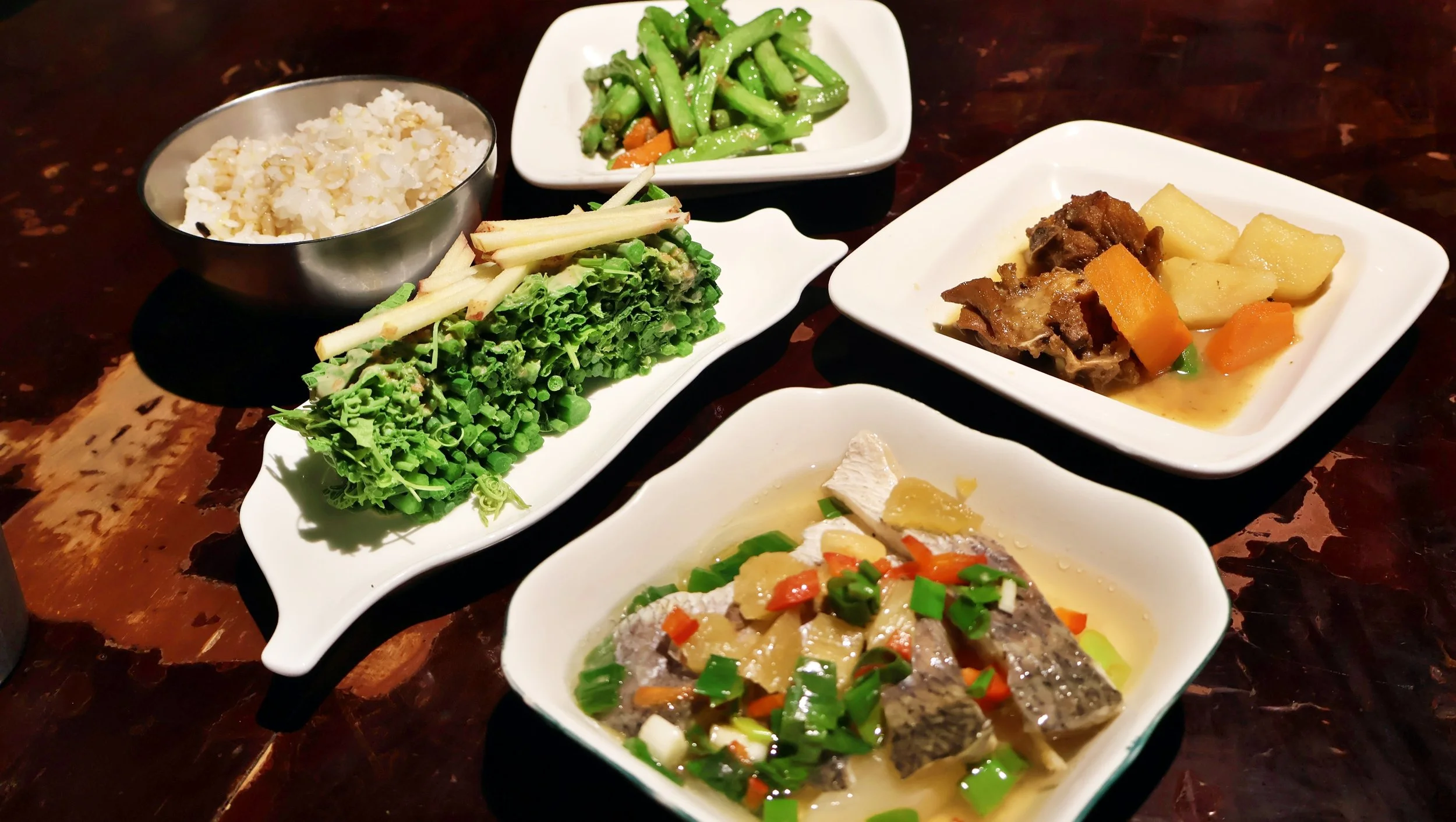
The seasonal fresh vegetables, simple and yummy.
Life in the mountains here is intentionally simple. At breakfast and dinner, all guests gather together in the dining hall. After the meal, everyone helps clear their own dishes. Tea oil, steamed rice, chili sauce, juice, coffee, and other items are available at self-service stations. Most facilities are modest and unpretentious, reflecting the genuine and down-to-earth spirit of mountain living.
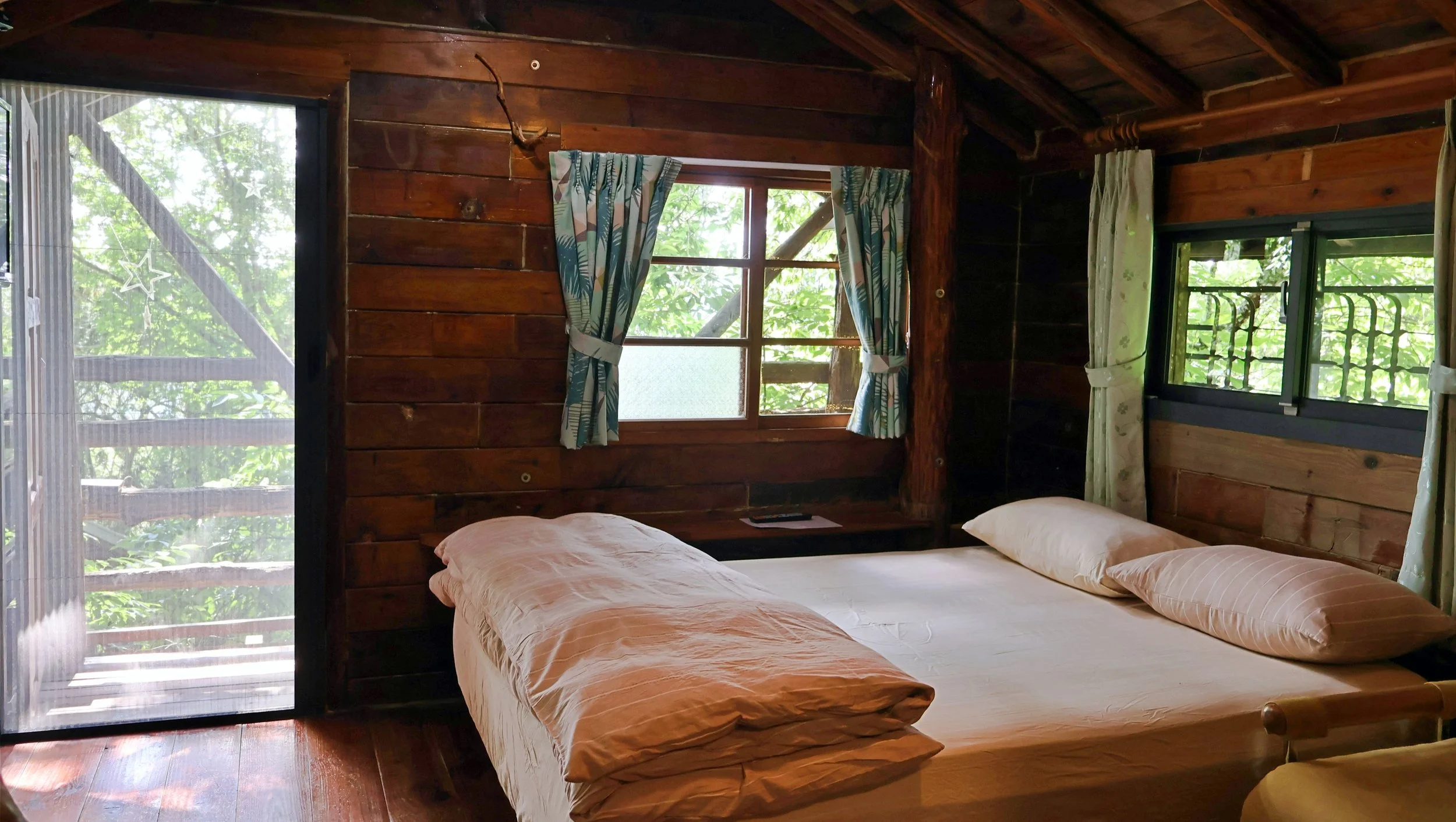
Everything you need in this boutique 2-people room (with bidet toilet! )
Q&A
What is wild-release tea (野放茶) and why does it taste different?
→ Wild-release tea refers to plants grown without fertilizer, pesticides, or mechanical pruning, left to develop at their own pace in a biodiverse environment. At Tea Gong Zu, the wild-release Qingxin Oolong plot is intercropped with fruit and flowering trees, and the soil has been built up through years of organic practice. The result is a slower-growing leaf with higher mineral complexity and a cup character that reflects the specific conditions of that hillside — not reproducible through conventional farming.
How does Tea Gong Zu compare to other Alishan tea farms?
→ Most Alishan-area farms operate at commercial scale with machine-trimmed rows and guided group tastings. Tea Gong Zu is a single-family farm with a personal tasting experience, a handbuilt cabin, and a producer who converted to organic at significant cost to yield. The comparison is not really like-for-like.
How would The T Scout suggest the tour?
→ Tea Gong Zu is 2 minutes drive, or 10 minutes walk from Lai Home Country Cottage B&B (Lai Home). You can either arrange a tea tasting at Tea Gong Zu in the afternoon before B&B check-in, or morning tea ceremony after check-out. Reservation in-advance is necessary. Prepare yourself at least 90 minutes for tea ceremony. If you’re seeking for tea farm visit, do prepare another hour.
Is Tea Gong Zu foreign language friendly?
→ She’s able to speak basic Japanese and use e-translator for English. If you wish to have a profound discussion with her, hiring an English tea guide would be the most ideal.
Any seasonality suggestion?
→ All year is comfortable, except when typhoon stirkes (usually July-Sep).
How does the distance look like of this trip?
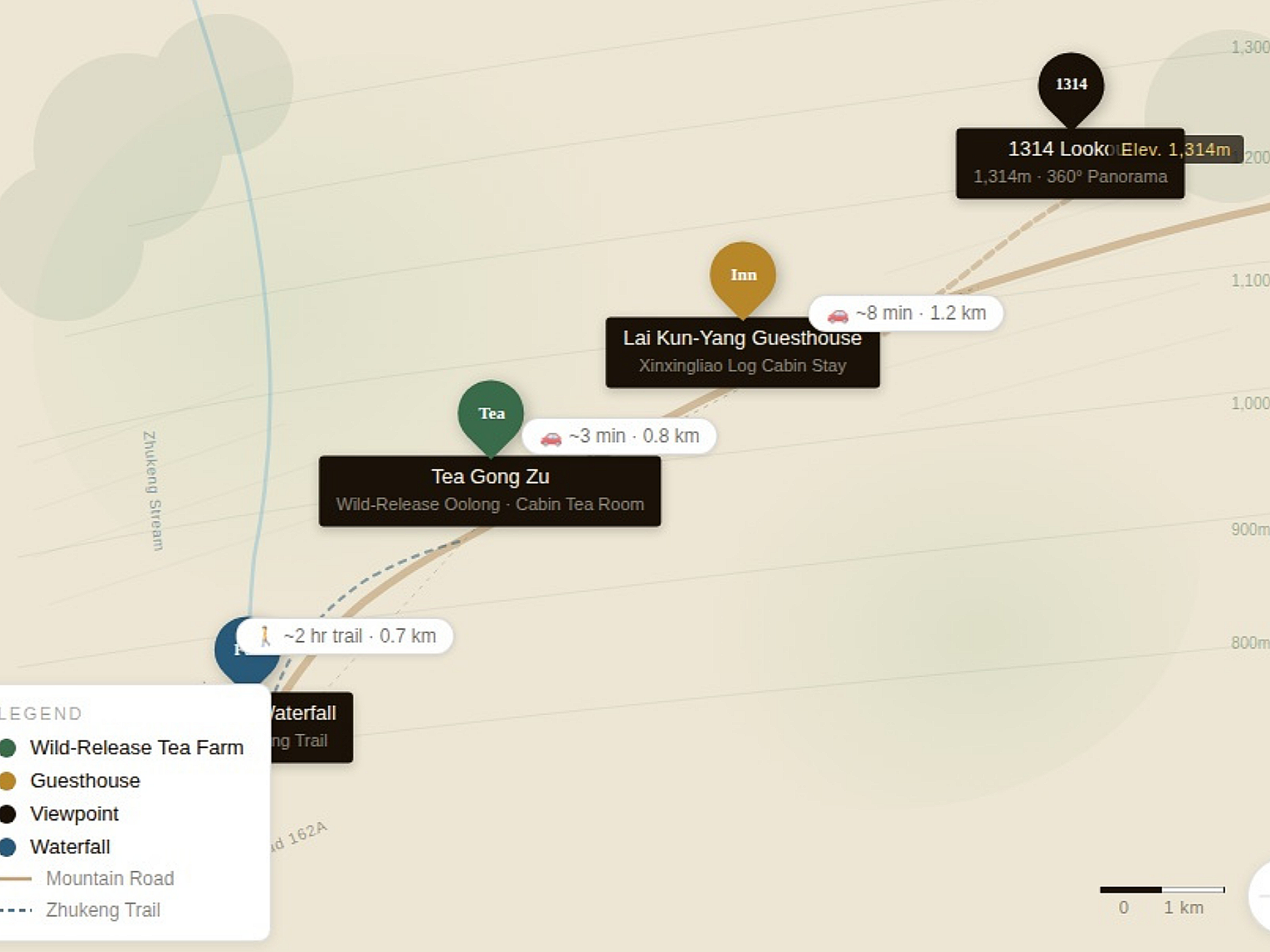
Map drawing by AI. Distance is correct by Google map.
Written & Photography by: The T Scout 2026© All rights reserved.
