Maokong's First Organic Tieguanyin
Chang Fu-Chin, owner of Hanser Tea House in Maokong, Taipei, became the first tea farmer in the district to convert to organic growing, in 1999. He is the sixth generation of his family to make tea in Maokong, and has spent over forty years in the trade — winning his family's first special-grade competition award at age thirty. Today, fewer than five tea farmers in Maokong still grow organically.
The Top 3 Hanshe Tea House Specialties:
Maokong's first organic tea farm.
Insisting growing Zhengcong Tieguanyin, the very speciality in Maokong.
40 years of tea-making experience, mastering heavy oxidation that younger tea makers aren’t willing to do.
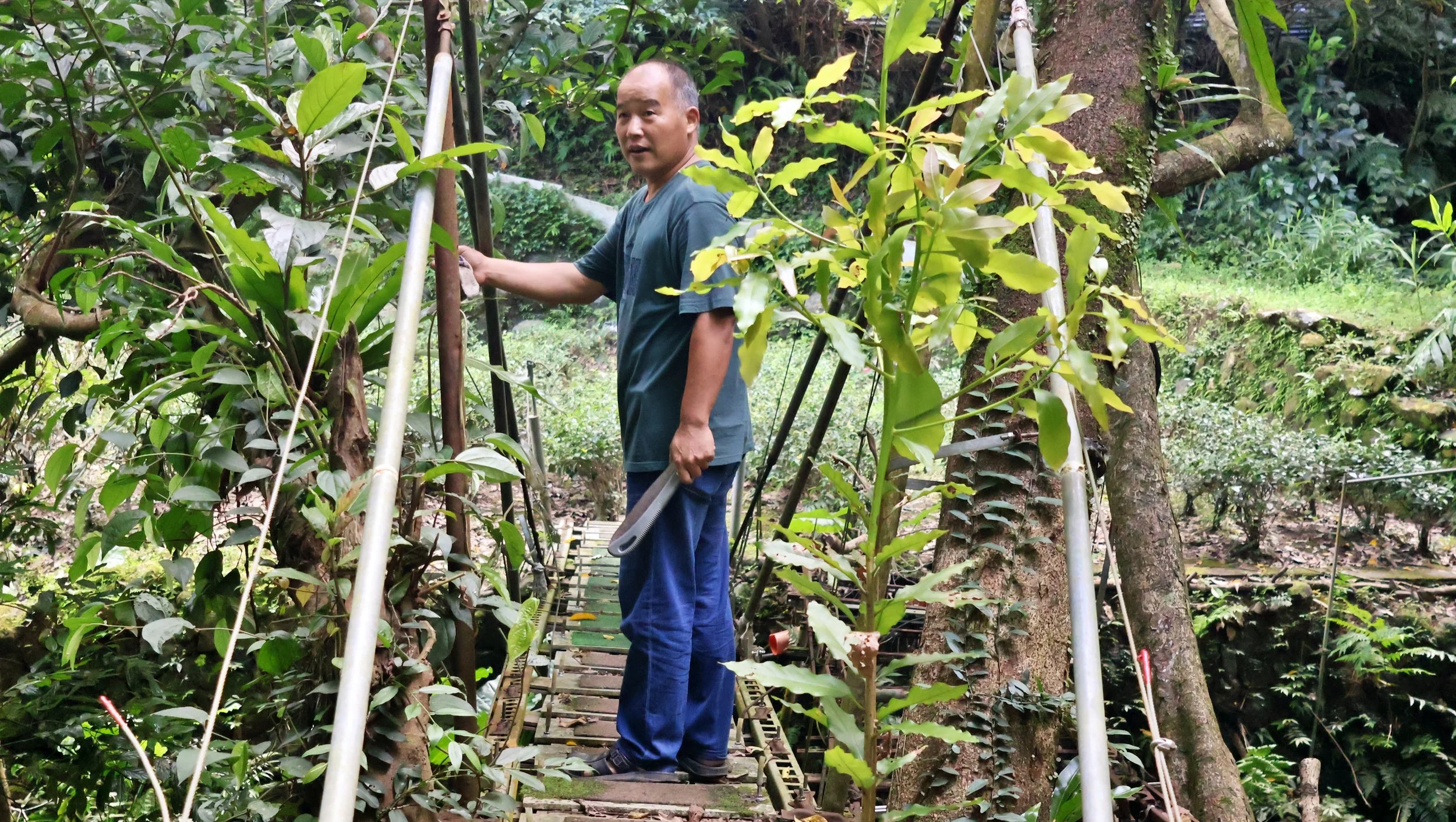
Mr.Chang took us to his tea field, way through a cute river and wild bushes.
His path into organic farming started out of necessity: as a young farmer returning home back then, he couldn't out-experience the senior tea masters around him. But young farmers were seen as the most open-minded, adaptable, and willing to experiment — and that was exactly what the push toward organic tea needed.
"Getting the next generation to take on this kind of care is genuinely difficult," he says often. In his first year of organic farming, yield dropped by two-thirds — from around 1,000 catties a year down to a fraction of that, the rest lost to insects. It took three years before he learned to use natural deterrents like wood vinegar, chili water, and Bacillus thuringiensis to control loopers and tea moths. Tea trees and weeds began to coexist. Earthworms, grasshoppers, spiders, frogs, snakes, and birds formed a natural food chain, and the garden's ecology stabilized.
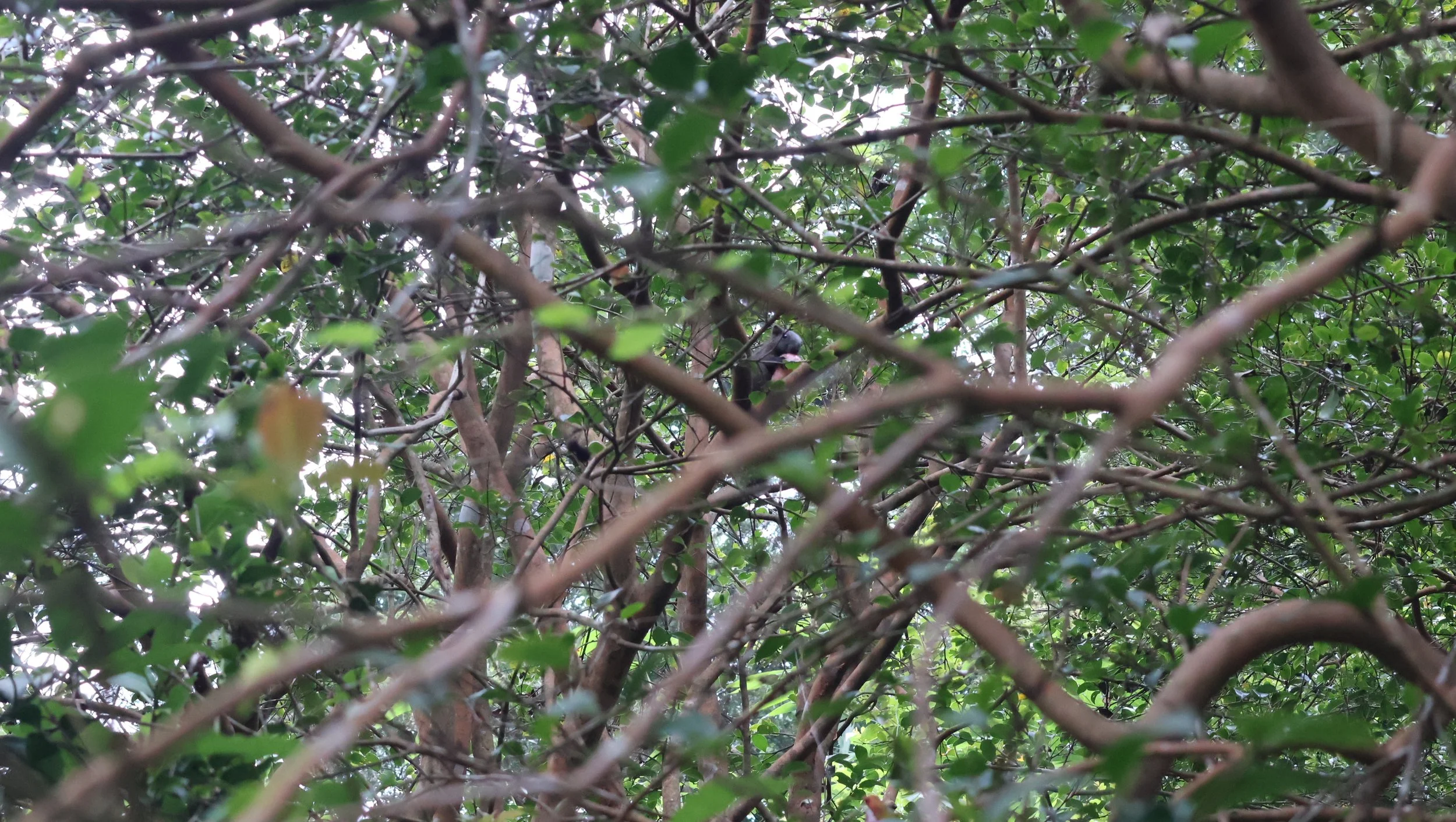
A squirrel was found eating a wax apple, yum-yum:)
His cultivar selection is unusually diverse. Beyond Zhengcong Tieguanyin and Jin Xuan, his organic garden also grows Rou Gui, Wuyi, Qingxin Dawu, Huang Jin Gui, Mei Zhan, and Shui Xian — all planted across small, scattered plots and hand-picked. Sometimes he'll take leaves harvested in the same picking and process each cultivar separately according to its character, then combine them for fixation and roasting together. The result carries more layers than a single Zhengcong Tieguanyin — a hint of white flower in the base note, and fruit character in the finish.
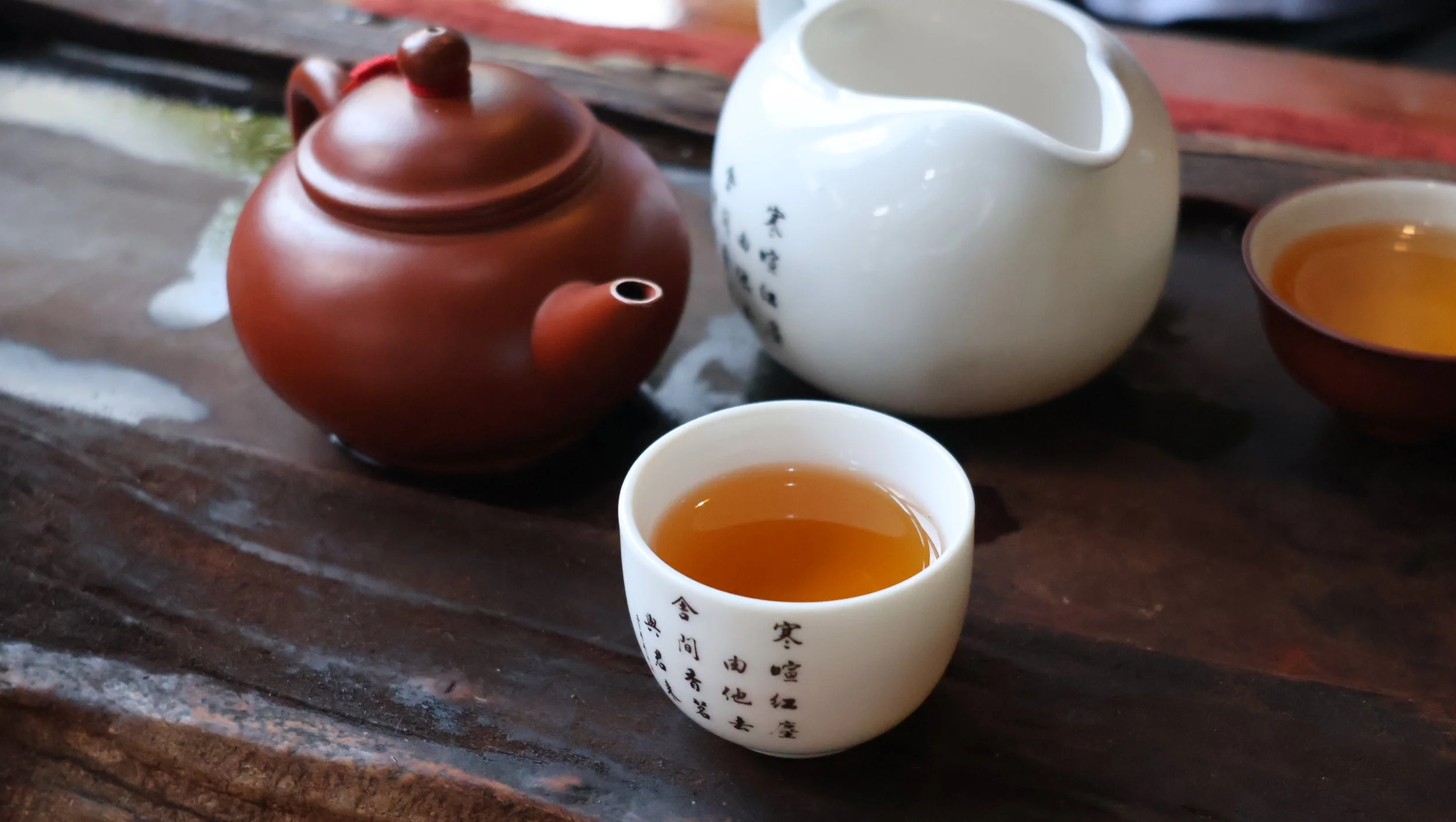
Fewer farmers are willing to grow Zhengcong Tieguanyin — it's harder to manage and yields less.
Walking through the organic garden, bees and butterflies move freely, and the bite marks of stink bugs are visible on the leaves — he treats them with enzymes rather than pesticide. He lets the insects have their share in summer, harvesting only in spring and autumn, and producing an average of just over 700 catties a year. Organic cultivation rules out herbicides, so weeding is done the old way, by hand. He was the first person in Maokong to use a power weed-trimmer instead of a scythe — and neighbors joked he was "the first of his kind in Maokong."
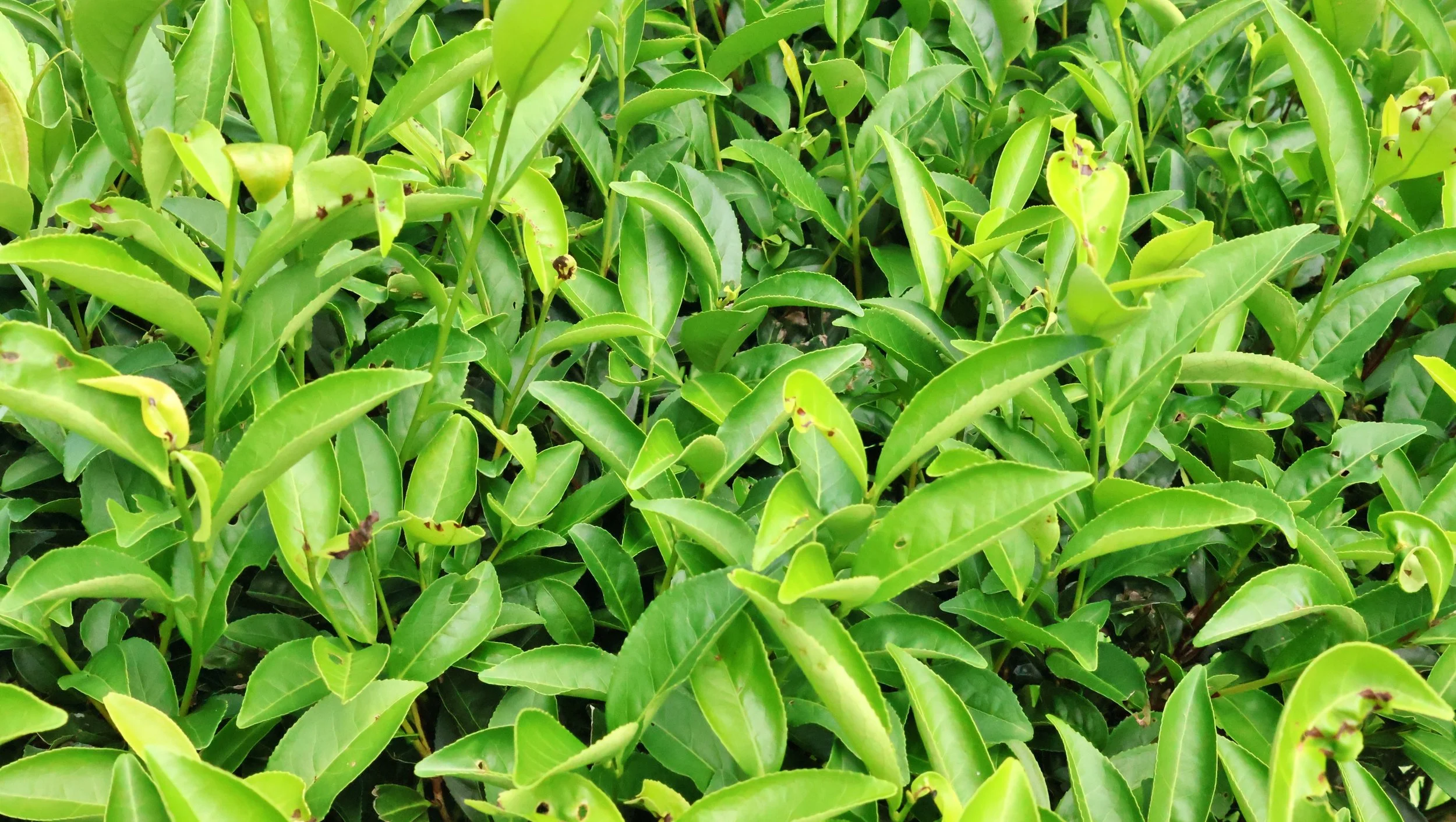
Going organic doesn't mean fewer bug bites — it means learning to work with them instead of against them.
Hanser Tea House sparked a wave of tea-drinking culture in Maokong. Set near Maokong's Caonan Bridge, the setting is quiet and ecologically rich; fireflies, beetles, and butterflies often keep company during a tea session. Follow the pothole trail from Hanser and you'll reach the pothole suspension bridge, where you can see the potholes carved into Zhinan Creek up close — a stretch of path even locals don't always know. There's no air conditioning outdoors in Hanser Tea House but steeping tea among the tea trees feels unhurried and relaxed (the experience is more comfortable outside of summer).
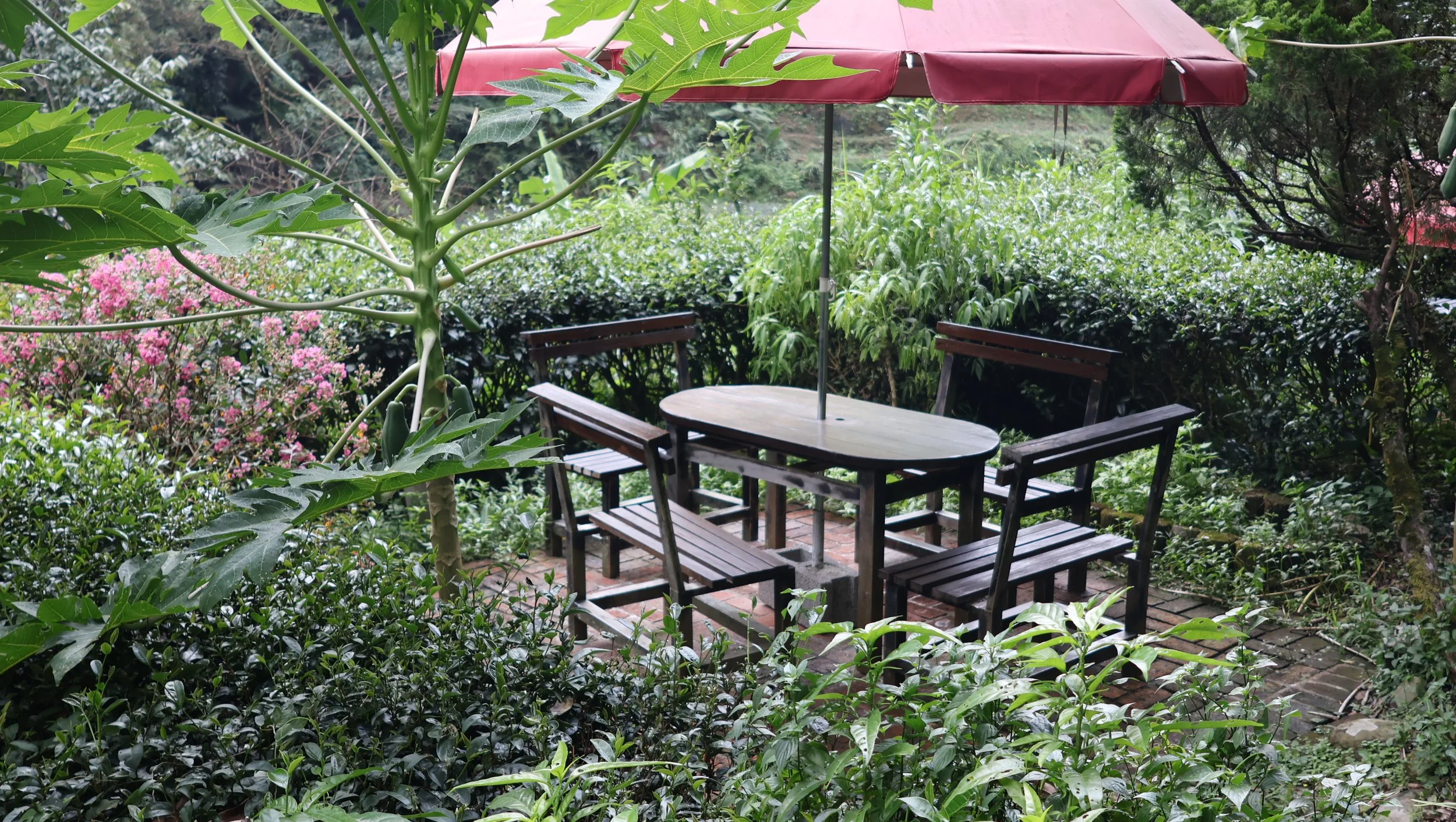
Tea in absolute nature is more than enjoyment — it's immersion.
Chang is a practicing Buddhist. He believes winning isn't just luck — it's the accumulation of good karma over time; when merit is complete, reward follows naturally. His attitude toward buying tea reflects the same philosophy: if you find tea you truly love in this life, you should buy it, because it's rare. Buying tea is a matter of fate. Sit down with him over a cup, and the conversation always stays in the present moment.
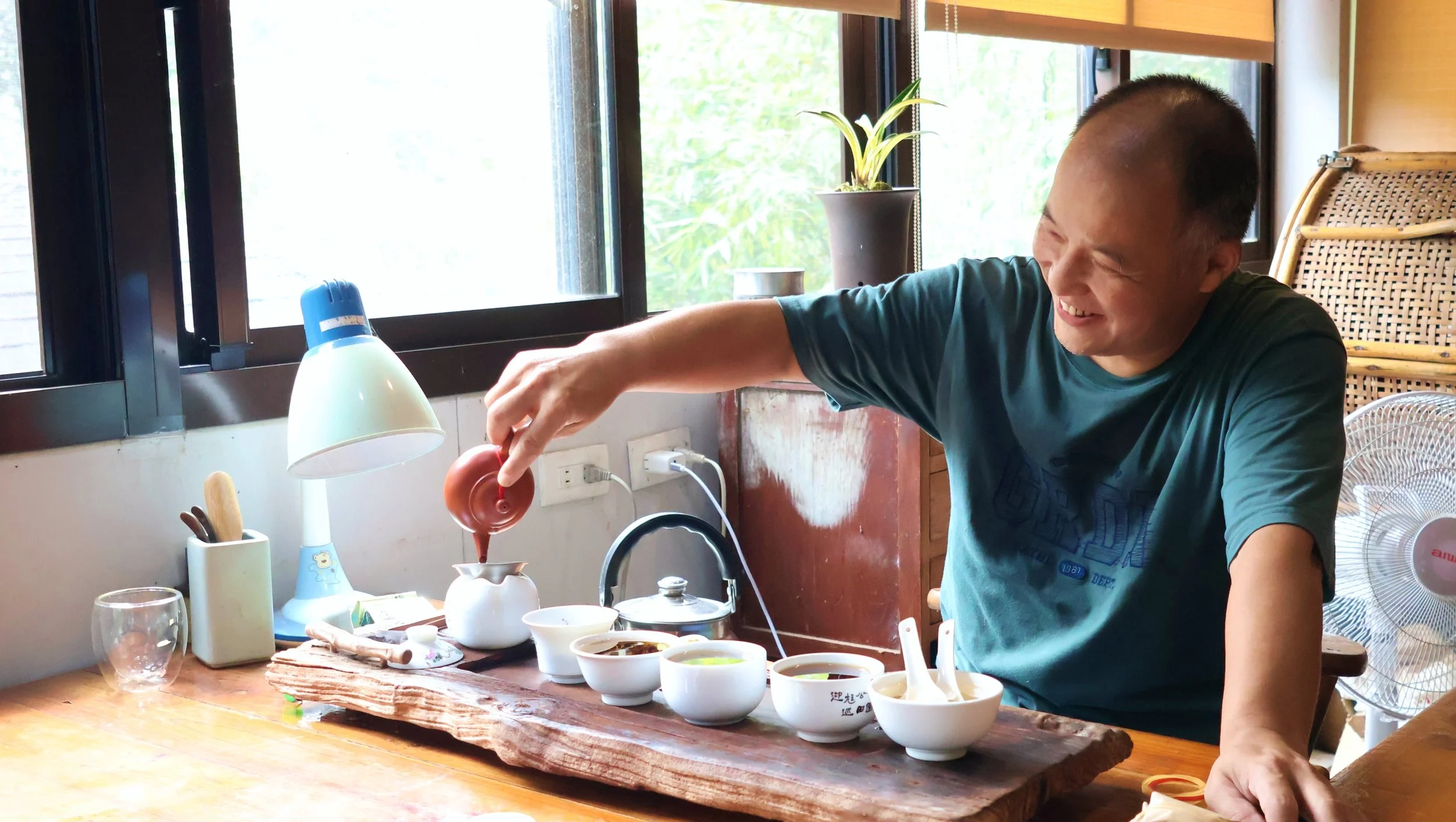
Mr.Chang is a very sharable and easy-going tea master that you may learn a lot from him through the conversation.
FAQ
Who was the first organic tea farmer in Maokong?
→ Chang Fu-Chin, owner of Hanser Tea House, became the first tea farmer in Maokong, Taipei to convert to organic growing, in 1999.
How many organic tea farmers are there in Maokong today?
→ Fewer than five tea farmers in the Maokong district currently grow tea organically.
What’s the most recommended tea to order in Hanser Tea House?
→ The oolong tea made of Zhengcong Tieguanyin is rare to find in Taiwan. Thus Tieguanyin related products are highly recommended.
Is Hanser Tea House vegetarian friendly?
→ Chang family is vegetarian, so the menu is vegetarian only. However if you’re looking for rich meal, Uncle Well’s Tea House may satisfy you more.
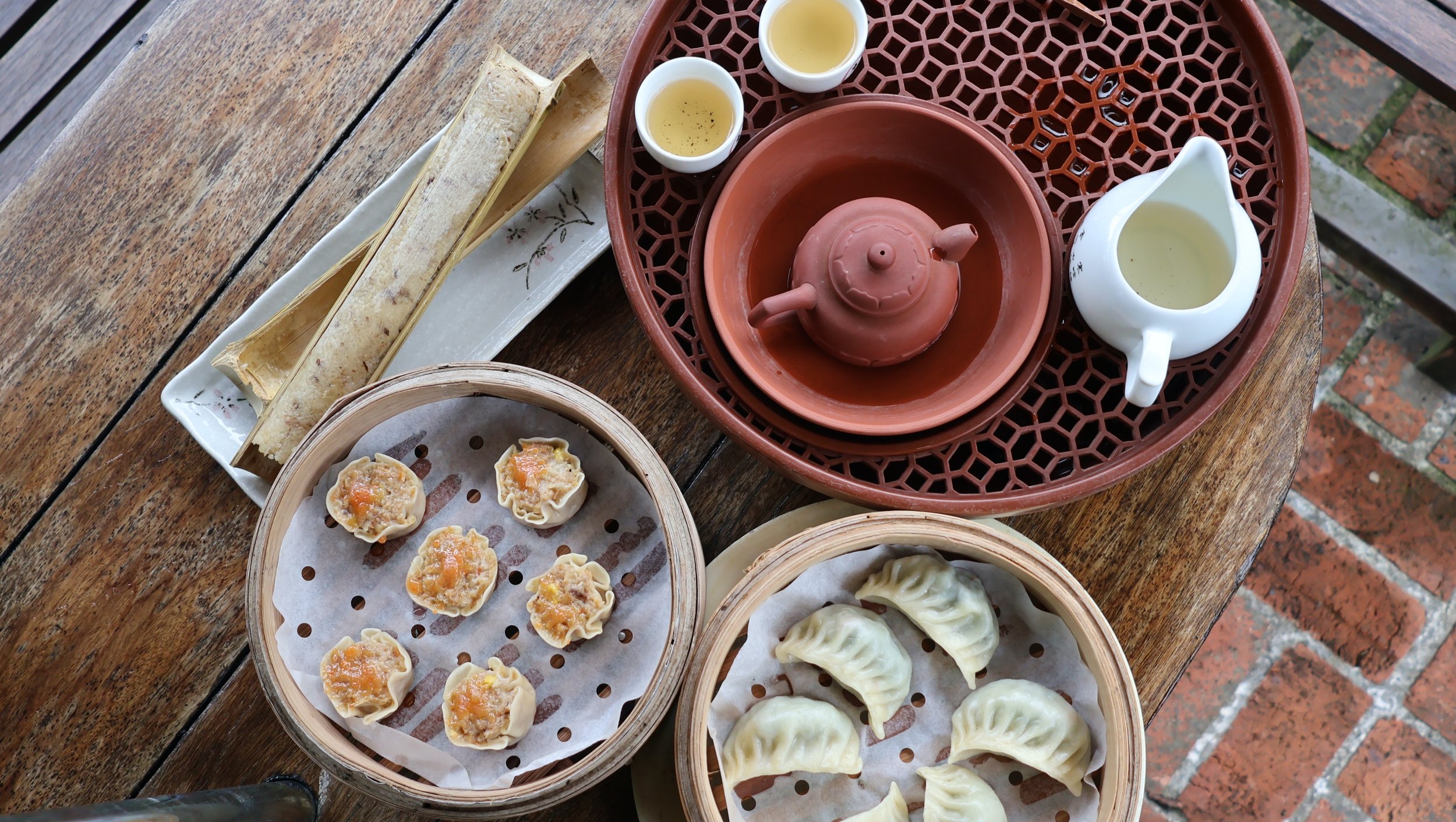
Hanser Tea House offers vegetarian friendly dim sum.
Written & Photography by: The T Scout 2026© All rights reserved.
