Pinglin・Taiwan's Pioneer of Wild Tea
Yu San-he grows wild-release tea in Pinglin, New Taipei City, inside the upstream watershed of Feitsui Reservoir — the water source for roughly six million people across greater Taipei. He is Taiwan's pioneer of wild-release tea (野放茶), fifth generation of a tea-farming family, and one of fewer than ten farmers in Taiwan still committed to true natural farming.
Wine has natural wine. Tea has its ecological equivalent — and, further still, wild-release tea. In Pinglin and neighboring Shiding, closest tea country to Taipei City, a small group of farmers have staked their lives on natural farming, tending the land with a patience few markets reward.
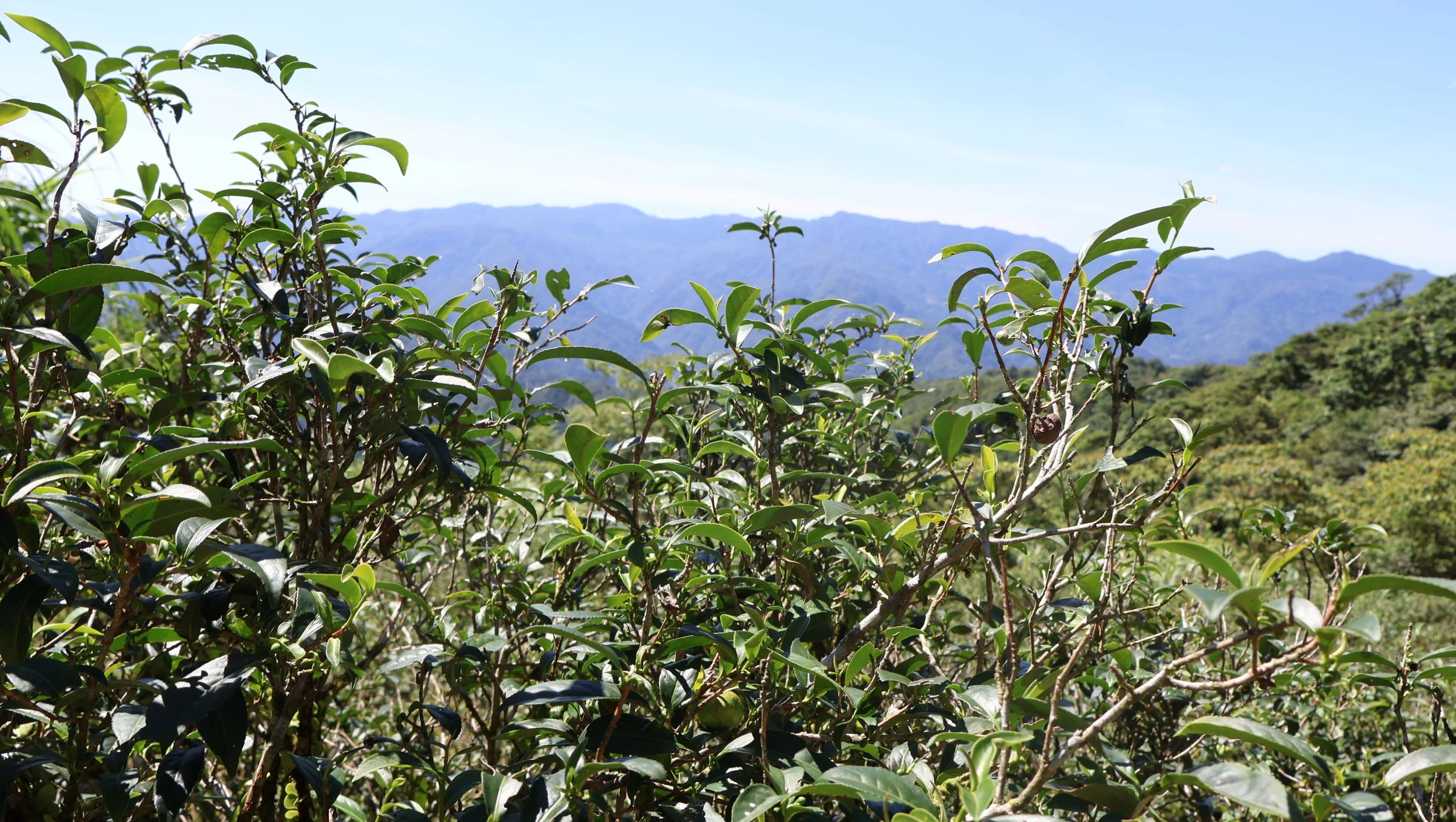
Yu lets his tea trees grow freely like forest trees, with no trace of the buzz-cut uniformity machine pruning leaves behind.
Why Pinglin, Not Maokong?
Pinglin was designated a water conservation area in 1984. It sits directly within Feitsui Reservoir's upstream catchment, holding the second-largest organic tea acreage in Taiwan — behind only Nantou, Taiwan's tea heartland. Of the tea regions near Taipei, Maokong suits travelers with limited time who want a quick taste of tea culture. Pinglin, with more tea-growing land and a wider range of tea makers, suits travelers after something deeper.
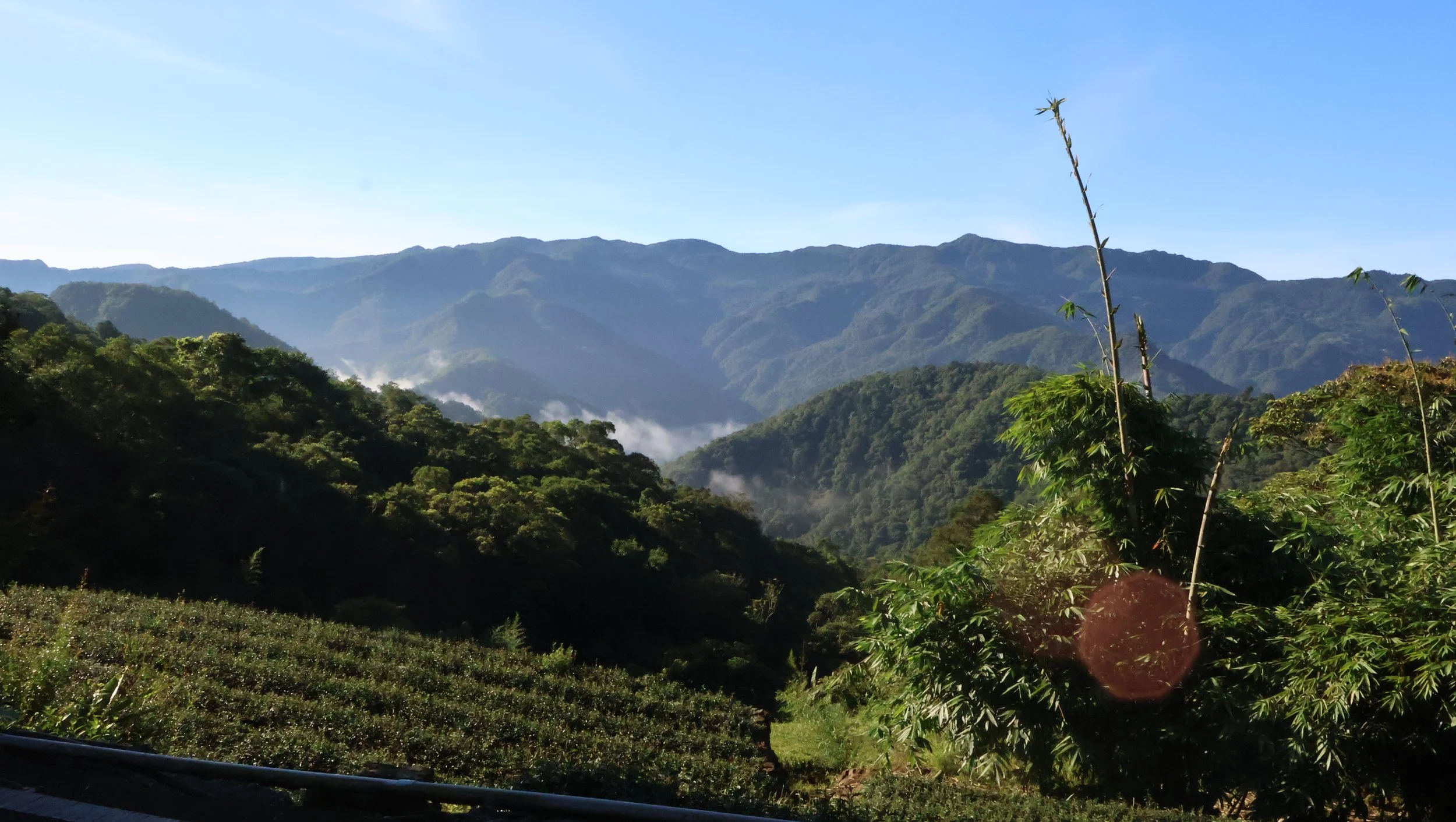
Constant mountain mist — a microclimate born of valley humidity and sharp day-night temperature swings, gives the tea bushes moisture-rich growing conditions.
Yu ran a tea shop for over two decades before returning to Pinglin in 2007 to take over his family's tea garden. He started with organic conversion alone — until someone asked him a question that jolted him awake: doesn't organic fertilizer running into the reservoir affect the water too? That question sent him toward fertilizer-free natural farming.
The turning point came when he crossed paths with a tea maker selling natural-farming tea. Its energy and flavor arc broke every expectation he'd built from years of drinking. He returned the next day and bought more — not cheap, but that batch is what pushed him through the narrow gate into natural farming. He has kept at it for nearly twenty years.
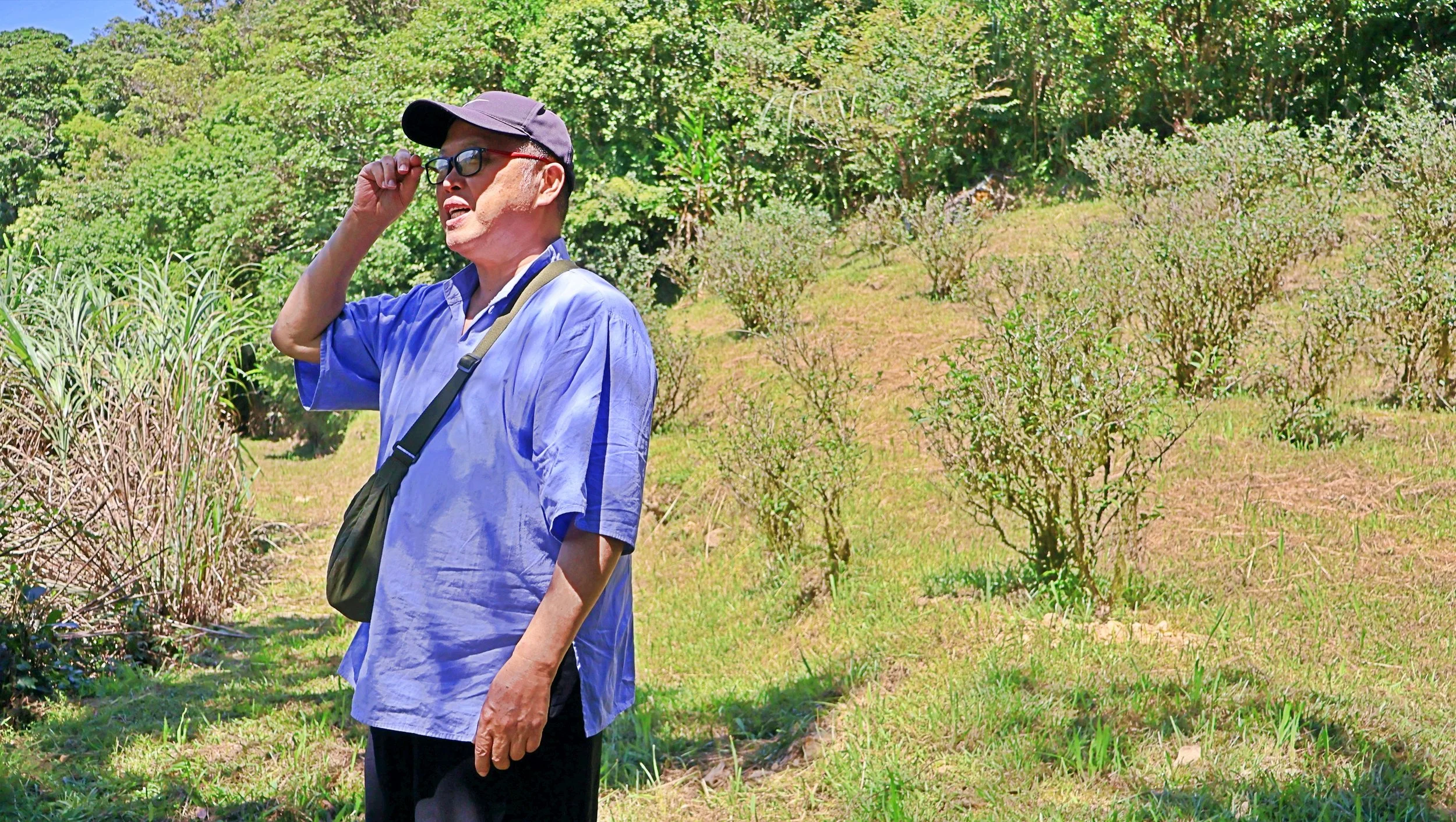
Yu San-he has spent twenty years on wild-release tea and is regarded as a pioneer of Taiwan's natural-farming tea movement.
What Wild-Release Tea Teaches Me
Walking Yu's tea garden overturned three assumptions about how tea is supposed to grow.
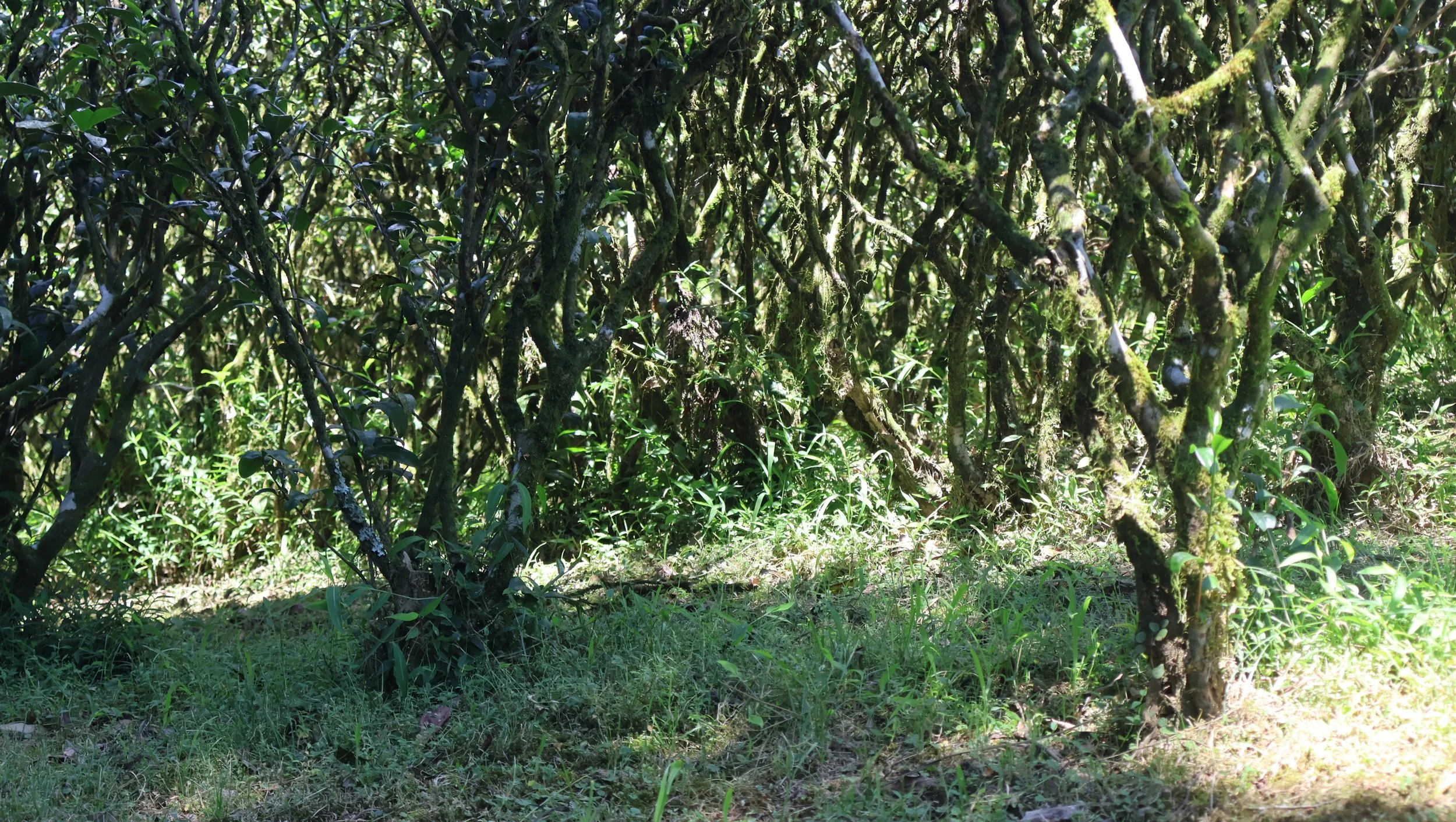
A strong root system is natural farming's most beautiful proof. Once a bush grows its own independent root network, it's reached what Yu calls "PhD level" — only then can the tea truly be called wild-release.
Nature finds its own balance. In his early organic-conversion years, tea bugs stripped the leaves bare within days — yields were dismal. Four years in, predators arrived along with the pests, and the ecosystem reached equilibrium. Fighting off insects for years, the bushes now produce their own antibodies; yields have recovered. At other tea farms, leaves ravaged by tea bugs are common. Yu's garden makes the contrast plain: nature heals itself, and human intervention is usually just interference.
Roots are the real secret. Few farmers let bushes grow to two meters — Yu manages his entire garden this way, unpruned, hand-picked only. Denied fertilizer, the roots dig deeper into the soil, chasing trace elements and minerals a shallow root system never reaches. Only once a bush grows this new root system does the tea earn the name "wild-release." Before that point, it's simply natural-farming tea.
Six hours of tea drinking, no stomach strain. Wild-release tea grows slowly with thicker leaves, so tannins release gradually — even long steeping doesn't push it toward bitterness. The sweetness stays pronounced, unlike the usual bodily reaction to drinking tea in volume. It's as if the tea metabolizes along with your own breathing.
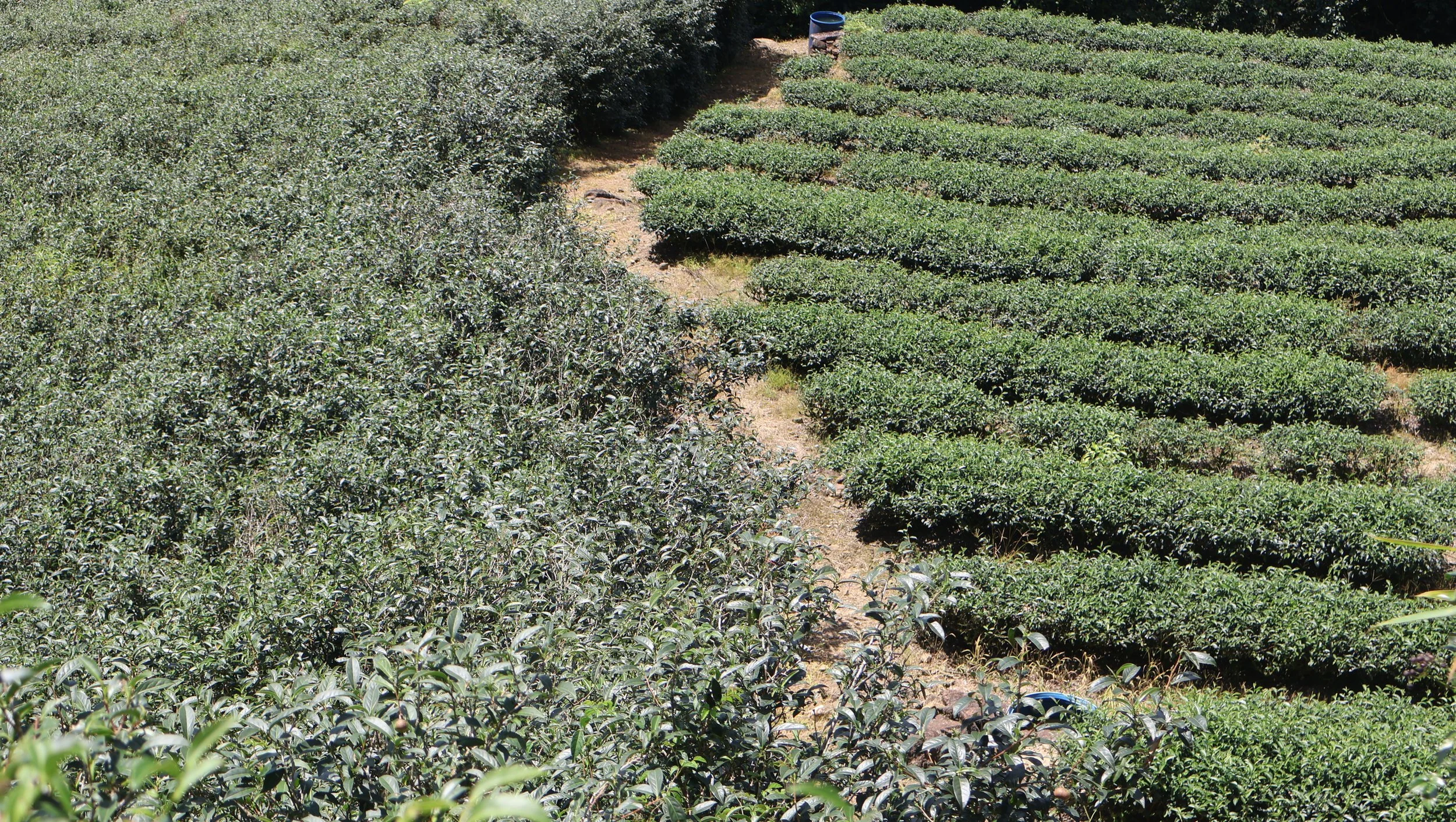
Left: a natural-farming tea garden. Right: a conventionally machine-pruned one. The difference in management style is obvious at a glance.
Farming Without Intervention
Yu recalls the early years of tending the garden, carrying a stick to beat back the grass and scare off snakes — tall grass meant heavy dew, heavy dew meant frogs, and frogs meant snakes. He was never bitten, but for his workers' safety he now cuts the grass every 35-40 days. In the early transition, pest damage drew birds in; once pests settled down, the birds moved on. Over time he learned the pattern — a spider-heavy spring signals a bad pest year, with a larger wave hitting roughly every three to four years.
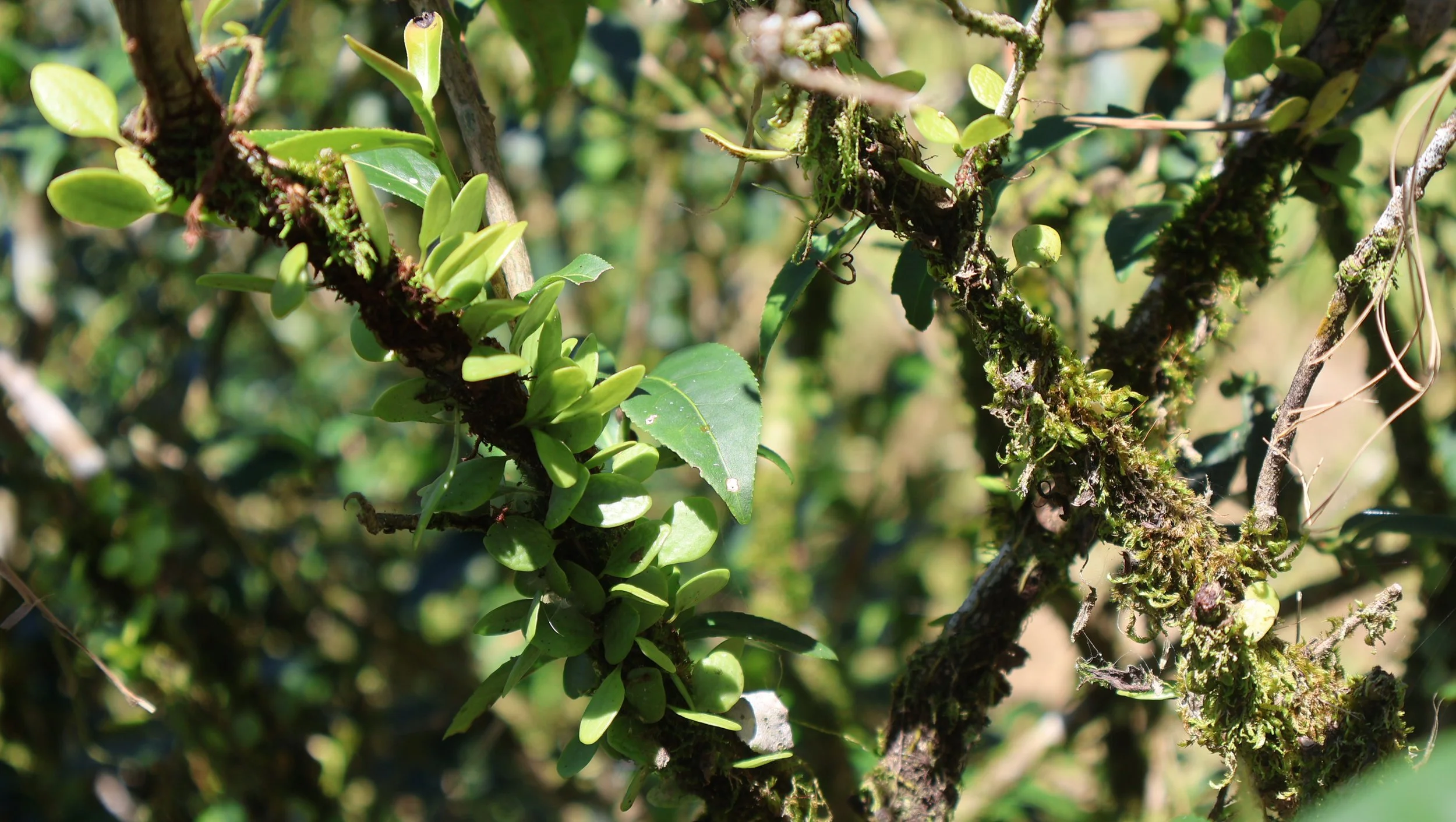
Lichen growing on the tea trunk is a key indicator of the bush's health and the surrounding environment's.
He also warns against over-picking new buds. Picking too often draws pests to the tender shoots; once they settle in and feed, there's no driving them out. That cycle — constant picking, constant fertilizing, constant spraying — is what defines commercial tea.
"Nature taught me all of this," he says.
The ease in his voice now hides what the transition cost — family support, financial pressure, real hurdles. He jokes: "If you want to curse someone, tell them to go do natural farming." The conversion from conventional to natural farming takes at least eight years, he says — patience and financial cushion both have to survive it. He once evangelized organic farming across Pinglin, rallying fellow farmers to convert. But organic tea means lower yield, higher cost, higher price, and consumers can't always taste the difference. Policy support never followed. Farmers gave up one after another, and Yu let go of the urge to convince others.
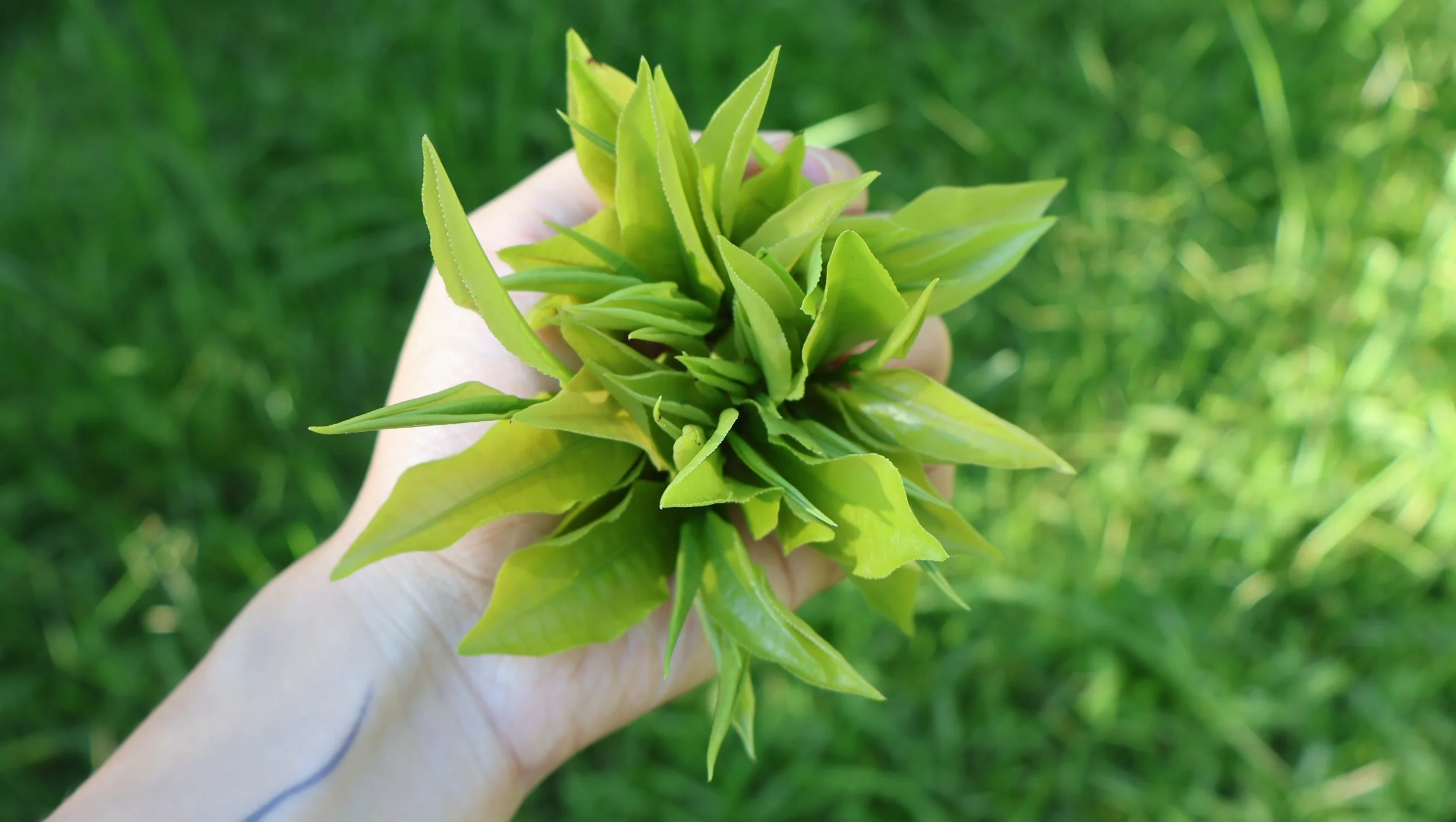
Freshly picked young Red-Jade leaves, gathered this morning, left to rest and oxidize into white tea at home.
The Tea Itself
Yu's garden holds an unruly mix of cultivars — Wuyi(武夷), Qinyu(沁玉), Hongyu(紅玉), Daman(大慢), purple-bud(紫芽), Qingxin(青心), Shuixian(水仙), and more. Every batch gets sun-withering only, never a hot-air dryer, giving the liquor a clarity that's immediately noticeable.
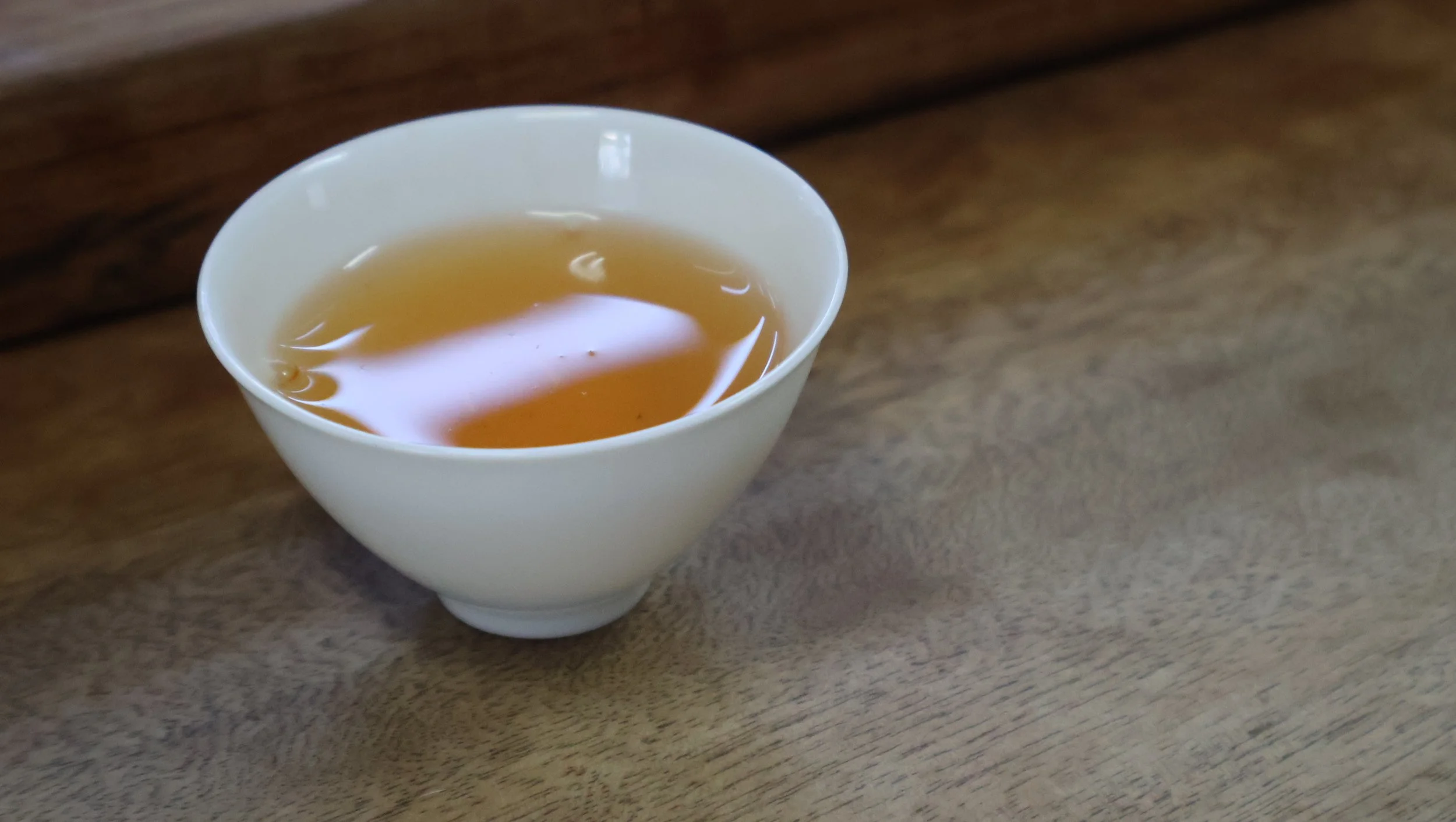
The standout on a recent visit was this summer's Daman-cultivar Oriental Beauty, still sweet on the finish by the tenth steep — pineapple skin, a trace of lychee, and a deep woody undertone in place of Daman's usual floral punch. Annual yield: barely over a pound, reserved before it's even made.
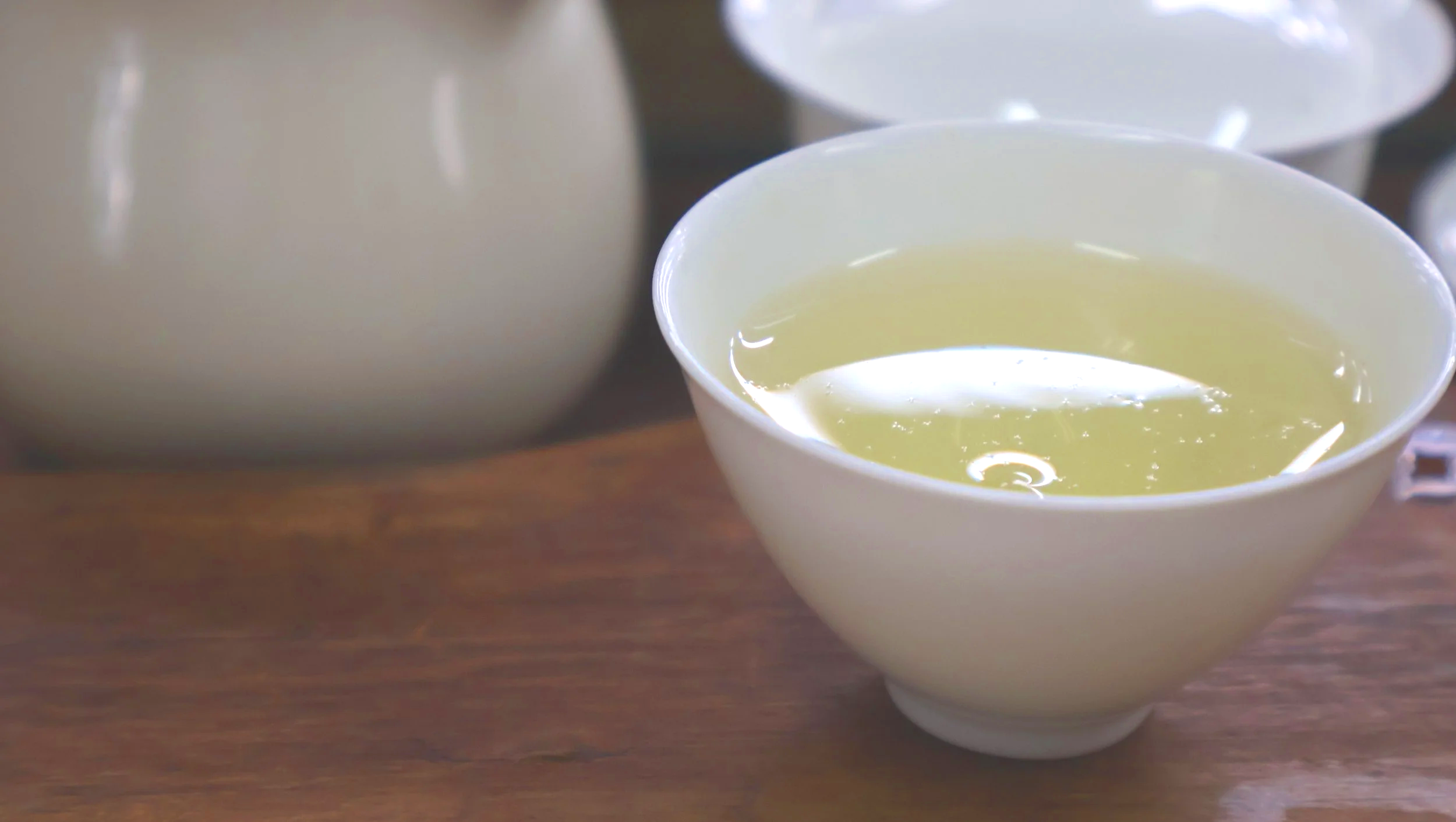
This Baozhong shows a clear covering of fine down on the leaf, with a sweet, delicate aroma.
A Baozhong from the same plot, blending Shuixian and Cuiyu, opens like a bouquet of white flowers the moment hot water touches the leaves. Yu calls it "Dream Baozhong" — named for the dream in which he says the finished process came to him, after years of natural-farming leaf falling short of the Baozhong standard he wanted.
"Tea is a gift from nature," he says. "Begin with the end in mind — know where you're ultimately headed, and let that destination be your starting point." He pauses, then adds: "But go slowly. You'll get there faster."
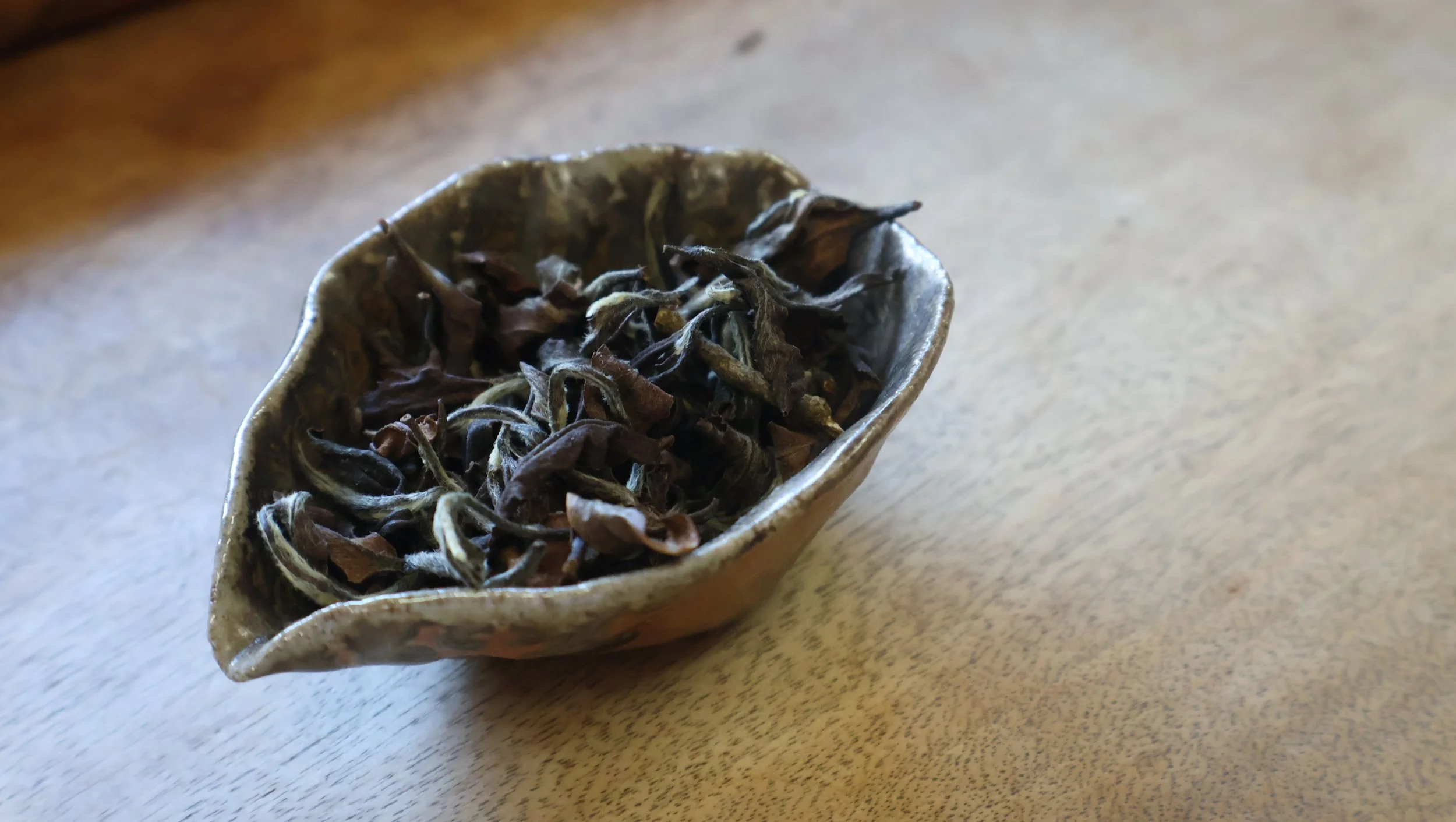
The one I can't stop thinking about: Daman-cultivar Oriental Beauty, made this year in a batch of just 375g.
FAQ
What are the standards to look for when searching for eco-friendly tea in Taiwan?
→ Taiwan's eco-friendly tea market runs on five tiers, from government-regulated to grower-defined (★=level of eco-friendliness )
★ Traceability certification (產銷履歷) — government-audited, traces the tea from field to package
★★ Not Detected (未檢出) — government-audited, tested for none detectable pesticide residue
★★★ Organic certification (有機認證) — government-audited, use organic certified fertilizer and bug killer
★★★★ Natural farming (自然農法) — grower-defined, no man-interfered fertilizer or pesticide, self-declared rather than certified
★★★★★ Wild-release tea (野放茶) — grower-defined, the strictest tier: no man-interfered fertilizer, no pruning, bushes left to develop deep, independent root systems through natural competition
The first three carry government oversight, so you can easily find the green label on packaging; the last two rely on the farmer's own practice and reputation, which is why direct producer relationships matter more here than a label on the package.
Wild-release tea takes years to produce and costs far more — how do you know a farmer is actually selling the real thing?
→ Ask two questions directly:
How many times a year do you harvest? Wild-release bushes grow slowly and get picked far less often than conventional tea — usually just once or twice a year. Frequent, multi-season harvesting is inconsistent with a true wild-release claim.
What fertilizer do you use? The honest answer should be none. Any answer describing an organic or natural fertilizer program means the tea is natural-farming at best, not wild-release.
A farmer who hesitates or gives a vague answer to either question is a signal to look elsewhere.
What is wild-release tea (野放茶)?
→ Tea grown with zero fertilizer and no pruning, left to develop a deep, independent root system through natural competition. It's distinct from organic tea, which still uses organic fertilizer and regular weeding.
How long does it take to convert from conventional to natural tea farming?
→ At least eight years, according to Yu — the time needed for yields to stabilize and for the farmer to have the financial cushion to survive the transition.
Why visit Pinglin instead of Maokong for tea tourism?
→ Pinglin has a larger tea-growing area and a more varied range of tea makers than Maokong, making it better suited to travelers who want depth over a quick cultural taste — though Maokong remains the easier stop for limited time.
What's a good one-day tea trip itinerary in Pinglin?
→ ① Morning|Pinglin Tea Museum (新北市坪林茶業博物館) for grounding in Taiwan's tea history and production process — the only museum in Taiwan dedicated to tea, with exhibits on cultivation, processing, and Pinglin's watershed ecology. Open daily 9:00–17:00 (until 17:30 on weekends), admission NT$80.
→② Lunch| Pinglin Old Street for lunch — a compact riverside strip of tea-infused local food, from tea-smoked dishes to tea-leaf snacks. Restaurants such as Just Pinglin(坪感覺) & Matsu Café(良醫藥師本舖) are very good options.
→③ Afternoon|Tea farmer's visit, like Yu San-he's, for the part no museum exhibit can replicate: tasting wild-release tea on-site, hearing the farmer's own account of the land, and seeing the growing method firsthand.
Budget roughly 2 hours for the museum, 1 hour for lunch, and 2–3 hours at the farm — a full but unhurried day.
Written & Photography by: The T Scout 2026© All rights reserved.
