Japan・Tsuwano・— Shūsuien Tea Estate
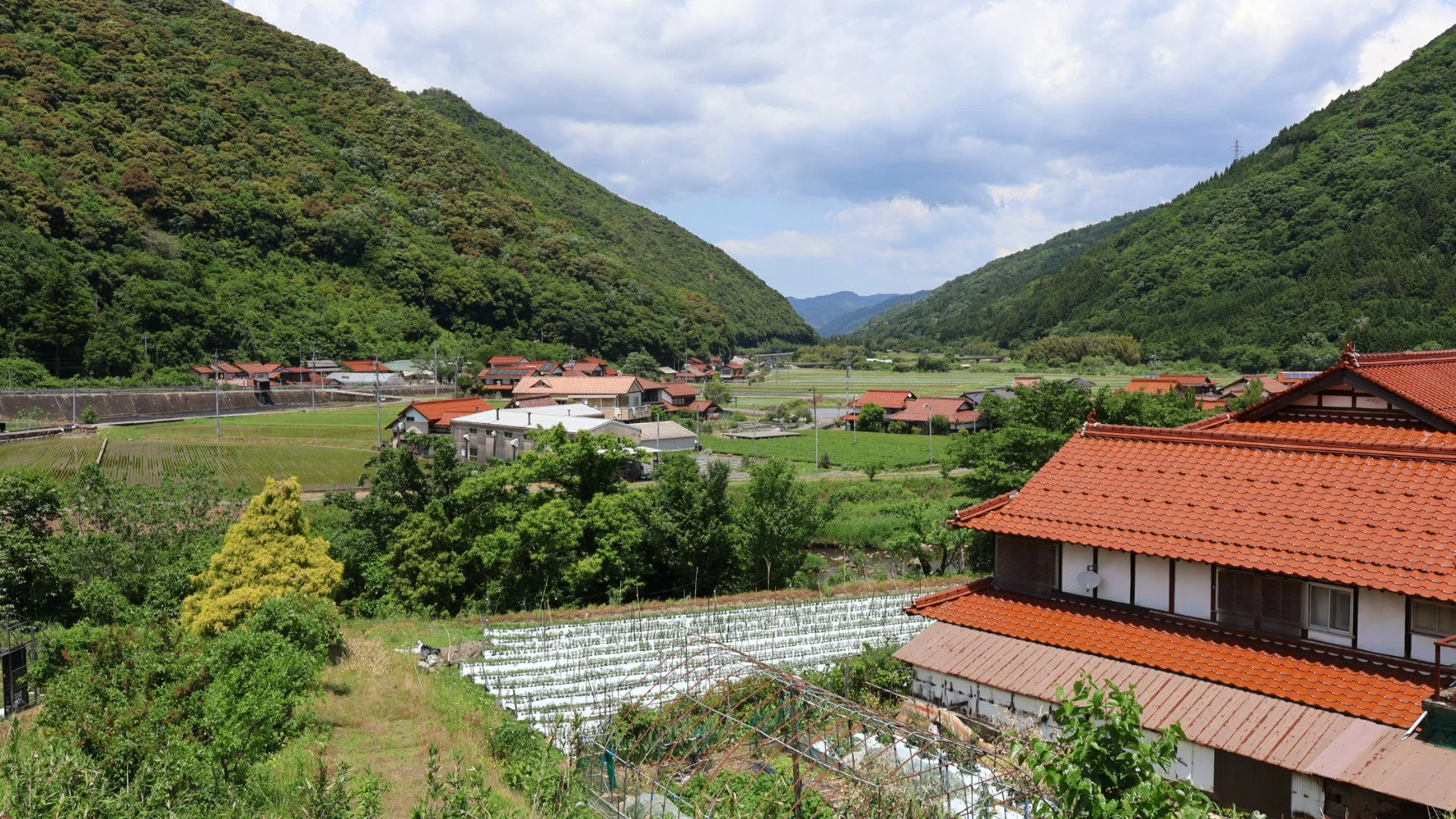
Tsuwano's tea fields sit in a mountain basin — volcanic ash soil, humidity held by the surrounding hills. The land gives the tea its character before the farmer even begins.
Tsuwano is known as the "Little Kyoto of San'in," a town of around 6,000 people. What makes it remarkable is that its streetscape has been almost perfectly preserved from the Edo-period paintings of local artist Kurimoto Kakusai, documented in his One Hundred Views of Tsuwano. This earned the town recognition as a Japan Heritage site in 2015, placing it alongside Kyoto and Kurashiki as a destination for traditional townscape tourism — though with considerably less of the commercial overcrowding.
The tea experience that is authentic, organic and non-touristic, exactly the one that T Scout is looking for!
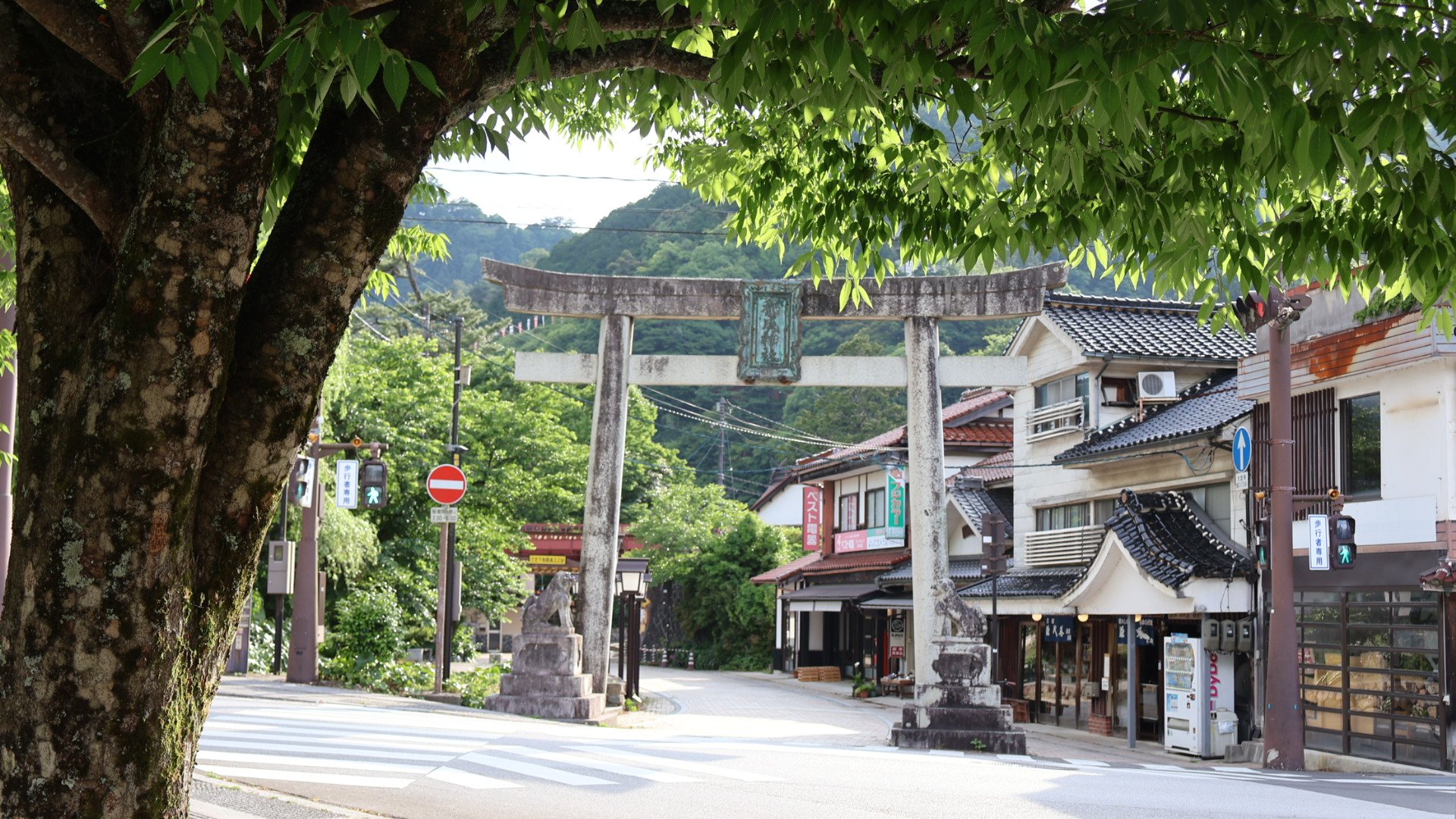
Behind the torii gates of Taikodani Inari Shrine stands Sōke — the originating shop of Genjimaki, passed down through four generations, still handmade every day. Around ¥350. Worth every yen.
Tsuwano is not among Japan's famous tea-producing regions, but the water that flows from the Takatsu River is considered one of Japan's cleanest, and the quality of tea grown here reflects that. The older generations grew up drinking mame-cha — a tea brewed from something resembling mung bean pods— and that tradition survives here. It's rare enough to have become one of Tsuwano's local specialties.
Shūsuien is a four-generation tea estate: fully vertically integrated, no pesticides, no chemical fertilizers, as close to a natural growing environment as possible. Every keyword matched what T Scout looks for in a producer. I packed my bags and went.
From Tsuwano station I took one stop to Aonoyama, and stepped out into a landscape wrapped in deep green — a stream running alongside, the sacred mountain Aonoyama rising directly ahead. The myths of the mountain felt present. Tsuwano itself already carries the atmosphere of a castle town frozen in time, but out here the sense of human smallness against deep time becomes something you feel in your body.
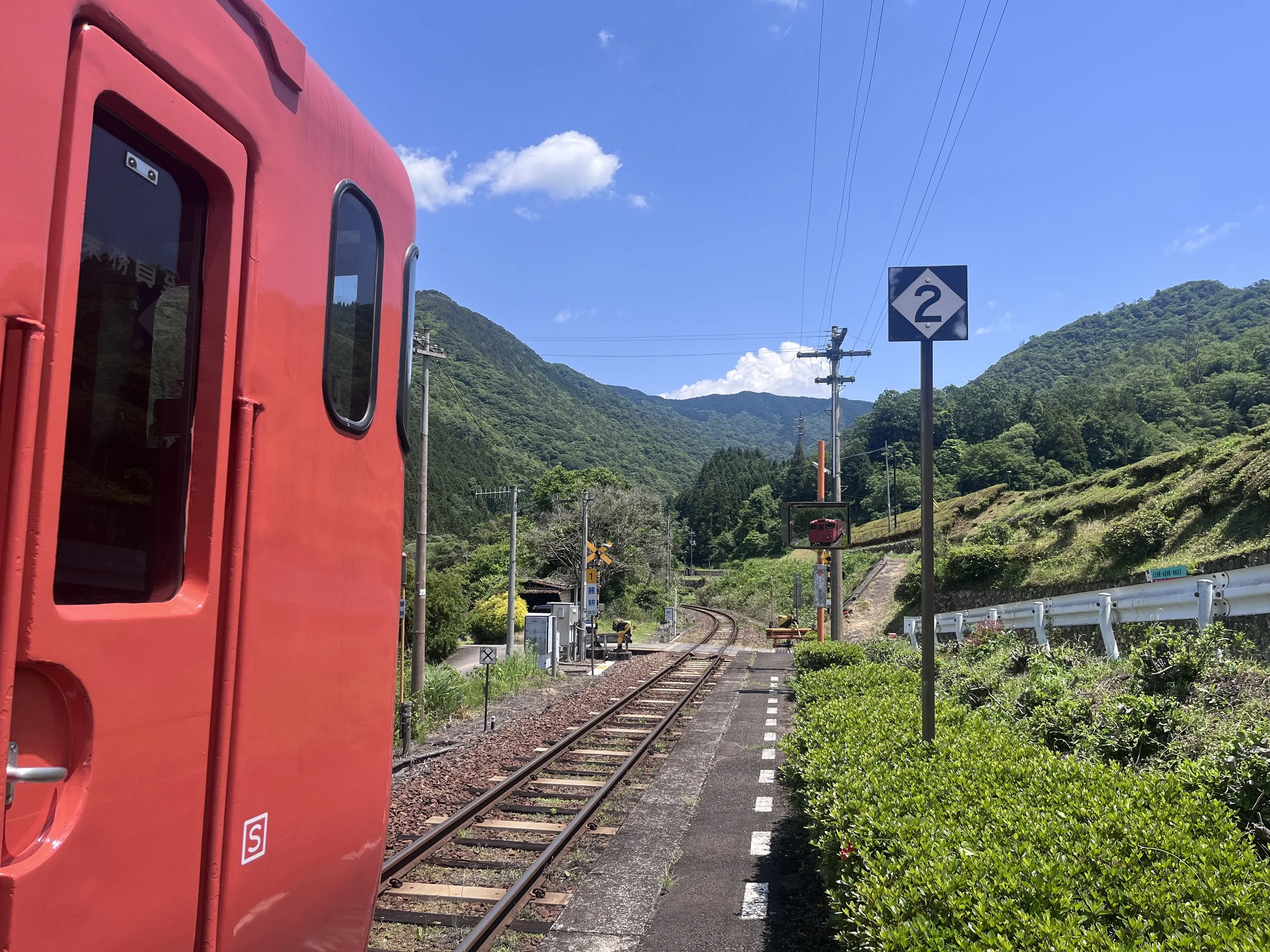
One stop past Tsuwano. The mountain fills the whole window before you even step off the train.
Fourth-generation farmer Tanaka Kenshiro told me that at one point there had been thirty tea estates in the area. Now only three farmers still make tea. His customers are mostly local supermarkets, restaurants, and inns — along with a loyal base of people who have been drinking his tea their whole lives. Perhaps it's precisely the taste of that steadfast care for the land that his longtime customers won't trade for anything else.
Last year he converted part of the family's old home into a tearoom and began welcoming visitors. He now offers a one-hour tea experience ( ¥6,600 per person) , hosted personally by him — drinking premium sencha and tea sweets with Aonoyama as the backdrop. Like many Taiwanese tea farmers I've encountered, he does everything himself, from leaf to guest.
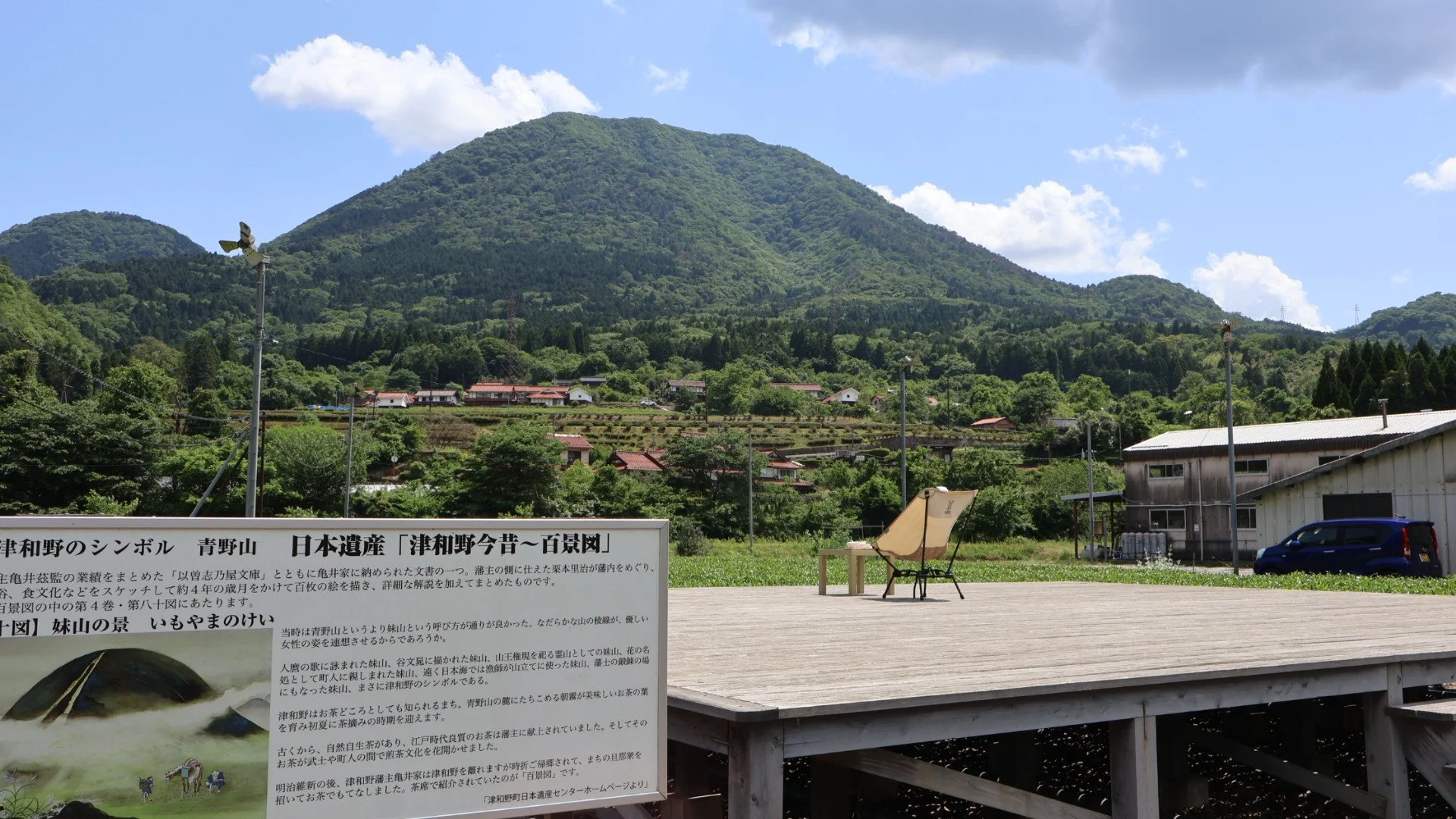
Aonoyama appears in the One Hundred Views of Tsuwano — and standing here, you understand why. Some landscapes paint themselves.
This year's new harvest tea was clean, fragrant, and sweet, with a lingering finish that just kept opening. The spring harvested tea normally comes around mid-end May. That’s a beautiful period to visit the tea farm, since the weather is still nice and breezy, and the farmers are happy to share the new tea with you.
The purity of the terroir was unmistakable. The closeness to nature made me feel, for a moment, beyond the reach of the world's noise or the passage of time — everything simply natural and good. I also picked up a blend with lemongrass, and I heard there are several other wild herb teas in the range. I hope to encourage Tanaka-san to produce more of them in the future.
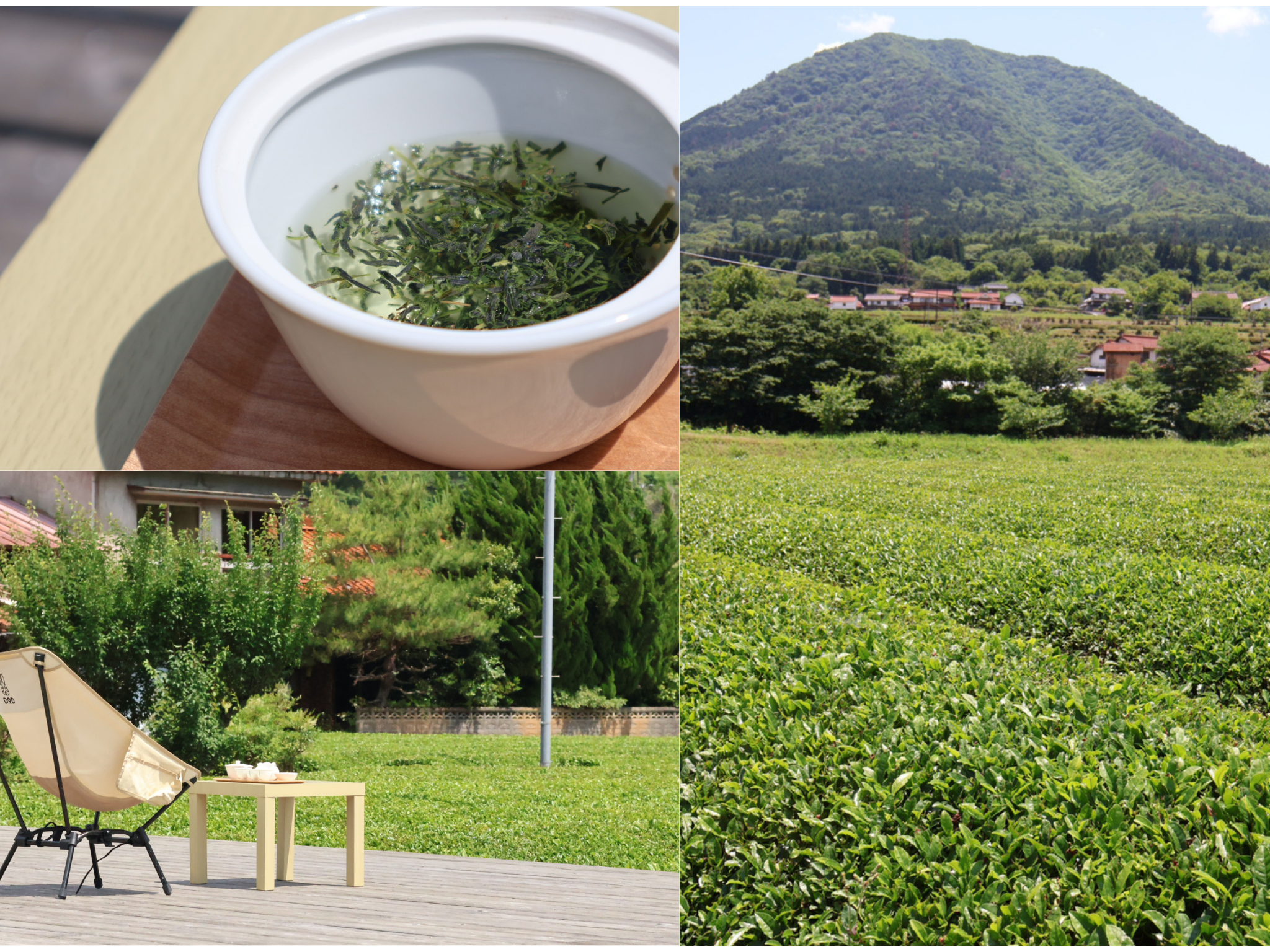
No pesticides, no chemicals, four generations. The tea tastes exactly like that sounds.
One of the more delightful parts of this visit was the language situation. Given the barrier, Tanaka-san had invited Mr. Ale, his sister-in-law who is from Milan, to help with communication — a tremendous help. He, too, is a tea lover; he even spent three years working at a tea factory learning the craft. We learned a great deal from each other through the shared language of tea.
I'm genuinely grateful for the warmth of their welcome and look forward to being back.
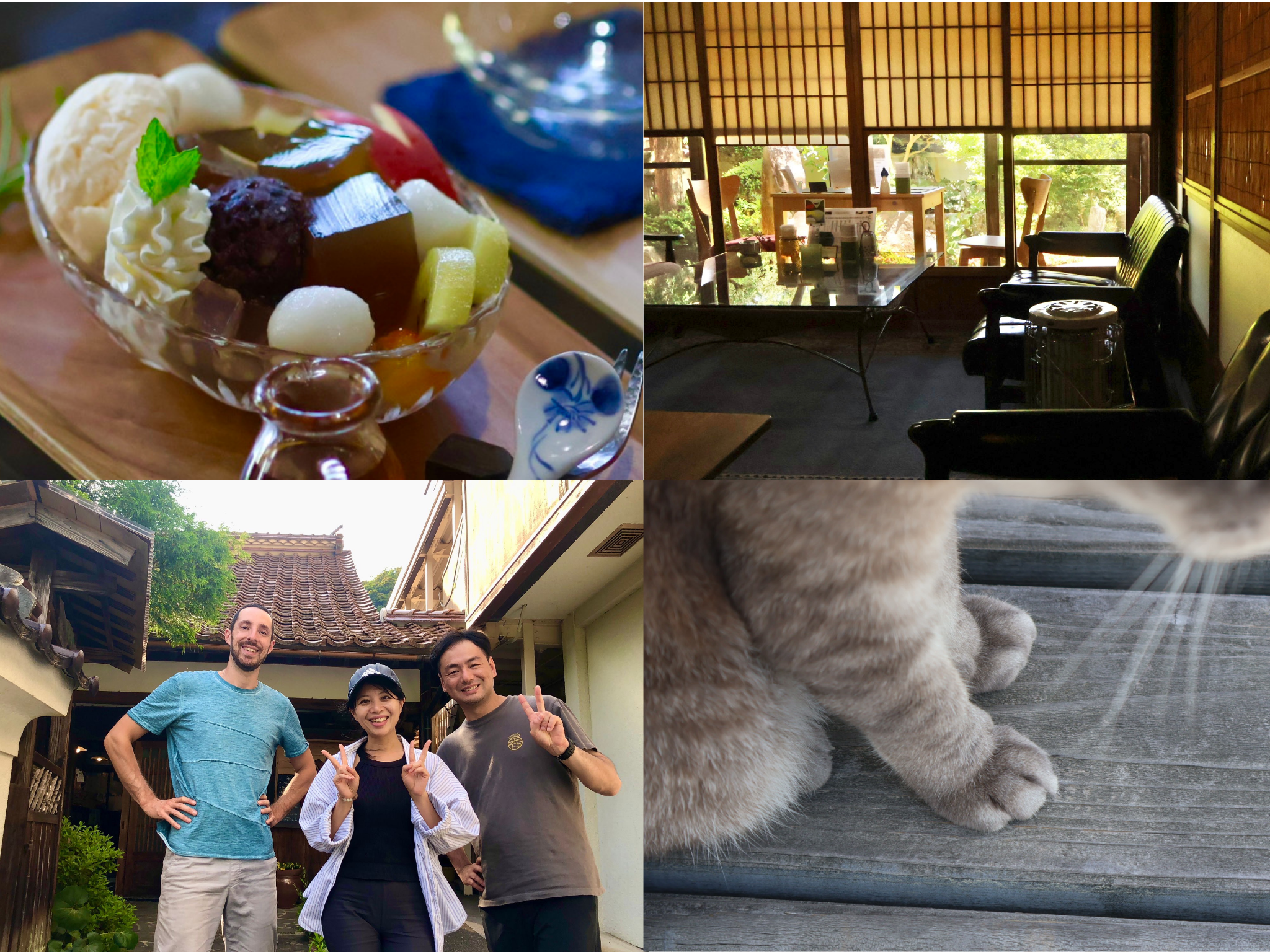
The tea ends with homemade sweets. The resident cat, unbothered and entirely at home, turns out to be just as popular as the tea.
P.S. Tanaka-san mentioned there's another tearoom in town worth visiting: Kōmien Kamiryo Chaho (closed Mondays), run by a son-in-law who is French. To encounter the global village in a quiet rural town — an unexpected and rather wonderful surprise.
FAQ
Is there a tea experience on the San'in line?
→ Shūsuien offers a one-hour tea experience at ¥6,600 per person, hosted personally by the estate owner.Is the San'yo San'in JR Pass good for a tea trip?
→ Tsuwano's Shūsuien is one of the very few natural farming tea estates within the pass coverage that offers a guest experience.Who is Shūsuien for?
→ Travelers who want to get into nature and slow down with something more immersive than sightseeing; if you're spending a night in Tsuwano, an afternoon here makes for a genuinely rich half-day.If I only have one day in Tsuwano, is the tea estate worth it?
→ If tea isn't your particular interest, a gentle walk through town followed by a meal is already a satisfying day. The estate is for those who want to go a little deeper.
Written & Photography by: The T Scout 2026© All rights reserved.
